How Much Does It Cost to Trek Upper Mustang? 2025/26
Trekking to Upper Mustang is an extraordinary travel experience offering breathtaking landscapes, a unique Tibetan-influenced culture, and a journey through the last forbidden kingdom of Nepal. The Upper Mustang trek in Nepal is an unparalleled experience, which costs start from USD 1800 to USD 3500 per person, depending on the type of trek you choose. The Upper Mustang Trek package can differ depending on several factors such as permit fees, guide and porter services, accommodation, transportation, etc. In this guide, there is an estimate of all the expenses that need to be incurred during the trek expected for the years 2025 and 2026. This will help you to enjoy the journey without financial surprises, allowing you to focus on the stunning scenery, rich cultural heritage, and the adventure itself. Despite the complexity of the trek, it is one of the most picturesque regions of Nepal.
Proper budgeting ensures that you have a smooth and hassle-free experience, covering essential costs such as permits, guides, accommodation, meals, and transportation. Whether you choose a budget-friendly trek or a luxury experience, planning your expenses in advance will make your trip more enjoyable and stress-free.
Comprehensive Breakdown of Upper Mustang Trek Costs
Like any other trek, such as Everest Base Camp and Annapurna Base Camp trek, the Upper Mustang trek is unique in its own way, coupled with the complexity of its layout and remote location. The economic framework of Upper Mustang trekking is complicated by diverse costs such as permits, transport, lodging, meals etc, all of which must be thought of in as integrated a way as possible.
1. Permits Fees
The permits are not only for allowing access but also play a very crucial role in protecting the environment and culture of the region. The Upper Mustang Restricted Area Permit (RAP), being the most expensive in cost, mirrors the area’s protected status. Along with the RAP, the Annapurna Conservation Area Permit (ACAP) and the Trekkers Information Management System (TIMS) Card are compulsory trekking permits for Upper Mustang for all trekkers in the Annapurna region, which makes it a necessity. This fee goes toward local development, cultural preservation, and maintaining the region’s unique heritage.
Upper Mustang Restricted Area Permit (RAP)
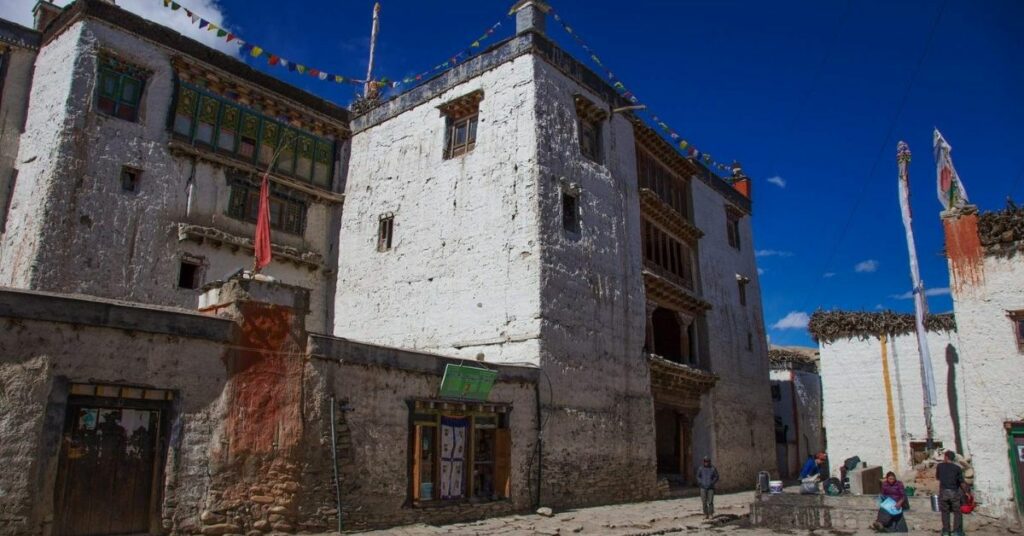
The permit that has the most notable cost for this trek is the Upper Mustang Restricted Area Permit. It costs $500 for the first ten days of trekking, and for each day beyond the initial 10, there is an additional cost of $50. The Upper Mustang RAP is only possible through a certified trekking agency in Nepal. The agency will handle the necessary paperwork and ensure you meet all the requirements, allowing you to focus on preparing for your trek. Solo trekkers, for any reason, have no means of obtaining this permit independently. This is the reason why guided treks are compulsory for this portion of the region.
Upper Mustang Restricted Area Permit also requires at least two trekkers traveling together with a registered guide, though exceptions may be made for solo trekkers who are willing to pay for both permits. Permits are checked at multiple checkpoints throughout the trek, so always keep them accessible during your journey.
Annapurna Conservation Area Permit (ACAP)
The Annapurna Conservation Area Permit (ACAP) is required for all trekkers entering the Annapurna region, including those heading to Upper Mustang. This permit costs NPR 3,000 (approximately $23) for foreign nationals and includes access to the entire Annapurna Conservation Area. The ACAP fee contributes to conservation efforts, trail maintenance, and community development projects throughout the Annapurna region. It helps fund initiatives for sustainable tourism, renewable energy, cultural preservation, and environmental protection in the communities you’ll be visiting.
Unlike the RAP, the ACAP can be obtained independently at the Nepal Tourism Board offices in Kathmandu or Pokhara. However, most trekking agencies will include this permit arrangement in their service packages. The permit is valid for a single entry and must be carried with you throughout your trek for verification at various checkpoints.
Trekkers Information Management System Card (TIMS)
The Trekkers Information Management System (TIMS) card is a registration system intended for the security of trekkers in Nepal. For the Upper Mustang trek, the TIMS card costs NPR 2,000 (around $15) per person while trekking with an agency or guide. The authorities are able to monitor the movement of trekkers within the trekking areas of Nepal using the TIMS system. This helps greatly in search and rescue operations during emergency situations. It also aids in the control of illegal trekking businesses as well as the regulation of the trekking business.
Like the ACAP, the TIMS card is issued at the offices of the Nepal Tourism Board in Kathmandu and Pokhara. You will need to submit the passport particulars, emergency contact, and a passport photograph.
2. Guide and Porter Costs
For the Upper Mustang trek, hiring a guide is not just optional; it is essential. Guides help in English interpretation and translation along with navigation, which, as is evident in this region, is very crucial as English is not widely spoken. A licensed guide typically costs between $25-35 per day for the Upper Mustang trek. Guides on this trek are more expensive than in other treks made in Nepal because of the high skill set necessary to navigate in this restricted area. The guided trek is strictly required in the restricted region.
Porters are optional but highly recommended, especially when you are carrying more than a backpack. Porters are in charge of carrying 15 to 20 kilograms for a fee of around 20 to 25 dollars per day. When considering whether to hire a porter, remember that the Upper Mustang trek involves several high passes and challenging terrain, making a heavy pack more burdensome than on other treks.
A lot of trekkers prefer a single person as a guide and porter, i.e. guide-porter combination. They will charge $ 30- $40 per day. It can be cost-effective for solo trekkers or couples with minimum gear. It does not matter if you prefer a guide, a porter, or both, such professionals help the local economy greatly, and in most cases, they depend on trekking season income to sustain their family for the rest of the year.
3. Accommodation Costs
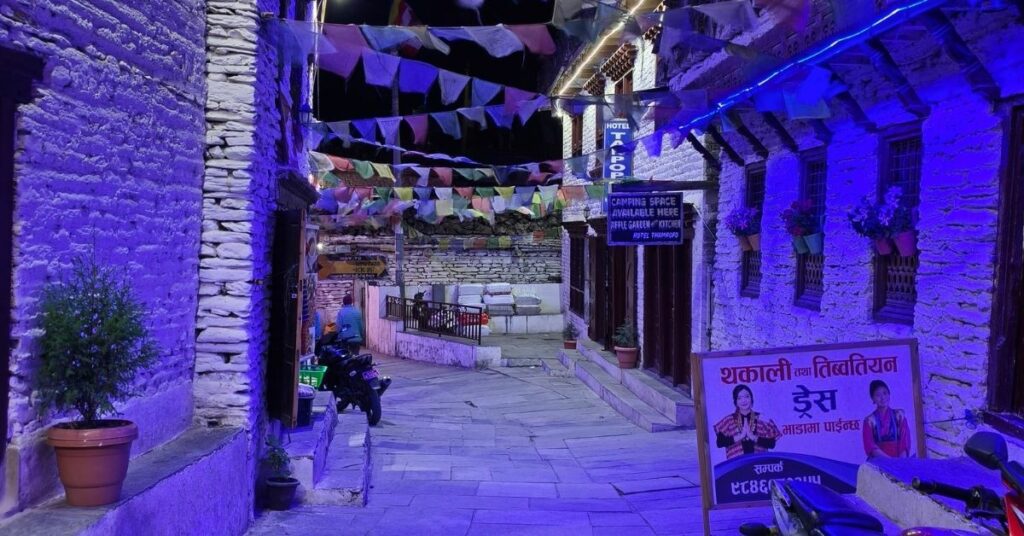
Most places in Upper Mustang provide basic teahouses and lodges for accommodation, which provide reasonable shelter. Room prices usually vary from $5 to $15 per night based on the location, season, and standard of the facility. At lower elevations in towns like Jomsom or Kagbeni, there’s hot water available for private bathrooms at a charge of $15 to $25 a night, which also includes Wifi. Furthermore, in Upper Mustang, more remote villages like Charang or Lo Manthang have twin rooms available for $5 to $10 a night, but they also share bathrooms, which makes the accommodations quite basic.
Most lodges offer to order meals from their lodges, but some lodges offer free accommodation if guests agree to have dinner and breakfast there. During the peak season of September-October and April-May, it’s a good idea to book accommodation beforehand, especially in the smaller and more remote villages. Most accommodations come with basic lodging like twin beds with mattresses, pillows, and blankets. Even though most lodges provide blankets, a sleeping bag is a must-have, especially for winter nights that can get really cold. Certain lodges also have the option of charging an electrical device for a fee between $1-$5, depending on the village. Remember to add this to your daily expenditure.
4. Nourishment and Refreshment Costs
Food costs along the Upper Mustang trek are higher than in many other trekking regions of Nepal, primarily due to the remote location and the difficulty of transporting supplies to these isolated villages. Expect to spend between USD 25-30 per day on meals. Meal expenses will range from USD 25-30 per day. Breakfasts include porridge, eggs, pancakes, and Tibetan bread and usually range from USD 4-7, while each lunch and dinner is priced at USD 7-12, with a few other helpful resources including noodles, momos, and pasta. In Lo Manthang, the price increases can be quite significant, as it is generally about 30% more than in Jomsom. This suggests that with higher altitudes, costs can go higher.
Drinking water is an important daily expense. While purchasing bottled water is possible (around USD 1-4 per liter, depending on the location), this creates plastic waste in a region with limited waste management infrastructure. Most teahouses boil water and sell it for about a dollar to two per liter, which is unbelievably helpful. Drinks of all types, teas, and coffee include,d range from USD 2-4, and beers can be purchased at USD 3-7 depending on the remoteness of a place.
5. Transportation Costs
Transportation to and from Upper Mustang involves multiple stages, each with its own set of costs. The journey typically begins with travel from Kathmandu to Pokhara, followed by a flight from Pokhara to Jomsom, the gateway to Upper Mustang. The transportation is usually carried out with buses, jeeps, flights, and other vehicles.
| Modes | Starting | Ending | Cost (per person) |
| Public Bus | Kathmandu | Jomsom | USD 20 |
| Tourist Bus | Kathmandu | Pokhara | USD 15- 18 |
| Van/ Jeep | Kathmandu | Pokhara | USD 240- 300 |
| Domestic Flight | Kathmandu | Pokhara | USD 200- 245 |
| Public Bus | Pokhara | Jomsom | USD 10 |
| Domestic Flight | Pokhara | Jomsom | USD 170-195 |
| Helicopter Ride | Kathmandu | Jomson | USD 4600 |
| Upper Mustang Heli Tour | Kathmandu | Lomanthang | USD 6700 |
Additional Expenses to Consider
There are other expenses that must be taken into consideration when formulating the budget for an Upper Mustang trek. These often forgotten expenses, like personal expenses, travel insurance, equipment and gear expenses etc, when accumulated over time, can raise in cost significantly if not planned for properly.
1. Personal Expenses
Personal expenses along the Upper Mustang trek can greatly differ from one person’s needs and habits to another’s. These optional costs comprise spending on souvenirs, paying for hot showers, purchasing alcoholic beverages and snacks, and sending laundry out. In Upper Mustang, souvenir shopping gives one the chance to buy genuine Tibetan and Thakali handicrafts. Particularly in Lo Manthang, authentic crafts of high quality are available, costing USD 10-15 for some smaller pieces, and thangkas or carpets for over $100.
In remote areas, hot showers have become a luxury, costing USD 3-7 per use, depending on the shower’s location, with prices increasing for higher elevations as heating water for showers requires more fuel. With most teahouses offering local spirits like raksi (rice wine) for USD2-5 per glass and beer for USD4-8 per bottle, local and foreign trekkers alike appreciate the cultural experience these drinks offer. Extra snacks and food are extremely overpriced, so bringing them from Kathmandu is a better option.
Laundry services are available in larger settlements for approximately USD 2-5 per kilogram, though drying can take longer in the arid but cold climate. If staying in the smaller villages, having biodegradable soap on hand is a good idea since washing the essential items yourself is likely necessary.
2. Travel Insurance
Upper Mustang lacks infrastructure and provides numerous risks that could result in the need for emergency evacuations; therefore, it’s pivotal that individuals undertake proper travel insurance. For the average two-week trip, comprehensive travel insurance that covers high-altitude trekking (4,000 meters) and includes emergency helicopter evacuations along with medical attention in Nepal costs around USD 100 to 200. Protection against emergency helicopter evacuation needs to be included in the policy, as this is usually the sole means to transfer serious medical cases from remote regions of Upper Mustang to hospitals in Pokhara or Kathmandu. Even for seasoned trekkers, travel insurance remains inevitable as a single helicopter evacuation can rake up a bill ranging from USD 5,000 to 10,000.
Furthermore, ensure your policy is valid for cancellation, luggage loss, flight delays, and personal items, as they are frequent problems for trekkers. While getting ready for your trip, ensure that you print enough copies of the documents with your insurance policy number and relevant contact numbers.
3. Equipment and Gear Expenses
Having the appropriate trekking gear is crucial for safety and comfort on the Upper Mustang trek, especially when daytime weather can vary from sunny and hot to freezing cold at night. Specialized high-altitude expedition trekking gear is not required, but proper trekking equipment is essential. Having a reasonable sleeping bag rated to -10°C/14°F along with good quality trekking boots, layered clothes, a sun protective jacket, and a daypack is a must. If you already own trekking gear, the expense will drop significantly. Many trekkers already have some suitable trekking gear so “new” might range from 500-1000 USD for those who don’t.
Renting equipment is another cost-effective option, particularly for items like sleeping bags and down jackets that you may not use frequently after the trek. Renting out sleeping bags costs approximately USD 1-3 a day in Kathmandu or Pokhara, while down jackets rent for USD 1-2 a day. A set of trekking poles rents for about USD 1-2 each day. Most rental outlets ask for a refundable deposit that is given back once you return the equipment.
4. Communication and Connectivity
Compared to other areas in Nepal, staying in touch while trekking the Upper Mustang region is possible, but not as accessible. Knowing the options for communication as well as the costs allows for better budgeting and expectation-setting. Mobile coverage in the Upper Mustang region has recently seen a boost thanks to the NTC (Nepal Telecom) and private carrier Ncell, who both provide coverage in several villages along the trekking route. Unfortunately, the cell signal is still very patchy, especially in isolated regions between villages. A local SIM card can be bought for approximately USD 2-3, and data packages run from USD 5 for 5GB up to USD 15 for 25GB with a 28-day expiration date.
Lo Manthang, Jomsom, and Kagbeni all provide Wi-Fi, but it becomes more limited and costly as you get deeper into Upper Mustang. Teahouses have been known to offer Wi-Fi access at a cost of USD 2-5 per hour or USD 5-10 per day. The quality of the connection is highly unreliable and tends to be rather slow, allowing for simple text messages to be sent but not much else. Another reliable option is satellite communication, which can be rented for roughly USD 10-15 per day can be rented in Kathmandu.
Total Estimated Cost for the Upper Mustang Trek
The total cost for the Upper Mustang trek in Nepal starts from USD 1800 per person. It will go upto USD 3500 as per your luxury. All expenses combined will enable us to better understand the investment needed for an Upper Mustang trek. This section analyses costs incurred based on different trekking styles and durations so that you can budget and plan accordingly.
| Trek Category | Price Range (USD) | What’s Included | Best For |
| Budget | $1,800-2,200 | All permits (RAP, ACAP, TIMS)Guide servicesBasic accommodationsMixed transportation (bus to Pokhara, flight to Jomsom)Group trekking format | Cost-conscious travelersThose comfortable with basic amenitiesTrekkers who enjoy group experiences |
| Mid-Range | $2,200-2,800 | All permitsMore comfortable accommodationsAll meals with some beverage optionsPrivate transportation optionsHigher-quality guiding servicesSmaller group sizes | Trekkers seeking additional comfortThose wanting more personalized attentionTravelers who prefer better food variety |
| Luxury | $2,800-3,500+ | All permitsBest available accommodationsPremium food optionsPrivate transportation throughoutHighly experienced guidesSpecial cultural experiences (monastery access, private meetings with monks)Potential helicopter options | Comfort-prioritizing trekkersPhotography-focused travelersThose seeking cultural immersionTrekkers with limited time |
Tips to Manage and Reduce Trekking Costs
Although Upper Mustang will never be an economical trekking destination because of its remote location and high permit charges, a few cost management strategies can still be applied without degrading the quality of the experience. These methods are aimed at helping a traveler to enjoy this amazing cultural area without spending a lot of money.
Money-Saving Strategies
With careful planning, it is possible to enjoy an Upper Mustang trek at a significantly lower cost. These approaches enable you to spend less money without forgetting the diverse cultural and natural features that make this experience one of a kind.
1. Group trekking benefits
One of the most efficient ways to decrease the cost of trekking in Upper Mustang is to book a group trek. Depending on the standard Upper Mustang trek itinerary, each traveler may save anywhere from USD 200- 400, as group treks share the expenses of a guide, porter, and transportation costs among multiple travelers. There is also the added benefit of socializing with other trekkers, which enables ideas and even friendships to be created. This is particularly helpful regarding safety, as it is always better in remote areas to travel in numbers. Smaller groups, usually consisting of two to six people, offer a good balance between personalized attention from guides and cost efficiency. When choosing a group, ensure it’s organized by a reputable trekking agency that handles logistics efficiently and ethically.
2. Off-Season Trekking
Trekking the Upper Mustang during the off-season months can reduce costs by 10-20% while avoiding crowds. The main trekking seasons are spring (April-May) and autumn (September-October) when weather conditions are most favorable, but prices peak and teahouses fill quickly. Other suggested months are early March, early Jun,e or November, which would be great for budget travelers. Many teahouses lower their prices, while guides and porters are also willing to reduce their daily rates.
Off-season trekking sure has its financial perks, but it also comes with challenges. Extremely low temperatures in winter months (December-February), especially at night, can be an issue, as well as certain high passes being snowed in. Upper Mustang, like the rest of Nepal, faces the summer monsoon season in July-August, but because it is in a rainshadow area, it is not as affected. Road conditions to Jomsom can be rough, especially towards the end of summer.
3. Advance booking advantages
Trekking in Upper Mustang should be booked well in advance if you want guaranteed availability and preferred dates at better rates. Early booking discounts by reputable agencies offer 5-10% discounts on group departures confirmed 3-6 months in advance. Advance booking also gives you leverage to negotiate inclusions or upgrades without increasing the base price. For example, you might secure airport transfers, additional nights in Kathmandu or Pokhara, or equipment rental at no extra cost. Securing early confirmation will allow tracking of flight prices to Nepal, potentially reducing international airfare by USD 100-300.
4. Minimalist Packing
Focusing on packing strategies efficiently reduces equipment costs and potential porter fees while making your trek more enjoyable. Prioritizing light and versatile items is economical while improving your overall trekking experience. A layering system with a combination of versatile pieces is more efficient than wearing distinct outfits every single day. For an 18-day trek, three pairs of socks, two pairs of trekking pants, three quick-dry t-shirts, one warm fleece mid-layer, and one waterproof outer layer enable functioning at peak levels. For a single trek, buying new equipment costs around USD 200-300, alongside losing out on flexibility during the trek. You can rent it from Kathmandu or Pokhara, which can help you save budget.
Remote regions tend to be more expensive in regard to essentials, so for items like sunscreen and medications, remember to pack enough supplies from home. Instead of buying bottled water during your trek, think about taking a portable water purification system that employs tablets, drops, or filters. This approach not only saves $50-100 over an 18-day trek but also reduces plastic waste in this environmentally sensitive region.
Upper Mustang Trek Expenses: Key Takeaways
Trekking in the Upper Mustang is rather expensive and might cost anywhere from USD 1,800 to USD 3,500 per person, depending on group size, season, and trekking style. Even though it is one of the more costly trekking locations within Nepal, the landscape and cultural views offer astonishing value to those seeking to experience the authentic side of the Himalayas, as opposed to the more commercial trekking routes. The Upper Mustang region’s communities are protected and developed due to the expensive permit fees, which can cost about USD 500 for 10 days.
To save money, there are treks during the off-peak season or minimalist packing that can be opted for while still providing the same core experience. If you wish to travel on a budget, then Mountain Routes ensures to provide you with the best trekking experience to Upper Mustang at a decent price, and make sure you get the most out of your journey. We ensure your safety with an enjoyable, worry-free travel experience.
FAQs
Why is the Upper Mustang trek expensive?
The Upper Mustang trek is expensive due to high permit fees, restricted access, costly logistics, remote location, and mandatory guide requirements. The restricted area permit alone costs $500 for 10 days.
Which one is better, Upper Mustang or Lower Mustang Trek?
Upper Mustang Trek offers a remote, culturally rich experience with stunning desert landscapes, while Lower Mustang Trek is more accessible, budget-friendly, and features diverse scenery with easier trails. So you can choose your trek according to your preference.
What is the cheapest way to trek to Upper Mustang?
Traveling in a group, booking in advance, and choosing budget accommodations can help reduce costs.
Is it possible to do the Upper Mustang trek without a guide?
No, the Upper Mustang trek is not possible without a guide, as it is under the restricted area; hiring a licensed guide is mandatory. Mountain Routes can assist you with an experienced English-speaking guide who can help you during your trek.



 Chat on WhatsApp