
Annapurna Base Camp Permits: Cost, Process & Requirements
Before you pack your bags for the Annapurna Base Camp trek, one thing matters just as much as your gear is permits. Every trekker, whether solo or in a group, must carry official permits to enter the Annapurna region. These are not just travel formalities; they are essential for safety, legal trekking, and environmental protection.
As you walk through villages, forests, and valleys, permit checkpoints will ask for your documents. If you don’t have them, you can be fined or asked to turn back. That’s why understanding the permit process helps you avoid stress during the trek. Plus, it saves time and ensures a smooth journey.
There are two permits you’ll need for the Annapurna trek. One is the Annapurna Conservation Area Permit (ACAP), and the other is the TIMS card. Together, they help manage trekking traffic and fund local conservation work. Your permit fee also supports trail maintenance and emergency services in the mountains.
Getting these permits is simple, but there’s a process to follow. You can apply in Kathmandu or Pokhara with basic documents. These include passport photos and a copy of your passport. Offices issue permits the same day so that you can start your trek without delay. Permit costs depend on where you’re from. Travelers from SAARC countries pay less, while others pay a bit more. Children may receive discounts or free access, depending on age. It’s smart to check the latest prices before arriving in Nepal.
Do You Need a Permit for the Annapurna Base Camp Trek?
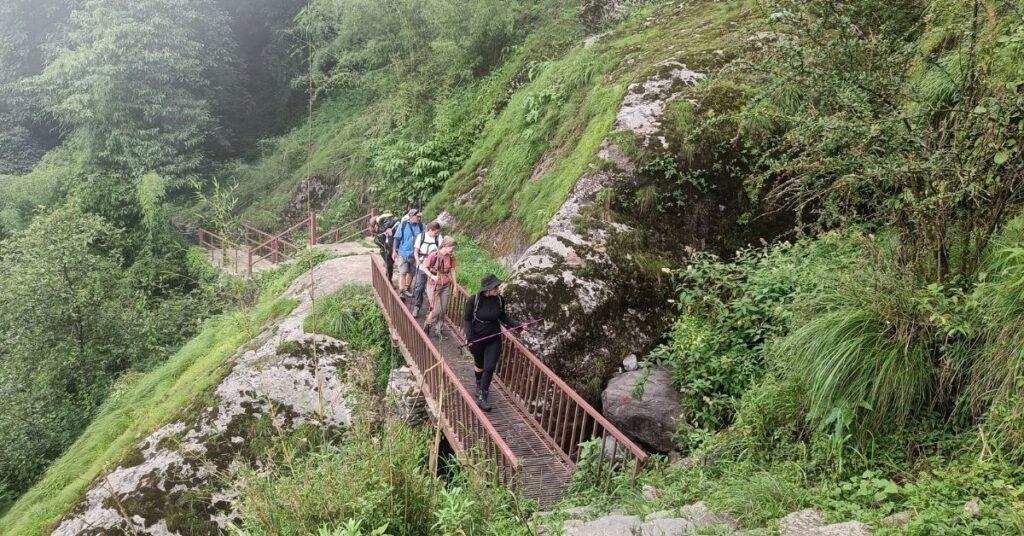
Yes, every trekker needs permits to hike to Annapurna Base Camp. The Government of Nepal requires these permits and must be obtained before entering the trekking region. Whether you’re trekking solo or with a group, you cannot legally access the trail without them. Local authorities check your permits at multiple points during the trek. If you fail to show valid permits, you may face fines or be turned away from the route.
Getting a permit is not just about following rules; it helps protect the environment and ensures your safety. The Annapurna region is a protected area, and trekking permits help support local communities and conservation projects. Besides, the trekking data collected through permits helps rescue teams locate trekkers during emergencies.
Why Are Permits Important?
- Legal Requirement: Trekking without permits is illegal and may lead to fines or expulsion from the trail.
- Conservation Support: Permit fees fund the protection of natural habitats, wildlife, and the local ecosystem.
- Safety Monitoring: TIMS permits help track trekkers in case of accidents or emergencies.
- Trail Maintenance: Revenue from permits is used to maintain trekking paths and basic facilities.
- Local Community Benefit: Permit income supports schools, healthcare, and development in rural mountain villages.
- Checkpoints Access: Permits allow you to pass through official checkpoints without issues or delays.
Types of Permits Required for the ABC Trek
To trek to Annapurna Base Camp, you need two important permits. These permits help keep you safe and allow you to enjoy the trek legally. Each permit has a purpose, and both are easy to get. Let’s look at each permit and why you need it.
TIMS Card (Trekkers’ Information Management System)
The TIMS card is like an ID for trekkers in Nepal. It helps the authorities know who is on the trail and where they are going. If something goes wrong, like bad weather or an injury, your TIMS card helps rescue teams find and help you faster. This card also helps the government keep records of how many people visit each trekking area. That way, they can manage crowds and take better care of the trails. Every trekker must carry this card at all times. Without it, you may not be allowed to pass certain points on the route.
To get a TIMS card, you need your passport and a passport-sized photo. You can apply in Kathmandu or Pokhara before your trek. The card is valid for one trip and cannot be reused for another trek. There are two types of TIMS cards: one for individual trekkers and another for people trekking with a guide or group. The cost is a bit higher for solo trekkers because guided treks offer more safety support.
ACAP Permit (Annapurna Conservation Area Permit)
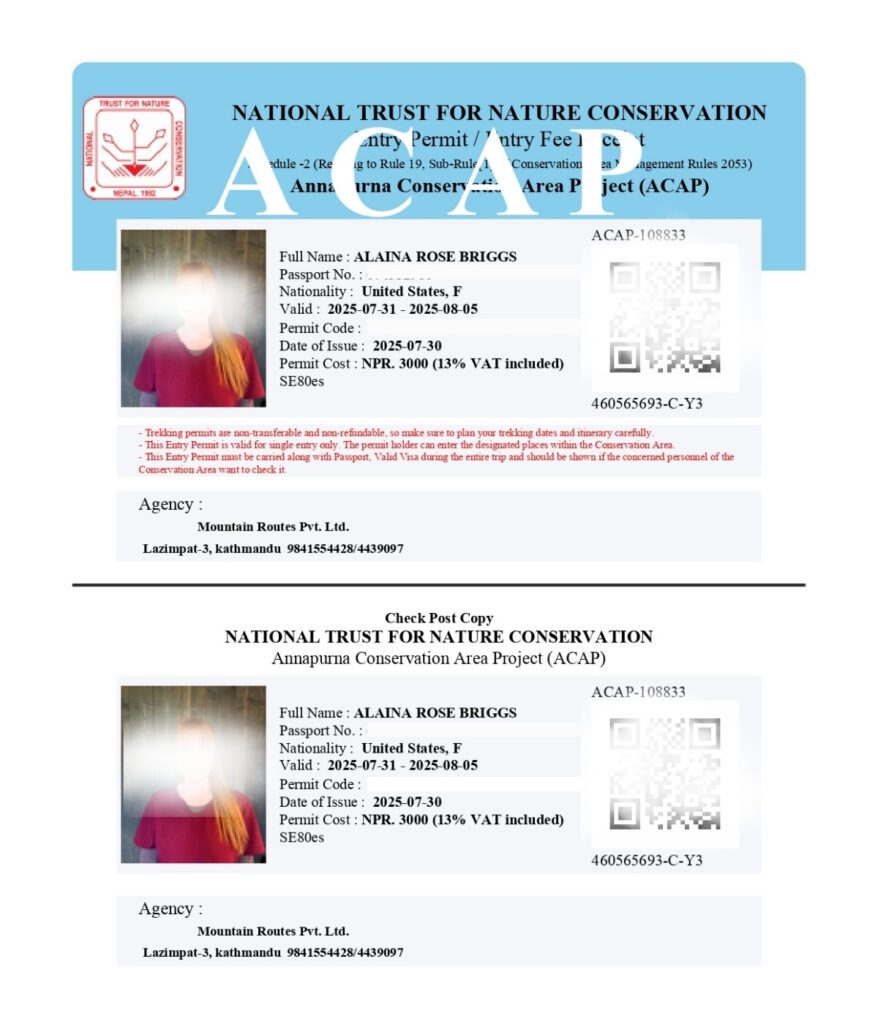
The ACAP permit allows you to enter and trek in the Annapurna Conservation Area. This region is a protected area, which means the plants, animals, and local culture are all carefully cared for. The ACAP permit helps fund this protection work. When you buy an ACAP permit, your money helps build safe trails, protect wildlife, and support the people who live in the villages along the trek. It also helps pay for signs, maps, and small shelters that make trekking safer and easier.
Just like with the TIMS card, you will need your passport and a photo to get the ACAP permit. It is valid for one entry and one trek. If you want to go again, you’ll need a new permit. Authorities will check this permit at several places on the trek, so keep it in your bag or pocket. Without the ACAP permit, you cannot legally enter the conservation area.
How Much Does the ABC Trek Permit Cost?
The cost of permits for the Annapurna Base Camp trek depends on your nationality and whether you trek solo or with a guide. Children may get discounts, and there could be extra costs if you hire a guide or porter. The table below shows the updated permit fees and additional expenses you should know about.
| Permit Type | Cost for SAARC Nationals | Cost for Non-SAARC Nationals | Children Under 10 |
| ACAP Permit | NPR 1,000 (approx. $8) | NPR 3,000 (approx. $25) | Free |
| TIMS Card (Group) | NPR 1,000 (approx. $8) | NPR 1,000 (approx. $8) | Free |
| TIMS Card (Solo) | NPR 2,000 (approx. $15) | NPR 2,000 (approx. $15) | Free |
| Guide Insurance | Varies (avg. $20–$30) | Same | Not required |
| Porter Insurance | Varies (avg. $20–$25) | Same | Not required |
Where to Get ABC Trek Permits in Nepal?
You can obtain the necessary permits for the Annapurna Base Camp (ABC) trek from two main locations in Nepal: Kathmandu and Pokhara. Both cities have official offices where trekkers can easily get the Annapurna Conservation Area Permit (ACAP) and the Trekkers’ Information Management System (TIMS) card.
In Kathmandu, you can get these permits at the Nepal Tourism Board (NTB) Office, located at Bhrikutimandap. This is convenient if you’re staying in Kathmandu before heading to Pokhara or beginning your trek. In Pokhara, you can visit the ACAP Permit Office near the Lakeside area or the NTB Office in Damside. Most trekkers choose Pokhara since it is closer to the starting points of the ABC trek, such as Nayapul or Ghandruk.
If you’re trekking with a registered trekking agency, they can arrange the permits on your behalf. However, independent trekkers must obtain them personally from these offices during office hours (typically 10 AM to 5 PM, Sunday to Friday). Make sure to carry the required documents and sufficient Nepali cash for the permit fees.
Documents Required
To get your ABC trek permits, you need to provide a few essential documents. Here’s what you must bring:
- Passport (original and photocopy) – Your passport is needed for identity verification.
- Valid Visa – Ensure your Nepal visa is valid and not expired.
- Passport-sized Photos (at least 2) – These are required for both ACAP and TIMS cards.
- Travel Insurance Details – Some offices may request to see your insurance covering trekking activities.
- Permit Fees (in Nepali currency) – Payments must be made in local currency, so bring enough Nepalese cash.
Can You Get the Annapurna Region Permit Online?
As of now, you cannot get the official Annapurna Conservation Area Permit (ACAP) and TIMS card entirely online. These permits still require physical issuance from authorised offices in Nepal, such as those in Kathmandu and Pokhara. However, to save time and streamline the process, the Nepal Tourism Board (NTB) has introduced an online form submission portal where trekkers can pre-fill the permit application form before visiting the permit office.
By submitting your information online, you avoid the hassle of filling out paperwork at the office. Once submitted, you’ll need to visit the Nepal Tourism Board office in person to pay the fees, show your documents, and collect the printed permit.
Do You Need a Guide to Get Permits for ABC?
Yes, as of April 1, 2023, it is mandatory to hire a licensed guide to initiate different treks in the Annapurna region, including the short Annapurna Base Camp (ABC) trek. This rule was introduced by the Nepal Tourism Board (NTB) and is strictly enforced for safety, environmental conservation, and better trekking experiences. Because of this rule, permits such as the TIMS card will only be issued through registered trekking agencies. Individual trekkers can no longer obtain TIMS permits on their own. However, the Annapurna Conservation Area Permit (ACAP) can still be obtained by solo trekkers, but it is not valid without a guide. Therefore, to legally trek to ABC, you must have both ACAP and TIMS permits issued through a guide or agency.
Also Read: How to Hire the Best Trek Guide in Nepal?
Rules and Regulations of Trekking with ABC Permits
Trekking in the Annapurna region requires following certain rules to ensure your safety and to protect the environment. Local authorities and permit offices enforce these regulations, and failure to follow them can lead to fines or denial of access. Make sure you understand and follow the permit conditions, guide requirements, and conservation guidelines while trekking to Annapurna Base Camp.
- Permit Must Be Carried at All Times: Trekkers must keep both the ACAP permit and TIMS card with them throughout the trek and show them at various checkpoints along the route.
- Permits Are Non-Transferable and Non-Refundable: Once issued, trekking permits cannot be transferred to another person or refunded, even if your trek is cancelled or shortened.
- Valid for a Single Entry and Trekking Route: The ACAP permit is valid only for one entry into the Annapurna Conservation Area and only for the specific trek for which it was issued.
- Guide Requirement Is Mandatory: Trekking in the Annapurna region requires a licensed guide. TIMS cards will only be issued through registered trekking agencies.
- Follow Conservation Guidelines: Trekkers must respect environmental rules, such as no littering, no wildlife disturbance, and staying on designated trails.
- Travel Insurance Is Strongly Recommended: While not mandatory for permits, having travel insurance that covers trekking at high altitudes is highly recommended and may be required by agencies.
- Permit Checks Are Frequent: Expect permit verification at multiple points during the trek. Trekking without valid permits can result in fines or being denied access.
- Observe Local Culture and Laws: Trekkers are expected to respect local customs, religious sites, and community norms while passing through villages in the Annapurna region.
Rules and Regulations of Trekking with ABC Permits
Your Annapurna Base Camp trek can feel overwhelming, especially when it comes to securing permits and organising your route. That’s where Mountain Routes comes in as your trusted partner. We have deep experience in trekking across Nepal and specialise in helping trekkers get all the necessary permits quickly and smoothly. Beyond permits, we also assist in creating a detailed itinerary tailored to your needs, making your entire journey hassle-free. By choosing Mountain Routes, you gain peace of mind knowing experts handle all the paperwork and local regulations. This support lets you focus on the amazing experience ahead, enjoying the stunning mountains, vibrant villages, and unforgettable views.
Frequently Asked Questions
Is the TIMS card still required for the ABC trek in 2025?
Yes, as of 2025, the TIMS card is still required for the ABC trek and must be obtained through a registered trekking agency, along with a licensed guide.
What is the total cost of permits for Annapurna Base Camp?
The total cost typically ranges from NPR 4,000 to NPR 6,000, depending on your nationality and whether you’re trekking individually or in a group.
Can I get permits on the same day as my trek starts?
Yes, you can get permits on the same day, but it’s best to visit the permit office early in the morning to avoid delays, especially during peak trekking seasons.
Are permits refundable or transferable?
No, once issued, trekking permits are non-refundable and non-transferable, regardless of changes in your trekking plans.





 Chat on WhatsApp