Can a Helicopter Fly on Top of Everest?
Climbing Mount Everest is a major human achievement that takes years of training and incredible endurance. Many people wonder if modern technology could make this journey easier. Can a helicopter fly on top of Everest and land at the highest point on Earth?
The idea sounds possible, but the reality is much more difficult. The air near the summit of Mount Everest, which stands at 8,848.86 meters, is extremely thin. This makes it very hard for helicopters to lift, hover, or stay stable. Flying a helicopter in Mount Everest’s environment tests both the machine and the pilot’s skill.
However, history has shown that with advanced technology and strong determination, a helicopter once managed to reach the top of Everest. It stayed there only for a few remarkable minutes.
Table of Contents
Reasons Why Helicopters Can’t Reach the Everest Peak
The idea of a helicopter landing on Everest’s summit is exciting, but for normal tourism or transport, it’s still not realistic. A helicopter did land on the peak of Everest once, but it was a highly specialized test flight under perfect conditions.
For everyday operations, the summit is off-limits. The extreme altitude creates a dangerous environment where the laws of physics that allow helicopters to fly are pushed to their absolute limit and beyond.
Flying to the top of Everest is extremely dangerous because many challenges come together. Thin air, weak engine power, rough weather, and the steep terrain all make it very hard for helicopters to fly safely there.
Low Air Density at High Altitude
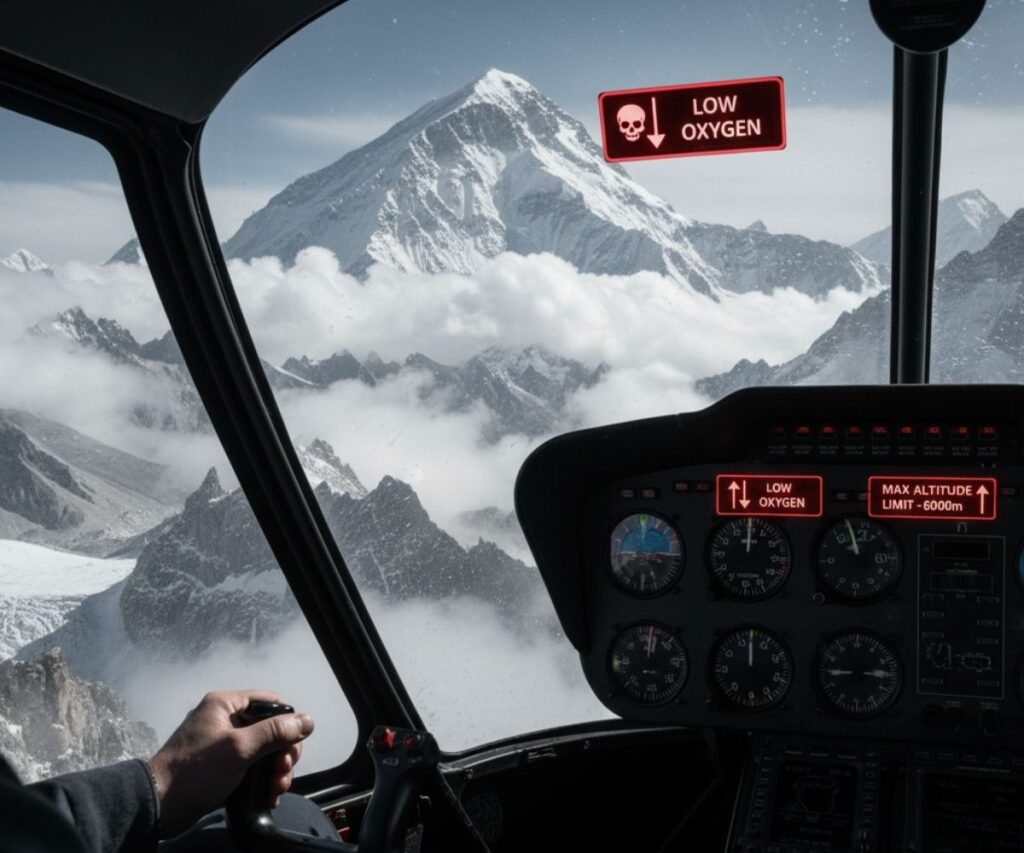
At 8,848 meters, air pressure is about one-third of that at sea level. There is far less oxygen. Both the engine and rotor blades struggle to generate lift.
When air density decreases, helicopter blades can’t produce the same upward thrust they do at lower altitudes. It is like trying to grab water with your hands. The thinner the air, the harder it is to grip.
Most commercial helicopters lose lifting power after 5,000 meters, which makes reaching Everest’s summit nearly impossible.
Additionally, pilots face oxygen deprivation themselves. Without supplemental oxygen, decision-making, reflexes, and vision deteriorate quickly. This adds another layer of danger during any attempt to fly that high.
Reduced Engine Performance
Helicopter engines rely on oxygen to burn fuel efficiently. At extreme heights, reduced oxygen means less combustion power. Even strong engines can stall. They may not produce enough thrust to climb higher.
Jet turbines and piston engines both suffer massive power loss above 6,000 meters. As a result, most helicopters can only hover safely below that height, even in ideal weather. Flying near Everest’s peak can cause engine failure and a dangerous fall, which is too risky in such harsh conditions.
Unstable Winds and Extreme Weather
The peak of Everest is famous for its sudden, strong winds and hurricane-force winds. Gusts can reach over 160 km/h, shifting within seconds. These unstable conditions make controlling a helicopter extremely difficult.
Even small turbulence can spin the helicopter out of control. Air density is too low to stabilize it. In addition, temperatures can drop below -40°C, causing rotor blades and fuel systems to freeze. Pilots must calculate every move precisely, as one wrong turn can end in disaster.
Limited Fuel and Payload Capacity
Every helicopter must balance its payload, including passengers, gear, and fuel, against lift. The higher it climbs, the less it can carry. To reach extreme altitudes, helicopters must fly light, often carrying just enough fuel for a short trip.
Even if a helicopter reaches the summit, it may not have enough fuel to descend safely. The thin air forces pilots to shed all excess weight, which limits operations to minimal loads, typically one pilot, no passengers, and reduced fuel capacity.
Lack of Landing Space on the Peak
The top of Everest is a narrow ridge surrounded by steep slopes and icy cornices. There’s barely any flat area wide enough for safe landing gear placement. Even the smallest tilt could cause the helicopter to slip off balance and crash.
Unlike open plateaus, Everest’s summit provides no margin for error. The slightest wind gust or imbalance during touchdown can be fatal. For this reason, even successful summit landings are brief, measured in seconds, not minutes.
Pilot Visibility and Oxygen Limits
Above 8,000 meters, visibility often drops due to snow glare, fog, and high winds. Combined with the lack of oxygen, pilots face double challenges: physical exhaustion and reduced concentration.
At that height, both human and machine reach their physiological limits. Frost can cover the windshield. Instruments may fail in sub-zero temperatures. Pilots cannot see clearly. Even the most experienced aviators must decide if a few seconds on the Mount Everest peak are worth risking their lives.
How High Can a Helicopter Fly on Mount Everest?
Although only specialized test flights can reach the summit, helicopters are often seen around the Everest region. They play a vital role in tourism, logistics, and rescue operations. So, how high can they actually go?
Most commercial helicopters operating in the area have a service ceiling of around 7,000 meters (23,000 feet), but for safety and performance reasons, they typically fly much lower.
Most helicopters for tourists or trekking support fly up to Everest Base Camp at 5,364 meters (17,598 feet). Some also land at Kala Patthar, a viewpoint at 5,545 meters (18,192 feet) with amazing views of Mount Everest peak. These heights are very high and challenging, but experienced pilots in strong helicopters can handle them safely.
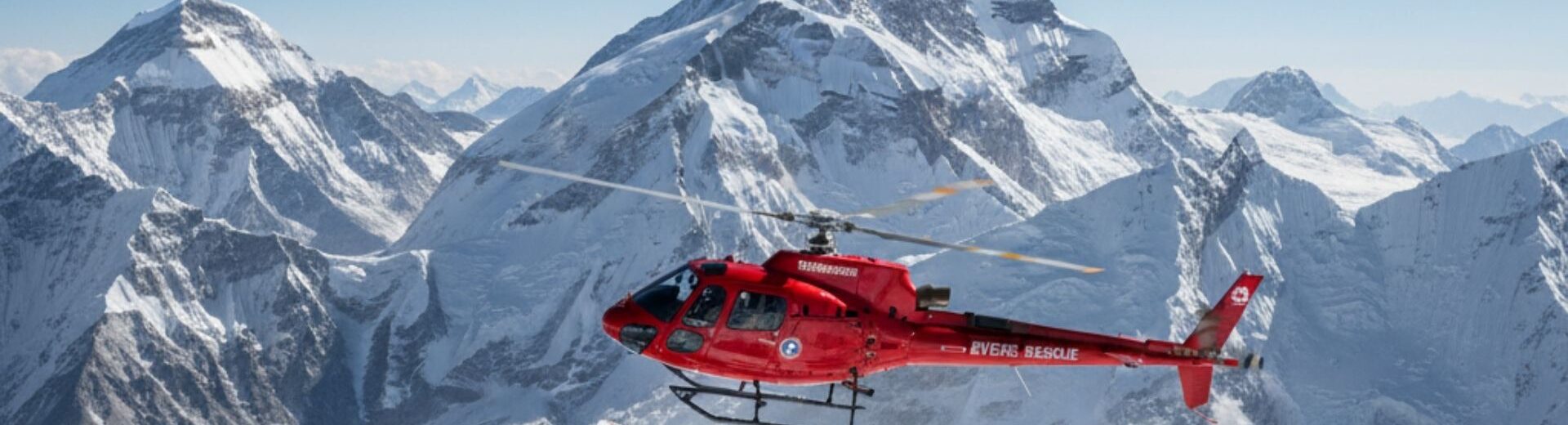
As for the absolute record, that belongs to French pilot Didier Delsalle. On May 14, 2005, he achieved what many thought was impossible. He landed an unmodified Airbus AS350 B3 helicopter on the summit of Mount Everest. The pilot stayed on the summit for three minutes and 50 seconds before taking off again. Also, he repeated the feat the next day to prove it wasn’t a fluke. This remains the world record for the highest landing and takeoff.
However, it is important to remember that this was a carefully planned test flight in perfect weather. It showed the helicopter’s capabilities and the pilot’s skill, not the start of regular flights to Everest’s summit.
Can You Use a Helicopter During the Everest Base Camp Trek?
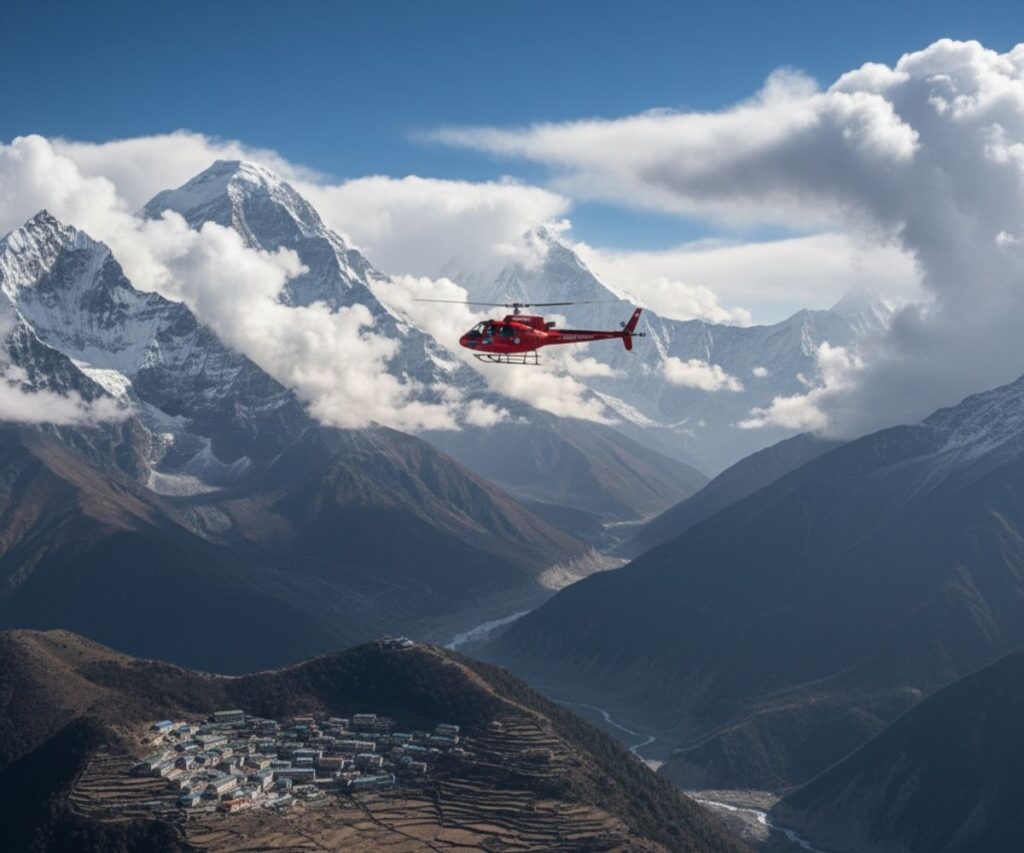
For many trekkers, the Everest Base Camp trek is a journey that involves weeks of walking through the beautiful Khumbu Valley.
However, not everyone has the time or physical ability to complete the full trek. For these individuals, a helicopter offers a fantastic alternative to experience the magic of Everest. Helicopter services are readily available and can be integrated into your trekking plans in several ways.
Using a helicopter can save you time. It also reduces the physical strain of the trek. A helicopter provides a unique aerial view of the stunning Himalayan landscape. You can fly back from Base Camp after your trek or take a scenic tour of the region, with plenty of options available.
Heli Return from Everest Base Camp
A popular option is to trek up to Everest Base Camp with Heli Return and flying back to Lukla or Kathmandu by helicopter. This lets you enjoy the full trekking experience, acclimatize properly, and experience Sherpa culture on the way up.
The helicopter ride back is ideal for those short on time or wanting to avoid the tiring downhill trek. From the air, you get amazing views of valleys, glaciers, and peaks, seeing the route you walked from a new perspective. Many trekking companies include this option in their Everest Base Camp packages.
Everest Base Camp Helicopter Tour Options
If you don’t have time for a multi-week trek, an EBC helicopter tour is an incredible way to see the world’s highest mountain in a single day. These tours typically start from Kathmandu and fly you deep into the heart of the Khumbu region. The journey itself is a scenic adventure, with stunning views of the Himalayan range.
Most tours include a landing at Kala Patthar for the best ground-level views of the peak of Everest. You will have time to take photos and soak in the awe-inspiring scenery. Many tours also stop at Hotel Everest View for breakfast with stunning views of Mount Everest and nearby peaks. It is a comfortable and memorable way to enjoy the beauty of the Himalayas. This is especially true for families, older travellers, or anyone who prefers not to trek.
Do Helicopters Perform Rescue Missions on Everest?
Yes, helicopters are essential for rescue missions on Mount Everest and throughout the Himalayas. The treacherous terrain and extreme altitude make ground-based rescues incredibly difficult and time-consuming.
If a climber is injured or sick from altitude, a fast evacuation can save their life. Helicopters can reach stranded climbers in a fraction of the time it would take a rescue team on foot.
These rescue missions are extremely dangerous and are only undertaken by highly skilled and experienced pilots. They fly specially adapted helicopters that are designed for high-altitude performance. Even so, they face the same challenges of thin air, unpredictable weather, and difficult terrain.
Rescues are typically performed at lower altitudes, up to Camp 2 at around 6,400 meters (21,000 feet). Above this altitude, the risks become too great for most rescue operations. Pilots must carefully assess the weather conditions and the location of the stranded climber before attempting a rescue. The courage and skill of these rescue pilots save countless lives every year on the slopes of Mount Everest.
Helicopter Use Around the Everest Region
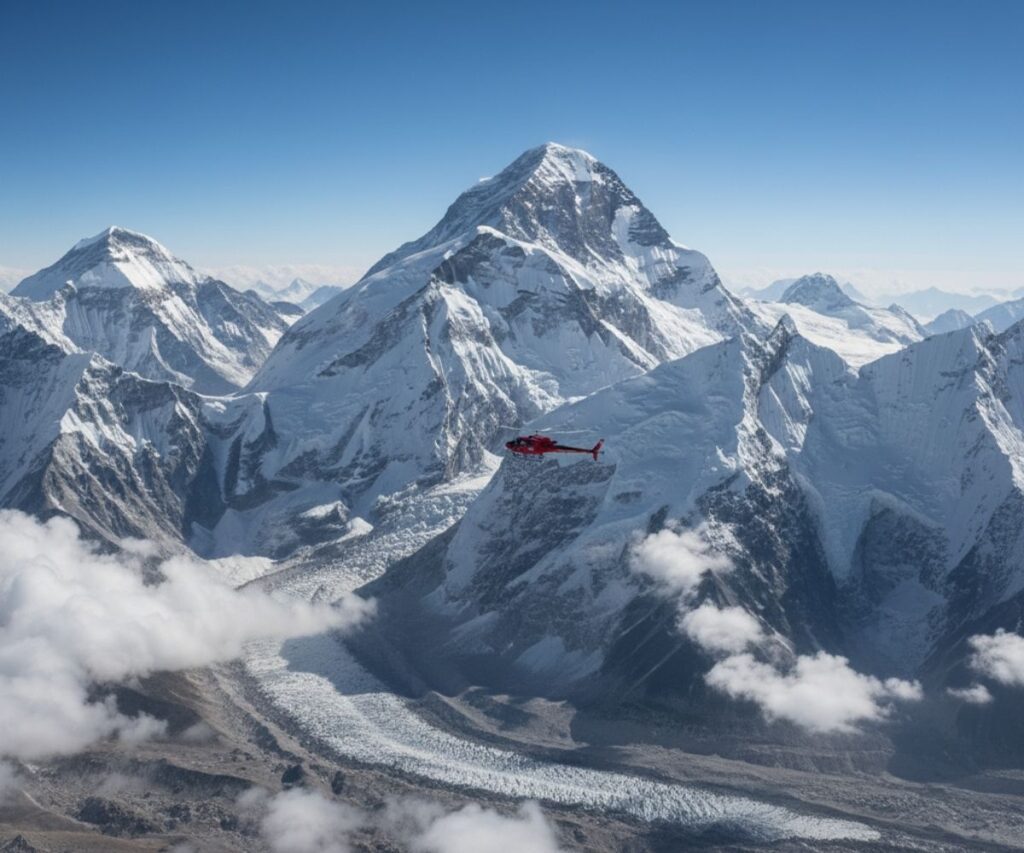
Apart from tourism and rescue missions, helicopters are vital for daily life near Mount Everest. The Khumbu Valley has no roads, so supplies like food, building materials, and trekking gear must be carried by porters, yaks, or delivered by helicopter. These flights are a lifeline that connects the isolated mountain villages to the rest of the world.
Helicopters transport goods to Namche Bazaar, the main trading centre, and to other villages along the trekking routes. They also help climbing teams by carrying supplies and equipment to Base Camp. That is why the sound of a helicopter in Everest’s region feels reassuring. It signals help, connection, and safety in one of the most remote places on Earth.
Can Helicopters Ever Conquer Mount Everest?
The question of whether helicopters will ever conquer Mount Everest is fascinating. Didier Delsalle’s record flight showed that a helicopter can land on the summit, but this is not something that can happen often. Flying at such a high altitude is extremely dangerous, and there is little practical reason to do it. For now, the top of Everest will likely stay as the goal of mountaineers, not machines.
In the future, new technology might make helicopters safer and stronger in thin air and bad weather. Lighter designs, better engines, and improved navigation could help. Still, flying helicopters regularly to the summit would raise environmental and ethical concerns.
For now, Mount Everest is best seen from safer places like Base Camp, Kala Patthar, or an Everest summit expedition. The summit remains a powerful symbol of nature’s strength and human courage.





 Chat on WhatsApp