Budget Everest Base Camp Trek 12 Days: Complete Cost Guide and Itinerary 2026
The 12-day Everest Base Camp trek on a budget provides an affordable route to the world’s most iconic mountain. This guide explains costs, itinerary details, accommodation options, and preparation requirements for budget trekkers planning their Himalayan adventure.
Most budget EBC treks range from 10 to 18 days depending on your schedule and acclimatization needs. Shorter 10-12 day itineraries focus on essential stops while longer 14-18 day routes include additional acclimatization days and side trips. Your journey passes through traditional Sherpa villages, crosses dramatic suspension bridges, and reaches stunning viewpoints throughout the Khumbu region.
Key stops include Namche Bazaar (the Sherpa capital at 3,440m), Tengboche Monastery (3,860m), Dingboche (4,410m), and Kala Patthar (5,545m). Each location offers spectacular mountain views including Everest (8,849m), Lhotse (8,516m), Ama Dablam (6,812m), and Makalu (8,485m). Learning the complete budget breakdown, daily itinerary, and cost-saving strategies helps you plan an affordable yet safe trek to Everest Base Camp.
How the 12-Day Trek Becomes Budget-Friendly
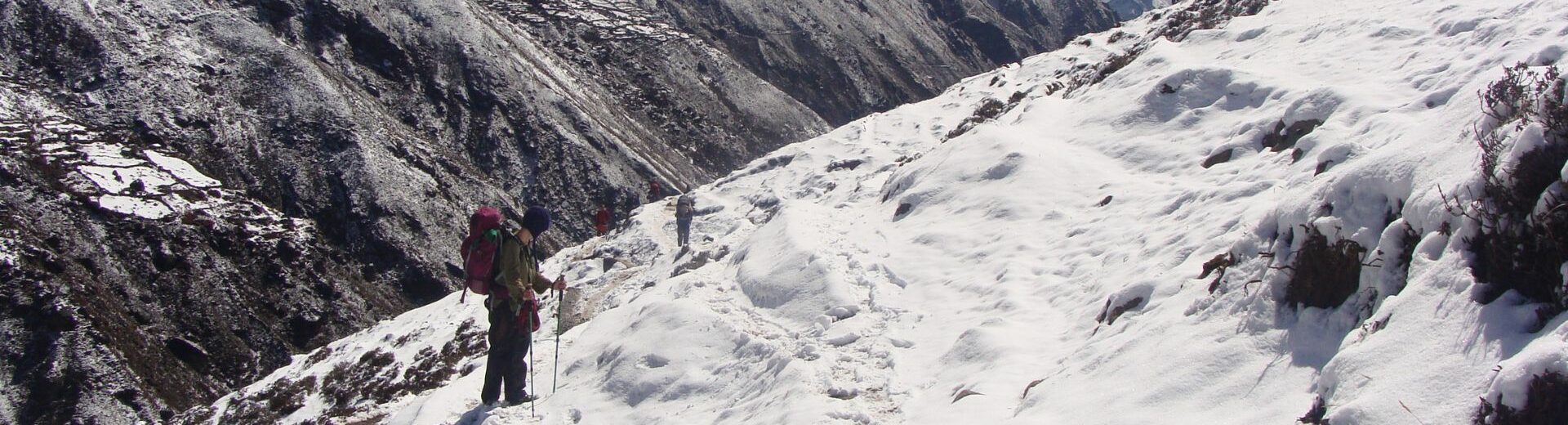
The standard Everest Base Camp trek can cost $2,000-$3,000 per person, but budget versions reduce costs to $900-$1,500 through smart choices. Budget trekking means selecting basic services over luxury amenities while keeping proper acclimatization and guide support.
Most trekkers cut costs through three main approaches: teahouse accommodation, self-arranged meals, and porter-guides instead of expert mountaineers.
Three Main Ways to Make Your EBC Trek Budget-Friendly
1. Teahouse Accommodation (Standard Budget Option)
Teahouses run by local Sherpa families cost $10-30 per night compared to $50-150 at luxury lodges. These basic lodges provide twin beds, blankets, and shared bathrooms at higher elevations. Most budget trekkers choose this option as it balances cost savings with reasonable comfort.
2. Self-Arranged Meals (Lowest Cost Option)
The cheapest approach involves paying only for accommodation without meal packages. You order and pay for each meal separately at teahouses, choosing affordable options like dal bhat (rice and lentils) with unlimited refills for $5-8 per meal. Sticking to local Nepali cuisine cuts daily meal costs by 40-50%.
3. Porter-Guide Instead of Expert Trek Leader
Hiring a porter-guide combines both roles at $25-30 daily compared to $50-100+ for certified expert guides plus separate porters. Porter-guides are experienced local Sherpas who know routes well and carry your main backpack (up to 15kg) while guiding.
Additional Budget Strategy: Group Joining Treks
Joining scheduled group departures significantly reduces per-person costs when 4-6 trekkers share expenses. Solo trekkers pay 30-40% more than group participants. Budget-conscious trekkers combining these strategies reduce total trek costs to $900-$1,100 per person for 12 days.
So, you can get a Group joining EBC trek package with Mountain Routes for a better discount.
EBC Trek Distance, Duration, and Altitude Profile
The Everest Base Camp trek 12-days itinerary covers approximately 130 kilometers round trip with elevation gains totaling 3,500+ meters.
Knowing daily distances and altitude of Everest trek changes helps you prepare physically and plan rest days properly. The trek progresses from Lukla at 2,860m through moderate zones to Everest Base Camp at 5,364m.
| Stage | Distance | Duration | Altitude |
| Kathmandu to Lukla | 38 km | 1 day | 2,860 m |
| Lukla to Phakding | 8 km | 3-4 hours | 2,610 m |
| Phakding to Namche Bazaar | 10.5 km | 5-6 hours | 3,440 m |
| Namche Bazaar to Tengboche | 10 km | 5-6 hours | 3,860 m |
| Tengboche to Dingboche | 11.5 km | 5-6 hours | 4,410 m |
| Dingboche to Lobuche | 6 km | 3-4 hours | 4,940 m |
| Lobuche to Gorak Shep | 4.5 km | 3 hours | 5,180 m |
| Gorak Shep to Everest Base Camp | 3.5 km | 3-4 hours | 5,364 m |
| Gorak Shep to Lukla | 38 km | 2 days | 2,860 m |
Elevation Gain: Approximately 2,500 meters from Lukla to Everest Base Camp
Acclimatization Strategy: Rest days at Namche Bazaar and Dingboche help your body adjust to decreasing oxygen levels, significantly reducing altitude sickness risk
Best Time for Budget EBC Trekking
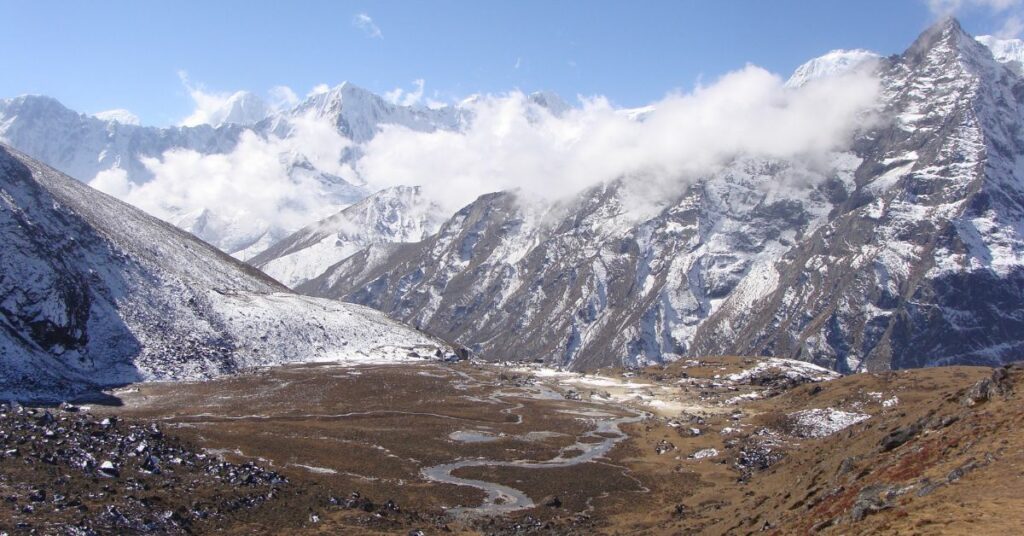
Spring (March-May) and autumn (September-November) provide ideal weather conditions for Everest Base Camp trekking. These seasons offer clear skies, moderate temperatures, and stable trails. Weather in the Everest region changes rapidly regardless of season, so pack layers and waterproof gear for all conditions.
Spring Season (March to May)
Daytime temperatures range from 10°C to 15°C while nights drop to -5°C to 0°C. Rhododendrons bloom across hillsides in vibrant reds and pinks during April. Spring attracts moderate crowds with teahouses filling up but remaining manageable.
Autumn Season (September to November)
Days stay dry with temperatures of 12°C to 18°C while nights cool to -10°C at higher camps. Post-monsoon freshness creates crystal clear mountain views perfect for photography. Autumn brings peak season crowds requiring advance teahouse booking, especially in October-November.
Complete 12-Day Budget EBC Itinerary
The 12-day itinerary balances trekking days with proper acclimatization stops at Namche Bazaar and Dingboche. This schedule allows your body to adjust gradually to high altitude. Each day includes specific distances, elevation changes, and key activities to expect along the route.
Day 1: Kathmandu to Lukla Flight (2,860m)
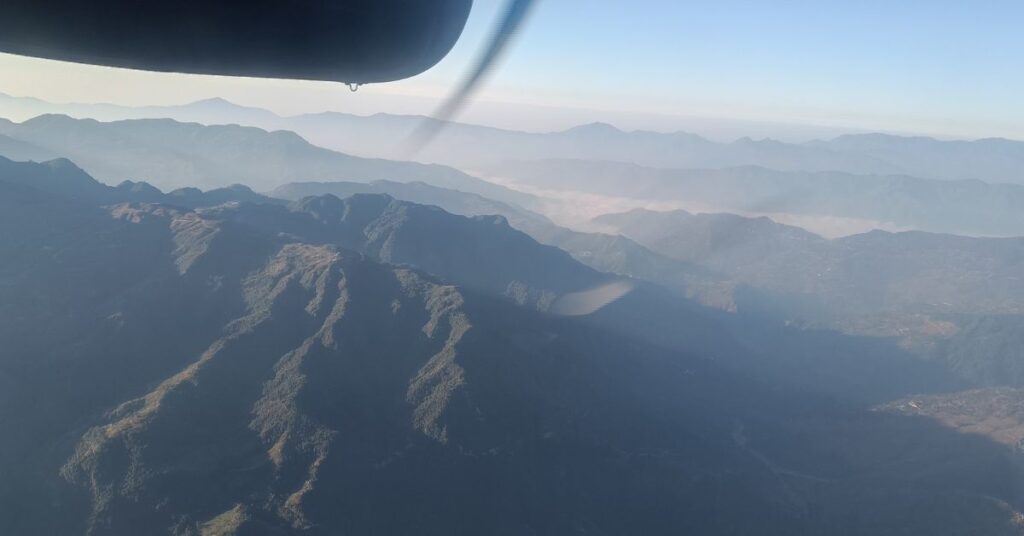
The 30-minute mountain flight to Lukla provides dramatic views of Himalayan foothills. Lukla’s runway measures only 527 meters and sits on a steep mountain slope. Upon arrival, guides conduct safety briefings while the rest of the day allows gradual acclimatization to 2,860 meters.
Day 2: Lukla to Phakding (2,610m)
Trekking Time: 3-4 hours | Distance: 8 km | Elevation Change: Descend 250m
The first trekking day follows a gentle downhill path through pine forests alongside the Dudh Koshi River. Prayer wheels line village entrances where locals greet trekkers warmly. Phakding village offers basic teahouses with vegetable gardens and evening arrival by early afternoon provides free time for rest.
Day 3: Phakding to Namche Bazaar (3,440m)
Trekking Time: 6-7 hours | Distance: 10.5 km | Elevation Gain: 830m
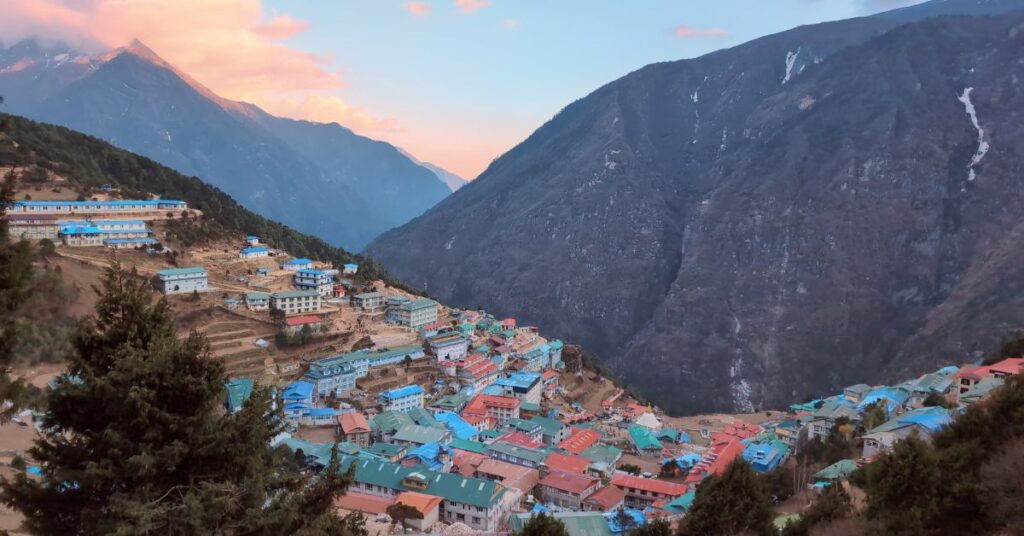
This day brings the first significant climb and multiple suspension bridge crossings including the high Hillary Bridge. A clearing offers the first Everest glimpse between neighboring mountains. The trail climbs steeply for the final hour before Namche appears around a bend with colorful buildings cascading down the hillside.
Day 4: Namche Bazaar Acclimatization Day
Activity Level: Light hiking | Optional: Everest View Hotel (3,880m)
Rest days help your body produce more red blood cells and improve oxygen absorption through active acclimatization. The Everest View Hotel trek climbs to 3,880 meters offering panoramic views of Everest, Lhotse, and Ama Dablam. The “climb high, sleep low” principle reduces altitude sickness risk effectively.
Day 5: Namche Bazaar to Tengboche (3,860m)
Trekking Time: 5-6 hours | Distance: 10 km | Elevation Gain: 420m
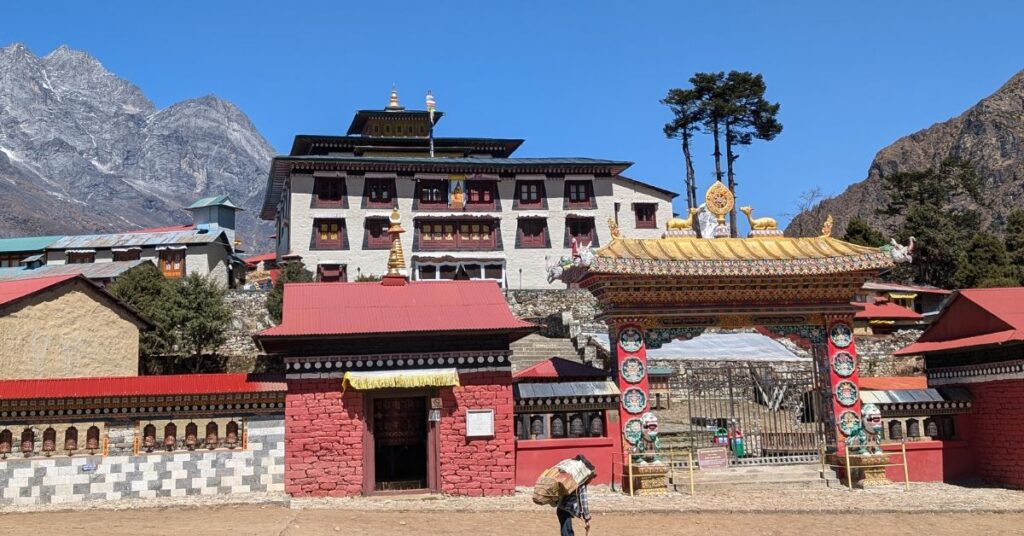
The trail contours around mountainsides through rhododendron forests with views of Everest, Nuptse, and Lhotse. Tengboche Monastery, built in 1916, hosts daily prayer ceremonies at 3 PM that visitors can observe. Tengboche offers arguably the best mountain views with Ama Dablam rising directly ahead.
Day 6: Tengboche to Dingboche (4,410m)
Trekking Time: 5-6 hours | Distance: 11.5 km | Elevation Gain: 550m
Forested areas disappear as the landscape becomes more barren with only alpine shrubs above 4,000 meters. Dingboche village spreads across a wide valley with stone walls protecting potato and barley fields. Increased breathlessness and potential headaches indicate your body working to adjust to thinner air.
Day 7: Dingboche Acclimatization Day
Activity Level: Moderate hiking | Optional: Nangkartshang Peak (5,083m)
The second rest day allows further altitude adjustment through active acclimatization hikes. Nangkartshang Peak ridge climb takes 3-4 hours round trip with incredible summit views of Makalu, Lhotse, and Island Peak. Your body continues producing red blood cells while breathing becomes easier and energy levels typically improve.
Day 8: Dingboche to Lobuche (4,940m)
Trekking Time: 5-6 hours | Distance: 6 km | Elevation Gain: 530m
Terrain becomes increasingly rocky as you walk on moraine with the Khumbu Glacier appearing on your left. Thukla Pass features memorials honoring climbers who died on Everest with prayer flags fluttering above stone cairns. Lobuche’s basic teahouses cluster together serving as a base for Base Camp attempts with cold nights above 4,900 meters.
Day 9: Lobuche to Gorak Shep to Everest Base Camp (5,364m)
Trekking Time: 8-9 hours total | Distance: 8 km | Elevation Gain: 424m
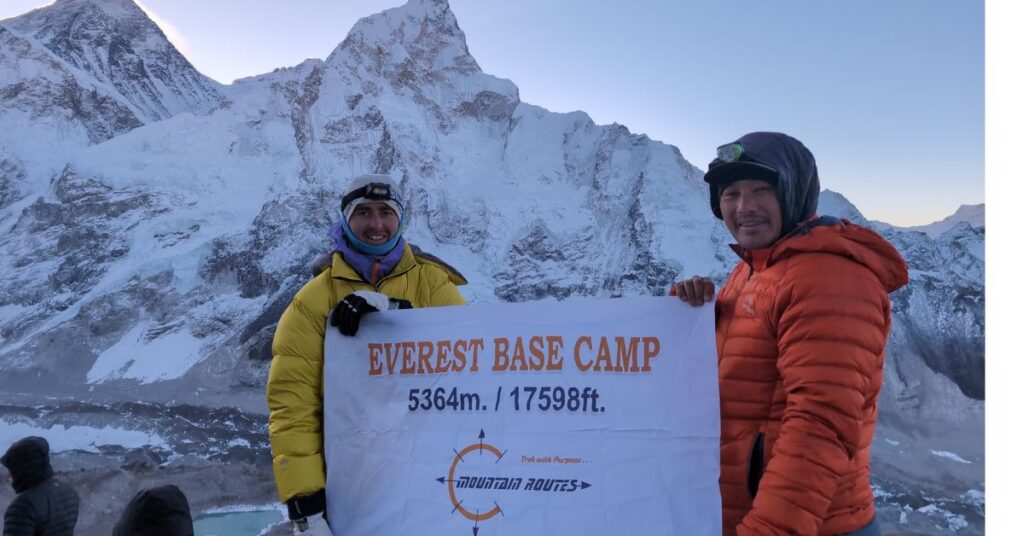
This pinnacle day involves walking to Gorak Shep first, having lunch, then continuing across the Khumbu Glacier to Base Camp. Prayer flags mark the Base Camp location at 5,364 meters where climbing tents dot the glacier during season. Photos celebrate your accomplishment standing at this legendary spot before returning to Gorak Shep before dark.
Day 10: Gorak Shep to Kala Patthar to Pheriche (4,371m)
Trekking Time: 7-8 hours | Distance: 15 km | Elevation: Climb to 5,545m, descend to 4,371m
Pre-dawn start for Kala Patthar with headlamps lighting the trail for 2-3 hours. Sunrise illuminates Everest’s peak in golden light from 5,545 meters where this viewpoint surpasses even Base Camp for photographs. The long descent to Pheriche provides immediate relief with improved breathing, returning appetite, and better sleep quality at lower elevation.
Day 11: Pheriche to Namche Bazaar (3,440m)
Trekking Time: 6-7 hours | Distance: 16 km | Elevation Loss: 931m
The return journey follows familiar trails through Pangboche and Tengboche with details missed during ascent becoming visible. Downhill walking feels easy after days of altitude challenges. Namche’s bustling town feels luxurious with bakeries, restaurants, and hot showers available again.
Day 12: Namche to Lukla, Fly to Kathmandu
Trekking Time: 6-7 hours | Distance: 19 km | Flight: 30 minutes
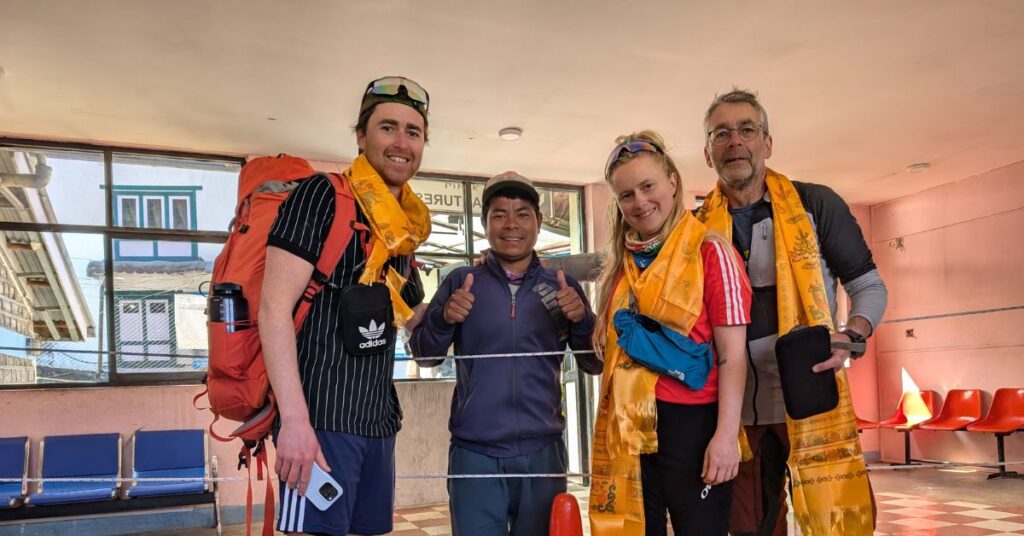
The final trekking day retraces the initial route descending through Phakding to Lukla by afternoon. Flights depend on weather conditions with morning departures having better success rates. You’ve walked over 130 kilometers with elevation gains totaling 3,500+ meters before celebrating trek completion with fellow trekkers in Kathmandu.
Budget EBC Trek Cost Breakdown
Knowing complete costs helps you plan your budget accurately for the 12-day trek. Total costs range from $900-$1,500 per person depending on group size and service choices. Breaking down expenses by category shows where money goes and how to save effectively.
Price Structure by Group Size
Solo Trekker: $1,000-$1,200 per person
Small Group (2-4 people): $1,200-$1,400 per person
Larger Group (5+ people): $900-$1,200 per person
Group size significantly affects per-person costs as guide and porter fees get shared among more trekkers.
Daily Cost Components
Accommodation: $10-30 per night (increases with altitude)
Meals: $10-20 daily (dal bhat provides best value with unlimited refills)
Guide Services: $20-25 daily (experienced English-speaking guides)
Porter Fees: $15 daily per porter (typically one porter serves two trekkers)
Equipment Rental: $1-2 daily for sleeping bags, similar for down jackets
Lukla Flights: $150-250 each way (prices peak during tourist seasons)
Personal Expenses: $3-5 per hour WiFi, $2-3 device charging, $3-5 hot showers
Total Trek Investment
Standard 12-14 day budget treks cost $1,000-$1,500 per person including permits, accommodation, meals, guides, porters, and flights. This represents the baseline for safe, organized budget trekking without luxury upgrades.
Required Trekking Permits
Permits are mandatory for Everest Base Camp trekking with total permit costs around $70 per person. Obtaining permits before starting your trek ensures legal compliance and supports local conservation efforts. Most trekking companies handle permit processing for organized groups.
Sagarmatha National Park Permit
Cost: $30 for foreign nationals
This permit grants access to Sagarmatha National Park protecting endangered species and mountain ecosystems. Obtain at Kathmandu tourism office or Monjo checkpoint with passport copy and two photos.
Khumbu Pasang Lhamu Rural Municipality Permit
Cost: $20 per person
This local permit supports community development projects including schools, health posts, and infrastructure in the Khumbu region. Obtain at Lukla checkpoint or Monjo with passport copy.
Essential Budget Trekking Gear
Proper equipment ensures comfort and safety without excessive spending on unnecessary items. You don’t need expensive brands to trek successfully. Kathmandu offers rental options for major gear items like sleeping bags and down jackets at $1-2 daily.
Backpack (40-50 liters)
Medium-sized packs carry essentials comfortably with internal frames distributing weight evenly. Hip belts transfer load from shoulders while adjustable straps allow custom fitting. Quality backpacks cost $60-100 or rent in Kathmandu.
Trekking Boots
Ankle support prevents injuries on rocky trails while waterproof boots keep feet dry. Break in boots before your trek to avoid blisters. Vibram soles provide excellent grip with leather or synthetic materials both performing well.
Sleeping Bag (-10°C rated minimum)
Higher altitudes require warmer temperature ratings since teahouse blanket quality varies significantly. Down bags pack smaller and weigh less while synthetic bags perform better when wet. Kathmandu shops rent quality sleeping bags for $1-2 daily versus $100-300 purchasing costs.
Clothing Layers
Base Layer: Moisture-wicking fabric (merino wool or synthetic) with 2-3 sets for rotation
Mid Layer: Fleece or insulated jackets with zip fronts for temperature control
Outer Layer: Waterproof, windproof jackets (Gore-Tex or similar) with hoods
Lower Body: Trekking pants with stretch, waterproof pants, thermal underwear
Additional Essential Items
Water System: Nalgene bottles (1-2 liters total) with purification tablets costing pennies per liter
Sun Protection: UV400 sunglasses, SPF 50+ sun cream, SPF lip balm (high altitude increases UV intensity)
Hand/Head Protection: Liner gloves under thicker mittens, warm hats covering ears, sun hats
Trekking Poles: Reduce knee stress by 25% while improving stability on rough terrain
First Aid: Pain relievers, Diamox (consult doctor), anti-diarrhea medicine, bandages, moleskin
Lighting: Headlamps with 2-3 spare battery sets (cold temperatures drain batteries faster)
Teahouse Accommodation and Meals for Affordable Everest Base Camp Trek
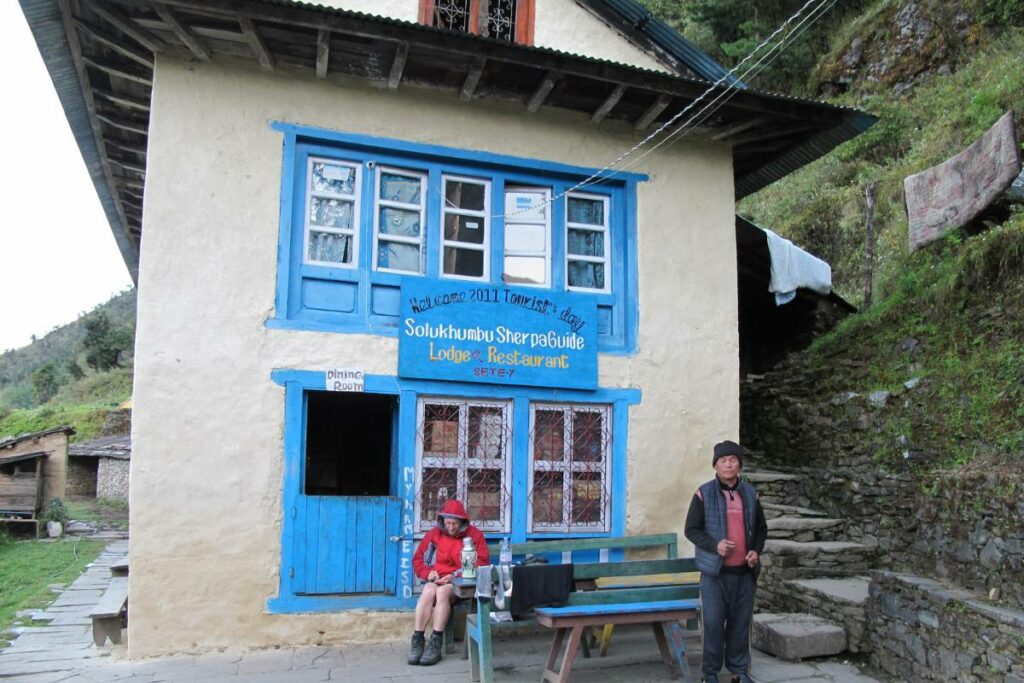
Teahouse standards vary by elevation with lower lodges offering more comfort than high camps. Twin beds fill most rooms with thin mattresses requiring sleeping bags for warmth. Lower elevations offer attached bathrooms while higher camps have shared facilities with Western-style toilets becoming rare above 4,000 meters.
Meal Options
Breakfast: Porridge, Tibetan bread with jam, eggs (fried/boiled/scrambled), pancakes, hash browns
Lunch: Dal bhat (unlimited refills, best value), fried rice, noodles, vegetable momos, Sherpa stew, thukpa
Dinner: Dal bhat (most nutritious), pizza (surprisingly good), pasta with sauce, fried rice, potato dishes
Beverages: Black or milk tea (cheapest), lemon or ginger tea, hot chocolate, coffee, avoid alcohol at altitude
Dietary Strategy
Vegetarian options dominate menus naturally with meat becoming less available and less safe at high altitude. Stick to cooked foods while avoiding raw vegetables above Namche. Dal bhat offers unlimited refills at one price providing excellent value and proper nutrition for altitude trekking.
Safety Guidelines for Everest Trekking
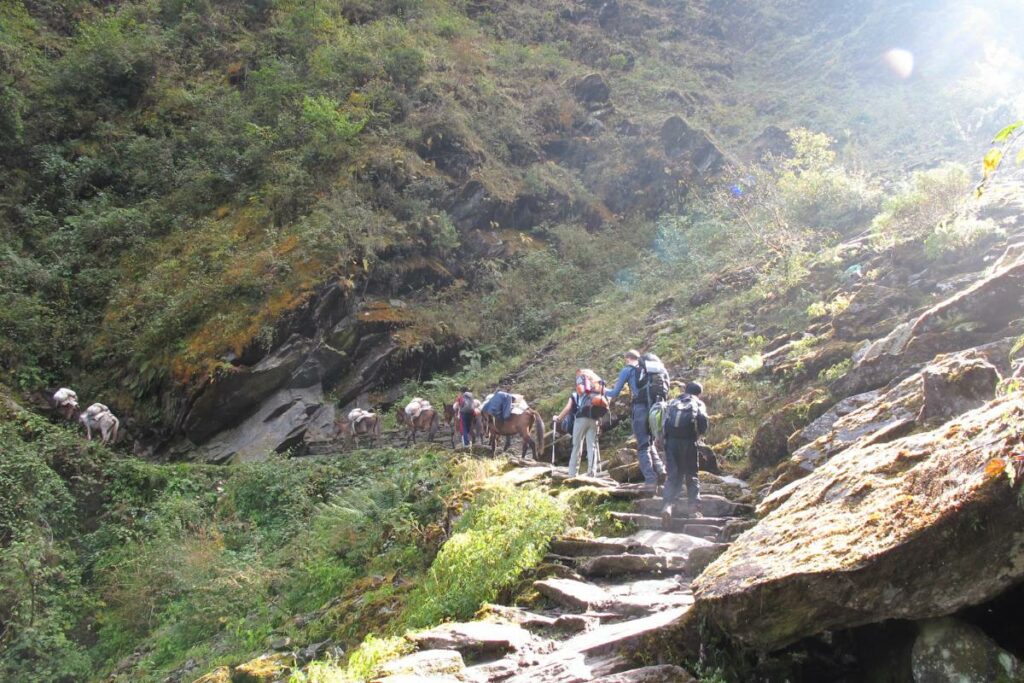
Proper safety awareness prevents most trekking problems even on budget trips. Altitude acclimatization, hydration, and pacing matter more than expensive gear. Never compromise safety to save money on essentials like guides, proper acclimatization days, or emergency support.
Altitude Acclimatization
Climb no more than 500 meters daily above 3,000 meters with rest days every 1,000 meters gained. “Climb high, sleep low” works best for adaptation. Severe headaches that don’t improve, confusion, or coordination loss require immediate descent.
Hydration and Pacing
Drink 3-4 liters daily above 3,000 meters since dehydration mimics altitude sickness symptoms. Check urine color hourly with dark yellow meaning drink more. Maintain sustainable pace all day with brief rests every hour and deliberate breathing matched to steps.
Trail and Weather Safety
Stay on well-worn trails following cairns and prayer flags since shortcuts prove dangerous. Never trek alone as groups provide help during emergencies. Mountain weather shifts rapidly so always carry rain gear and add or remove layers frequently.
Physical Preparation for EBC Trekking
Training makes your trek enjoyable rather than agonizing regardless of budget level. Start preparing 2-3 months before departure with gradually increasing intensity. Physical fitness matters more than expensive gear for successful budget trekking.
Training Timeline
12 Weeks Before: Begin cardiovascular training building base fitness with 30-minute sessions
8 Weeks Before: Increase training intensity, add hill training, practice with weighted backpack
4 Weeks Before: Peak training with long weekend hikes, reduce intensity final two weeks for recovery
Exercise Program
Cardiovascular: Running 3 times weekly (start 3km, build to 8km), cycling 60-90 minutes, swimming 45 minutes, weekend hikes building to 6-8 hours
Strength Training: Squats (3 sets of 15), lunges (3 sets of 12 per leg), planks (3 sets of 60 seconds), core exercises
Backpack Training: Start with 5kg pack, add 1kg weekly, build to 10kg minimum worn during all training hikes
Planning Your Budget EBC Trek
This guide provides complete information for planning an affordable Everest Base Camp trek covering costs, itinerary, and preparation. Budget trekking to Everest Base Camp remains accessible to determined trekkers willing to forego luxury amenities. The 12-day itinerary balances affordability with proper acclimatization through smart cost-saving strategies.
Start planning 4-6 months before your intended trek dates by researching multiple companies and comparing package inclusions carefully. Book Kathmandu-Lukla flights well in advance for better prices while beginning physical training immediately. Purchase or rent essential gear systematically and obtain required permits plus comprehensive insurance before departure.
The Everest Base Camp trek on a budget offers an achievable Himalayan adventure through proper preparation, realistic expectations, and smart planning. This iconic journey becomes accessible without breaking your budget when you learn costs, choose appropriate services, and prepare adequately for high-altitude trekking challenges.





 Chat on WhatsApp