
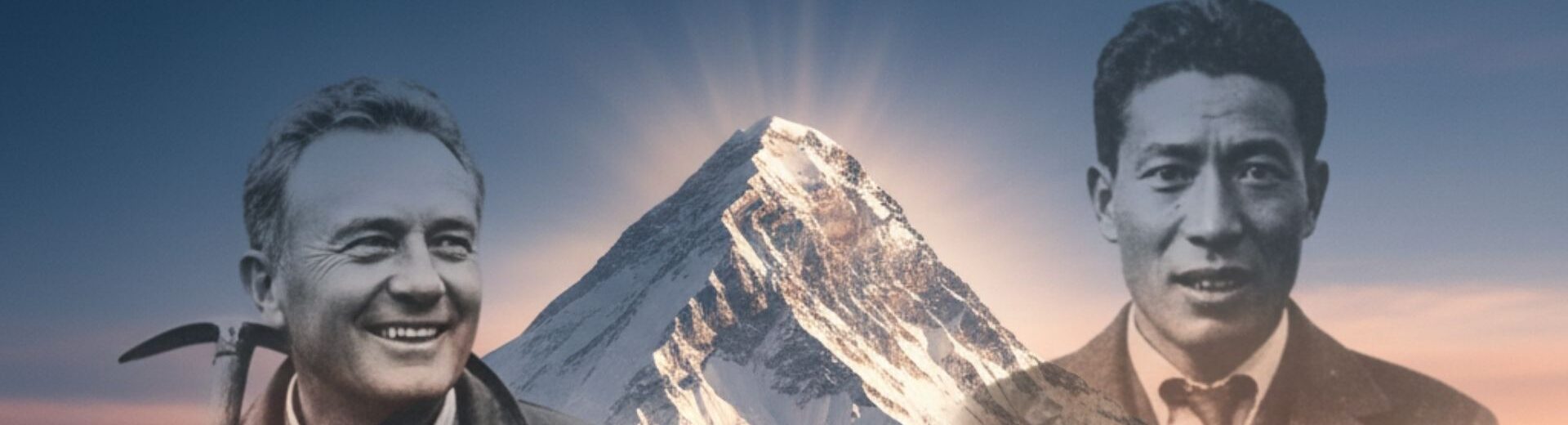
The Everest Conquest Story of Tenzing Norgay and Edmund Hillary
On May 29, 1953, two men from different corners of the world stood together on the top of Mount Everest, the highest point on Earth. Their climb marked the first successful ascent of Everest and became a story of courage, trust, and the strength of the human spirit.
Tenzing Norgay Sherpa from Nepal and Sir Edmund Hillary from New Zealand battled freezing winds and thin air to achieve what once felt impossible. Their success was not just about reaching the summit. It was a moment that brought nations together and showed the true meaning of teamwork.
Even today, their remarkable journey inspires trekkers and travelers to follow their trail through the rugged Himalayas.
A Historic Climb That Changed the World
The first climb of Mount Everest in 1953 remains one of the greatest moments in history. For years, explorers dreamed of reaching the world’s highest peak, but harsh weather, thin air, and steep terrain made every attempt end in failure.
Then came Edmund Hillary and Tenzing Norgay, whose determination changed Everest’s story forever. Their climb was not only about reaching the top. It showed the strength of human endurance and the power of unity. When their flags waved on the summit, the whole world celebrated.
Everest was no longer an impossible dream but a symbol of courage that inspires people to chase their own goals.
Early Lives of Two Legends
Before becoming heroes of Everest, both men lived simple but inspiring lives shaped by hard work and a love for the mountains.
One was born in the heart of the Himalayas, while the other grew up in the quiet countryside of New Zealand. Their separate paths of struggle and strength would one day meet on top of the world.
Tenzing Norgay — The Sherpa from Khumbu
Tenzing Norgay was born in the Khumbu region of Nepal, surrounded by tall snowy mountains. He grew up loving the mountains and learned how to live and work in them. Like many Sherpas in Nepal, he worked as a porter, carrying heavy bags for climbing teams on steep and icy paths. This hard work made him strong and brave. Even though he did not go to school much, he learned many skills from his experience.
People began to respect him as one of the best climbers in the Himalayas. His dream was to climb Mount Everest, and each expedition brought him closer to that goal.
Sir Edmund Hillary — The Beekeeper Who Reached the Top of the World
Edmund Hillary’s childhood and training were shaped by life in rural New Zealand. He helped his family with beekeeping, a job that required both patience and physical strength. When he wasn’t tending to hives, he explored the Southern Alps, where his love for climbing began.
The demanding conditions of these icy peaks built his stamina and discipline. Hillary trained himself to handle cold, fatigue, and risk, always pushing his limits a little further. His quiet focus and practical mindset made him a dependable climber.
These qualities would later make him the ideal partner for Tenzing Norgay, as the two prepared to take on the greatest challenge in mountaineering history.
The Path to Everest — Before the 1953 Summit
The dream of reaching the top of Mount Everest began long before 1953. Many brave climbers had tried and failed, but each attempt brought new lessons and a deeper understanding of the mountain.
Everest expeditions before 1953 were filled with both hope and heartbreak. In the 1920s and 1930s, several British teams explored possible routes to the summit, often battling fierce winds, avalanches, and limited technology. Though none reached the top, their efforts laid the foundation for future success.
By the early 1950s, the British team wanted to try climbing Mount Everest again. They learned from earlier climbs, used better oxygen tanks, and trained hard for the thin air at high altitudes.
During this time, Edmund Hillary joined the team led by John Hunt. Tenzing Norgay was also chosen because he knew the mountain well and had lots of experience. Together, they worked as a team and turned many years of failed attempts into one of the greatest successes in climbing history.
The 1953 Everest Expedition
The 1953 Everest Expedition marked a turning point in mountaineering history. This journey was not just about reaching the summit but about teamwork, courage, and determination. The British team that year came well-prepared, equipped with years of experience from past attempts and a deep respect for the mountain.
Building the Team
The British Everest team in 1953 was made up of some of the best climbers and Sherpas. Colonel John Hunt was the leader, and he made sure everyone worked together as one team.
The British climbers brought their skills, and the Sherpas from Nepal shared their great knowledge of the mountains.
Some of the climbers were George Lowe, Tom Bourdillon, Charles Evans, and a man from New Zealand named Edmund Hillary. The Sherpa team included Tenzing Norgay, who knew Everest very well.
They trained hard, tested new oxygen tanks, and planned every step carefully so they could reach the top safely.
The Climb to Glory
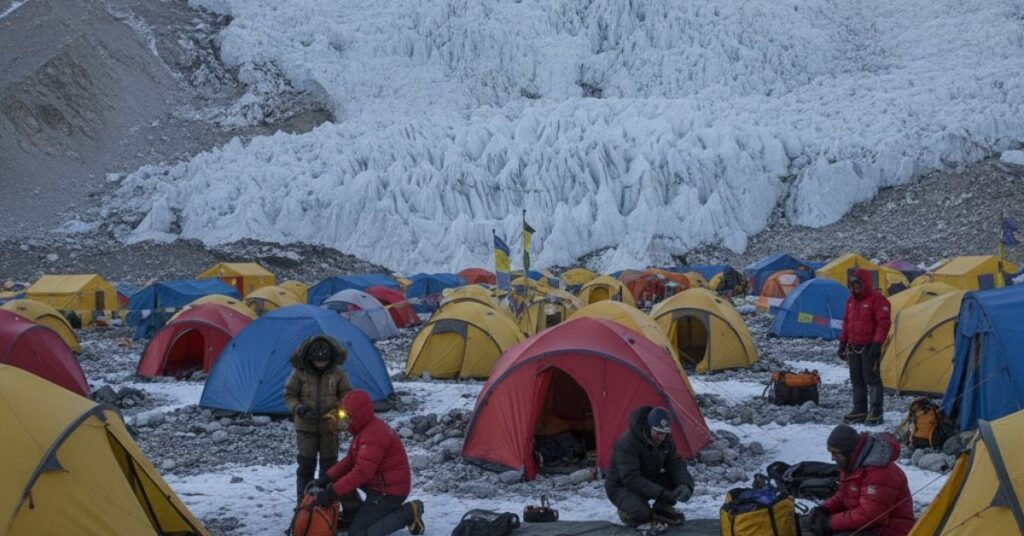
The climb to the top of the world started from Everest Base Camp, the same path that many trekkers still walk today. The team first crossed the Khumbu Icefall, a dangerous place full of moving ice and deep cracks.
After that, they walked through the Western Cwm, a big icy valley, and then climbed the steep Lhotse Face, which was very hard and cold.
After many days of climbing, they reached the South Col, their last camp before the top. The first team, Bourdillon and Evans, tried to reach the summit but had to stop because their oxygen ran out. Then Edmund Hillary and Tenzing Norgay took their turn.
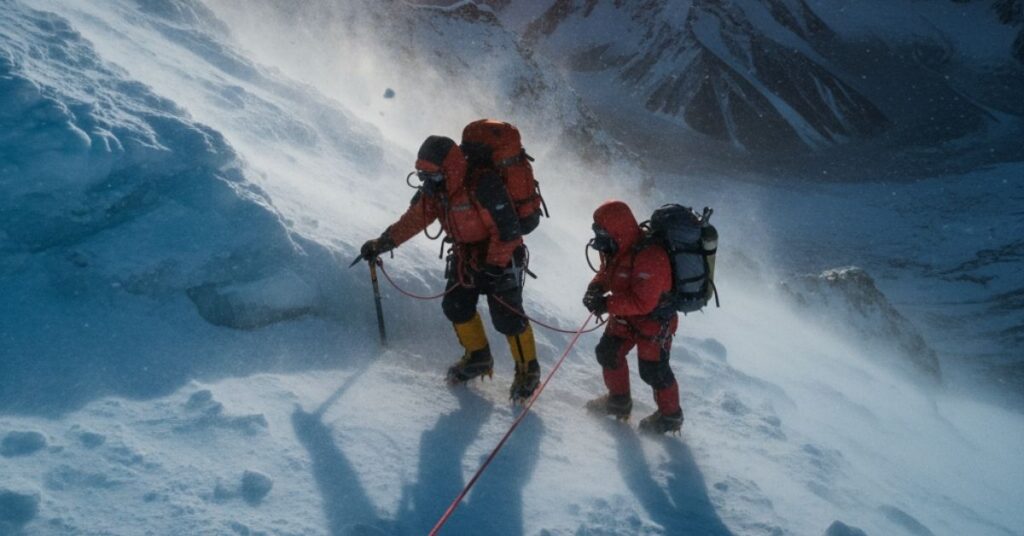
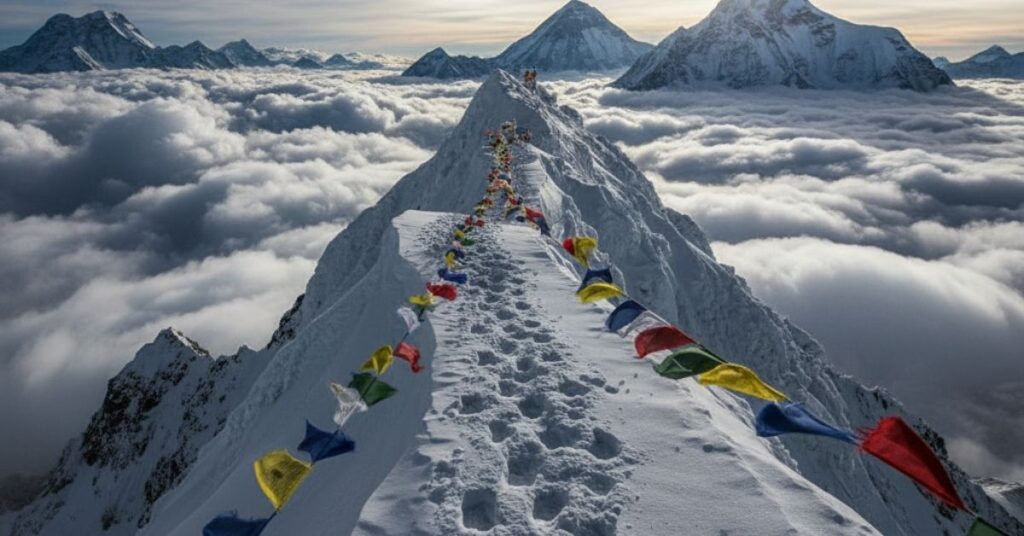
On May 29, 1953, after facing strong winds and freezing cold, they finally stood on the top of Mount Everest. Their teamwork and bravery showed that even the hardest dreams can come true.
The Summit : May 29, 1953
In 1953, Edmund Hillary and Tenzing Norgay became the first people to reach the top of Mount Everest, the tallest mountain in the world. They climbed a very steep part called the Hillary Step, which was hard and scary.
The air was thin, the wind was cold, and every step needed a lot of care. They helped each other and worked together to keep going. When they reached the top, they could see clouds all around them.
They had done something that no one had done before. Their climb showed that if you try hard, prepare well, and help each other, you can do amazing things.
Recognition and Global Celebration
When Hillary and Tenzing climbed Mount Everest, people all over the world cheered. After their climb in 1953, they got many awards. Queen Elizabeth made Edmund Hillary a knight, and Tenzing Norgay got special awards in Nepal and India.
Newspapers and radios told everyone about their brave climb. People admired how they worked together. Their climb showed that if you are brave and work as a team, you can do great things. Even today, their story inspires other climbers and travelers to try big adventures.
After the Summit — Life Beyond Everest
Climbing to the top of Mount Everest changed Tenzing Norgay and Edmund Hillary’s lives forever. Their amazing success gave them new chances to help climbers and their communities.
Tenzing Norgay’s Later Years
After his famous climb, Tenzing Norgay spent his life helping new climbers. He became the director of the Himalayan Mountaineering Institute in India, where he taught people how to climb and shared his mountain experience.
He also helped Sherpa communities and encouraged young climbers to follow their dreams. Tenzing’s work helped keep Sherpa traditions alive and made Nepal’s link to Everest stronger.
By teaching and guiding others, he showed courage, leadership, and kindness that people still remember today.
Sir Edmund Hillary’s Philanthropy
After climbing Everest, Edmund Hillary wanted to help the people of Nepal. He started the Himalayan Trust, which built schools, hospitals, and roads in the mountains. Hillary worked with local people to make life better for children and families. His work showed that helping others is just as important as climbing mountains.
Because of him and Tenzing, many people could live better lives, and their story teaches us to be brave and kind.
The story of Tenzing Norgay and Sir Edmund Hillary lives on through the Everest legacy in Nepal. When they climbed Everest in 1953, the world noticed the Khumbu region. Now, it is famous and loved by many people. The area shows bravery, hard work, and how climbers and Sherpas help each other.
Legacy in Nepal and the Khumbu Region
Many people now trek Everest Base Camp each year to walk the same paths that Tenzing and Hillary took. This helps the people in Khumbu earn money and build better schools, roads, and homes.
The Sherpa people are very strong, kind, and love the mountains. They guide climbers and keep their traditions alive. The colorful flags, temples, and friendly faces show that Everest’s greatest treasure is not just the top of the mountain, but the people who live there.
Lessons from Their Journey
The story of Tenzing Norgay and Edmund Hillary teaches us that working together, trusting each other, and being kind are very important. Their climb shows that courage is stronger when friends help each other.
They proved that practice and patience are more important than luck. Tenzing’s skill and Hillary’s hard work made something impossible possible. Their story also reminds us that reaching a goal is just the start. The real success comes from helping others and trying new adventures.
Follow Their Footsteps — Plan Your Everest Base Camp Journey
Walking the trails once taken by Tenzing Norgay and Sir Edmund Hillary is a journey through history. The EBC trek allows you to experience the same breathtaking landscapes, Sherpa villages, and spiritual landmarks that shaped their legendary climb.
If you’re dreaming of standing where the legends once stood, Mountain Routes is here to make it possible. With expert guides, safe routes, and well-planned itineraries, we ensure that your trek is not only inspiring but also secure and comfortable.
From planning your journey to walking the final stretch to Base Camp, our team takes care of every detail.
Let Mountain Routes lead your path to Everest. Walk in the footsteps of legends, explore the beauty of Khumbu, and create your own story in the land of the world’s tallest mountain.





 Chat on WhatsApp