Different Trekking Routes to Everest Base Camp
The Everest Base Camp trek is more than a single route. Different Everest Base Camp trek route options shows a different side of the Himalayas.
Some trails pass through Sherpa villages filled with prayer flags and ancient monasteries. The classic Everest Base Camp trek from Lukla is the most popular route. It offers comfortable lodges, gradual altitude gain, and a steady pace.
For those who want more challenge and quiet, the Gokyo Lakes and Three High Passes routes are great options. These trails lead to turquoise glacier lakes, wide mountain panoramas, and crossings like Cho La and Renjo La.
If you have less time, the Everest Base Camp trek with heli return adds a scenic flight back to Kathmandu. For budget travelers, the EBC trek by road from Salleri gives more flexibility and lower costs. Each route, whether classic, heli, or by road, reveals a new way to experience Everest.
Every journey combines culture, challenge, and stunning mountain views.
The final stretch of the trek to Everest Base Camp follows the edge of the Khumbu Glacier. The air is thin, the wind sharp, and the landscape alive with ice. Trekkers move carefully on rocky trails, guided by experienced Sherpas who ensure safety. Standing at the foot of Mount Everest is a moment of pride and wonder, a true reward for every step taken.
Calm and reflection fill the return journey as trekkers pass Tengboche’s peaceful monastery and Namche Bazaar. Each step down feels lighter yet filled with emotion.
In Lukla, travelers bid farewell to the mountains before flying back to Kathmandu, carrying memories of courage.
The Best Trekking Route for Everest Base Camp: How to Find One
Finding the best route to Everest Base Camp depends on what kind of adventure you are looking for. Some trails offer calm moments. Others challenge your body and mind as you climb steep passes.
The ideal Everest trekking route balances time, comfort, and exploration.
A longer route gives space to adjust to the altitude, while a shorter one fits those who want to reach Base Camp faster.
From the quiet Gokyo Lakes trail to the thrilling Three High Pass circuit, every path offers its own rhythm and reward.
In the end, the real journey is not only about reaching Everest but feeling the spirit of the Himalayas along the way.
Everest Base Camp Route Options for Every Trekker
| Routes | Duration | Difficulty Level | General Cost |
| Classic EBC trek | 14 days | Moderate to Challenging | $1485 |
| Everest Base Camp Heli Tour | 4-5 hrs | Easy | $1250 |
| EBC Trek with a helicopter return | 10 days | Moderate | $2500 |
| Everest Base Camp Trek By Road | 16 Days | Moderate | $1485 |
| Everest Base Camp and Gokyo Lakes Trek | 17 days | Moderate to Challenging | $1750 |
1. Everest Base Camp Trek 14 Days
The 14-day Everest Base Camp trek is the most popular and balanced itinerary for exploring the Khumbu region.
It follows the classic route from Lukla to Base Camp.
The trail passes through scenic Sherpa villages such as Phakding, Namche Bazaar, and Tengboche. One can see the views of Everest, Lhotse, Nuptse, and Ama Dablam.
The two-week itinerary allows enough time for proper acclimatization in Namche and Dingboche. It makes the EBC travel safer and more enjoyable for trekkers of all experience levels.
Highlights include a visit to Tengboche Monastery and the viewpoint of Kala Patthar for sunrise over Everest. The EBC 14-day trek is ideal for those seeking the full experience. It includes steady walking days, good lodges, and rich Sherpa culture.
Further, the classic Everest trekking balances adventure and comfort. Hence, this makes it one of the ideal routes to experience the heart of the Himalayas truly.
- Trek Difficulty: Suits trekkers with moderate fitness levels. Daily walking ranges from 5 to 7 hours at high altitude.
- Scenic Beauty: Offers breathtaking close-up views of Everest, Ama Dablam, and Lhotse throughout the trail.
- Trail Atmosphere: Busy during spring and autumn when weather is clear, but lively with trekkers from around the world.
- Recommended For: Those who want a well-paced Everest Base Camp trek that blends comfort, culture, and Himalayan adventure.
The Classic 14 Days EBC Itinerary
- Day 1: Arrival at Kathmandu (1,400m / 4,600 ft)
- Day 2: Lukla ( 2,840 m 9,318 feet) to Phakding (2,610 m / 8,563 feet)
- Day 3: Phakding to Namche Bazaar ( 3,440 m / 11,286 ft)
- Day 4: Namche Bazaar Acclimatization walk to Everest view hotel ( 3,880 m / 12,730 ft)
- Day 5: Namche Bazaar to Tengboche (3,860m / 12,664ft)
- Day 6: Tengboche to Dingboche (4,410 m / 14, 469 ft)
- Day 7: Dingboche Acclimatization walk to Nangkartshang Peak (5,083m / 16,667 ft)
- Day 8: Dingboche to Lobuche (4,910m 16,109 ft)
- Day 9: Lobuche to Gorak Shep (5,125 m / 16,814 ft) and EBC 5,364 m/ 17,598 ft)
- Day 10: Gorakh Shep to Kalapathar and Gorakh Shep to Pheriche ( 4,240 m / 13,911 ft)
- Day 11: Pheriche to Namche Bazaar (3,440 m / 11,286 ft)
- Day 12: Namche Bazaar to Lukla (2,840 m / 9,318 ft)
- Day 13: Lukla to Kathmandu (1,400m / 4,600 ft)
- Day 14: Depart Kathmandu
2. Everest Base Camp with Helicopter Tour
The Everest Base Camp Helicopter Tour is the fastest and easiest way to see Mount Everest. Instead of walking for many days, you fly straight into the Himalayas for an amazing view of the world’s tallest peaks.
EBC heli tour is perfect for travelers who want to feel the thrill of Everest without doing a long trek.
The trip starts in Kathmandu with a scenic helicopter flight to Lukla and the Khumbu Valley.
As the helicopter climbs, you’ll see small Sherpa villages, green hills, and white glaciers below.
The best part is landing at Kala Patthar (5,545 m), where you can see Everest, Lhotse, Ama Dablam, and Pumori all around you.
After enjoying the view, the flight stops at the Everest View Hotel for breakfast with stunning mountain scenery.
- Tour Duration: 4 to 5 hours (Kathmandu to Everest and back)
- Trip Type: Luxury scenic helicopter tour — no trekking required
- Difficulty Level: Easy, suitable for all age groups and fitness levels
- Highlights:
- Aerial views of the entire Everest region, glaciers, and mountain peaks
- Landing at Kala Patthar for the closest view of Mount Everest
- Breakfast at the world-famous Everest View Hotel
- Ideal for travelers with limited time or mobility
3. Everest Base Camp Trek with Helicopter Return
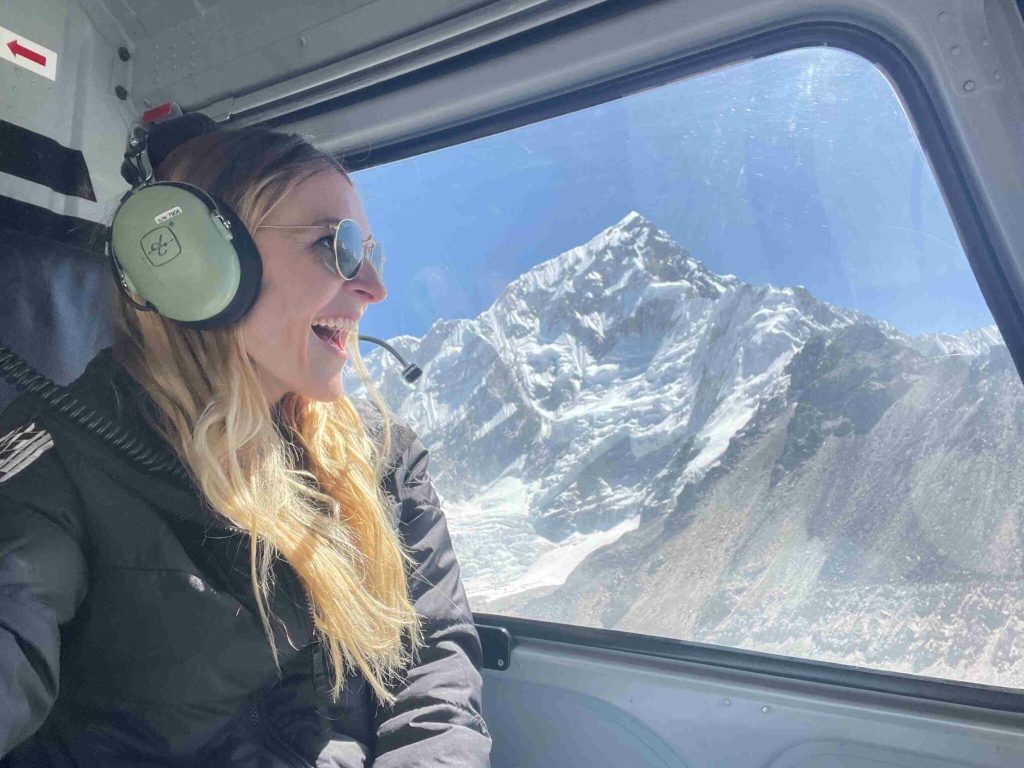
The Everest Base Camp Trek with Helicopter Return is a perfect blend of adventure and comfort. It allows you to trek the legendary trail to Everest Base Camp while skipping the long return walk.
The heli return everest trekking route for trekkers who want the full mountain experience but prefer to save time and energy.
The journey begins with a scenic flight from Kathmandu to Lukla. From there, you follow the classic trail through lush pine forests, suspension bridges, and Sherpa villages. Each day brings you closer to Everest, with time to acclimatize in Namche and Dingboche.
Along the way, you’ll witness some of the most beautiful landscapes in the Himalayas. The landscapes includes Dudh Koshi Valley to the towering peaks of Ama Dablam, Lhotse, and Thamserku. Nights are spent in cozy tea houses where warm meals and friendly faces make the adventure memorable.
The highlight comes when you stand at Everest Base Camp (5,364 m), facing the Khumbu Icefall and feeling the power of the world’s tallest mountain.
The next morning, you climb to Kala Patthar (5,540 m) for sunrise views over Everest.
Instead of retracing the same route back to Lukla, you’ll board a helicopter from Lobuche. The flight soars above glaciers, valleys, and mountain ranges, offering a bird’s-eye view of the region.
Difficulty Level
This trek is moderate with fewer days required for acclimatization. The helicopter return reduces physical exertion, making it manageable for many.
Why Choose the EBC Trek with Helicopter Return?
- Combines trekking adventure with a scenic flight over Everest
- Ideal for trekkers with limited time who still want to reach Base Camp
- Saves 3–4 days of walking while offering a full trekking experience
- Includes acclimatization stops for safety and comfort
- Best for those seeking luxury and efficiency in one
Everest Base Camp Trek with Helicopter Return Itinerary
- Day 1: Arrival in Kathmandu (1,400 m)
- Day 2: Flight to Lukla (2,840 m) and Trek to Phakding (2,610 m)
- Day 3: Trek Phakding → Namche Bazaar (3,440 m)
- Day 4: Acclimatization in Namche Bazaar (3,440 m)
- Day 5: Trek Namche → Tengboche (3,860 m)
- Day 6: Trek Tengboche → Dingboche (4,410 m)
- Day 7: Acclimatization in Dingboche (4,410 m)
- Day 8: Trek Dingboche → Lobuche (4,910 m)
- Day 9: Trek Lobuche → Gorak Shep → Everest Base Camp (5,364 m)
- Day 10: Hike Kala Patthar (5,540 m), Trek to Lobuche, and Fly Back by Helicopter
4. Everest Base Camp with Gokyo Lake Trek
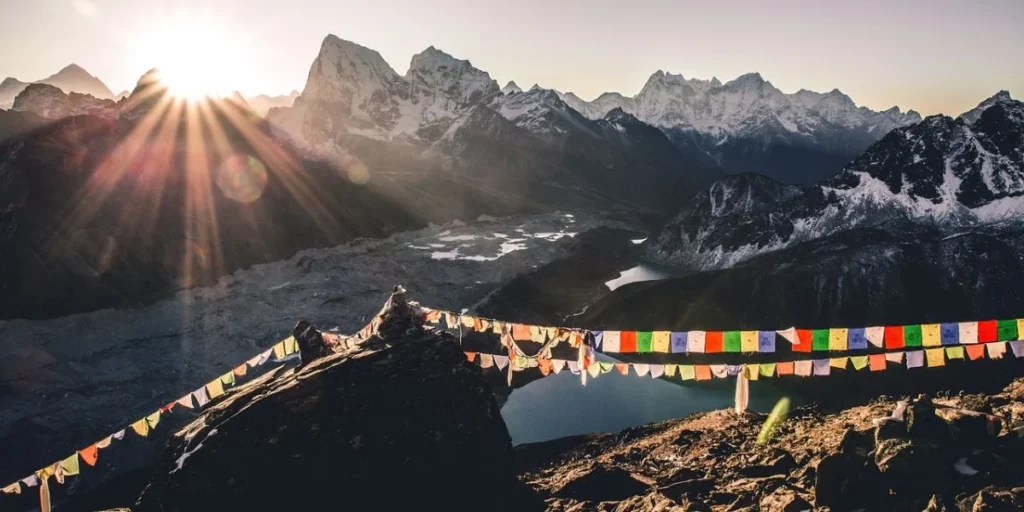
The Everest Base Camp with Gokyo Lakes Trek is one of the most beautiful and varied journeys in the Khumbu region. It blends the classic Everest route with the calm, mirror-like Gokyo Valley. Gokyo Valley is home to six sparkling glacier lakes and the famous viewpoint of Gokyo Ri.
EBC with Gokyo trek is ideal for travelers who want a quieter, longer, and more scenic adventure.
The trail begins in Lukla and follows the familiar path to Namche Bazaar. From there, it turns toward Dole and Machhermo, leading into the Gokyo Valley.
As you climb higher, you walk past yak pastures, frozen streams, and peaceful Sherpa villages that feel far removed from the crowded main trail.
At Gokyo (4,750 m), the turquoise lakes glisten beneath snow-covered peaks. Climbing Gokyo Ri (5,357 m) rewards you with one of the finest views in the Himalayas, where Everest, Lhotse, Makalu, and Cho Oyu line the horizon.
From Gokyo, the route crosses the icy Cho La Pass (5,420 m), joining the main Everest Base Camp trail. This high-altitude crossing adds a sense of adventure and brings unmatched views of glaciers. The final stretch continues through Lobuche, Gorak Shep, and finally Everest Base Camp.
Though longer and more demanding than EBC trek, this route offers greater variety, and fewer crowds. Furthermore, it is a rewarding choice for trekkers who want both challenge and tranquility in the Himalayas.
Trail Difficulty
- Level: Moderate to challenging due to high altitude and crossing Cho La Pass
- Best For: Experienced trekkers or those seeking a quieter alternative to the main EBC route
- Highlights: Gokyo Lakes, Gokyo Ri viewpoint, Cho La Pass, and panoramic views of four 8,000-meter peaks
- Ideal Season: Spring (March–May) and Autumn (September–November) when passes are snow-free
Everest Base Camp with Gokyo Lakes Trek Itinerary
- Day 1: Arrival at Kathmandu (1,400m / 4,600 ft)
- Day 2: Lukla ( 2,840 m 9,318 feet) to Phakding (2,610 m / 8,563 feet)
- Day 3: Phakding to Namche Bazaar ( 3,440 m / 11,286 ft)
- Day 4: Namche Bazaar Acclimatization walk to Everest View Hotel ( 3,880 m / 12,730 ft)
- Day 5: Namche Bazaar to Phortse 3680 m / 12,074 ft
- Day 6: Phortse to Dingboche (4,410 m / 14, 469 ft)
- Day 7: Dingboche Acclimatization walk to Nangkartshang Peak (5,083m / 16,667 ft)
- Day 8: Dingboche to Lobuche (4,910m 16,109 ft)
- Day 9: Lobuche to Gorak Shep (5,125 m / 16,814 ft) and EBC 5,364 m/ 17,598 ft)
- Day 10: Gorakh Shep to Kalapathar ( 5,540m / 18,176 ft) and Gorakh Shep to Dzongla (4830m / 15,846 ft)
- Day 11: Dzongla to Thaknak (4700m / 15,420ft) via Cho La Pass (5,420m / 17,782 ft)
- Day 12: Thanknak to Gokyo (4750 m / 15,584 ft)
- Day 13: Gokyo Valley Side Hike to Gokyo Ri (5,357m / 17,575ft) and to Macchermo (4,470 m /14665 ft)
- Day 14: Macchermo to Namche Bazaar ( 3,440 m / 11,286 ft)
- Day 15: Namche Bazaar to Lukla (2,840 m 9,318 ft)
- Day 16: Lukla to Kathmandu (1,400m / 4,600 ft)
- Day 17: Depart Kathmandu
5. Everest Base Camp Trek By Road from Salleri
The Everest Base Camp Trek by Road is a great option for travellers who want to reach Everest without flying to Lukla. It offers a slower, smoother, and more scenic path through the hills of Nepal.
This route is perfect for budget trekkers who prefer flexibility and fewer flight risks. The journey begins with a jeep ride from Kathmandu to Salleri, a long but beautiful drive through green hills, rivers, and local villages. It gives an early taste of Nepal’s countryside before the real trek begins.
From Salleri, the road continues to Surke, where the walking trail meets the traditional Lukla route. Trekkers rest overnight, then start the hike toward Phakding the next morning.
Soon, the trail connects with the classic EBC path, leading through Namche, Tengboche, and Dingboche.
The road trek offers all the same highlights as the standard EBC route. You’ll see Everest, Lhotse, and Ama Dablam rising above the valleys.
The drive also lets you explore Nepal’s middle hills, where terraced farms and rhododendron forests paint the landscape.
The EBC Road trek takes a few more days than the classic version but costs less and avoids weather delays in Lukla. It’s a peaceful, scenic, and practical way to experience the Himalayas.
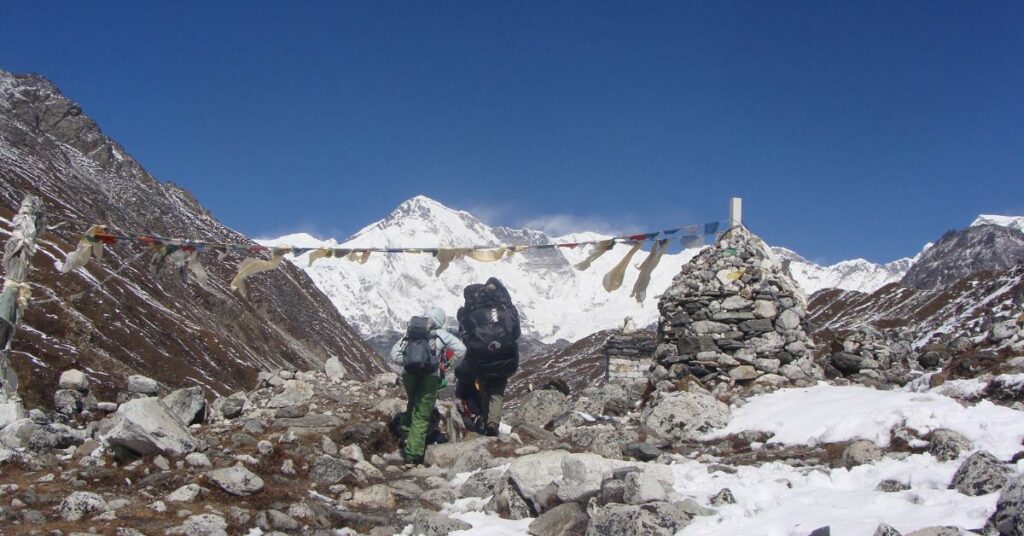
Trail Difficulty
- Level: Moderate to challenging due to the longer duration and high altitude
- Distance: Similar to the classic trek, with extra mileage from the road approach
- Best For: Trekkers seeking a cost-effective route or those who wish to avoid flying
- Highlights: Scenic drive through lower Solukhumbu, gradual altitude gain, and the same iconic Base Camp experience
- Ideal Season: Spring (March–May) and Autumn (September–November
Everest Base Camp Trek by Road – 16 Days Itinerary
- Day 1: Drive Kathmandu → Salleri (Phaplu) (8–10 hrs, 2,390 m).
- Day 2: Drive Salleri → Surke. Trek to Phakding (4–5 hrs, 2,610 m).
- Day 3: Trek Phakding → Namche Bazaar (5–6 hrs, 3,440 m).
- Day 4: Acclimatization in Namche Bazaar (3,440 m).
- Day 5: Trek Namche → Tengboche (5–6 hrs, 3,860 m).
- Day 6: Trek Tengboche → Dingboche (5–6 hrs, 4,410 m).
- Day 7: Acclimatization in Dingboche (4,410 m).
- Day 8: Trek Dingboche → Lobuche (5–6 hrs, 4,910 m).
- Day 9: Trek Lobuche → Gorak Shep → Everest Base Camp (7–8 hrs, 5,364 m).
- Day 10: Hike Kala Patthar (5,550 m). Trek Gorak Shep → Pheriche (6–7 hrs, 4,240 m).
- Day 11: Trek Pheriche → Namche Bazaar (6–7 hrs).
- Day 13: Trek Namche Bazaar → Chaurikharka (2,694 m).
- Day 14: Trek Chaurikharka → Thamdanda (2,326 m).
- Day 15: Drive Thamdanda → Kathmandu (1,400 m).
- Day 16: Final Departure.
6. Everest Cho La Pass Trek
The Everest Cho La Pass Trek offers a thrilling adventure by combining the classic EBC route with a crossing over Cho La Pass. This route takes trekkers through both Everest Base Camp and the stunning Gokyo Lakes, making it a scenic and varied journey. It’s designed for experienced trekkers looking for a challenging route with rewarding views.
This trek provides diverse landscapes, including glacial valleys, alpine lakes, and rugged mountain paths. The Cho La Pass adds an exhilarating high-altitude challenge, rewarding trekkers with panoramic views of Everest and nearby peaks. The route is remote and less crowded, providing a peaceful trek through some of the Himalayas’ most beautiful terrains.
Itinerary
- Day 1: Arrival at Kathmandu (1,400m / 4,600 ft)
- Day 2: Lukla ( 2,840 m 9,318 feet) to Phakding (2,610 m / 8,563 feet)
- Day 3: Phakding to Namche Bazaar ( 3,440 m / 11,286 ft)
- Day 4: Namche Bazaar Acclimatization walk to Everest View Hotel ( 3,880 m / 12,730 ft)
- Day 5: Namche Bazaar to Dole (4040 m / 13,255 ft)
- Day 6: Dole to Machhermo Village (4150 m / 13616 ft)
- Day 7: Machhermo to Gokyo (4750 m / 15,584 ft)
- Day 8: Gokyo Valley Side Hike to Gokyo Ri (5,357m / 17,575ft)
- Day 9: Gokyo to Thanknak (4700m / 15,420ft)
- Day 10: Thaknak to Dzongla (4830m / 15,846 ft) via Cho La Pass (5,420m / 17,782 ft)
- Day 11: Dzongla to Lobuche (4,910m 16,109 ft)
- Day 12: Lobuche to Gorak Shep (5,125 m / 16,814 ft) and EBC 5,364 m/ 17,598 ft)
- Day 13: Gorakh Shep to Kalapathar ( 5,540m / 18,176 ft) and Gorakh Shep to Pheriche ( 4,240 m / 13,911 ft)
- Day 14: Pheriche to Namche Bazaar (3,440 m / 11,286 ft)
- Day 15: Namche Bazaar to Lukla (2,840 m / 9,318 ft)
- Day 16: Lukla to Kathmandu (1,400m / 4,600 ft)
- Day 17: Depart Kathmandu
Difficulty Level
The trek to Everest Cho La Pass is challenging. It requires good fitness and high-altitude trekking experience, especially for the Cho La Pass crossing.
Why this Route is Better?
This route is ideal for experienced trekkers seeking a scenic and challenging journey. It combines Everest Base Camp with crossing over Cho La region, offering a blend of iconic and off-the-beaten-path experiences. The Cho La Pass trek detailed itinerary rewards adventurers with diverse landscapes and fewer crowds, providing a memorable and less-traveled path to Everest.
The 14-Day Trek to Everest Base Camp: Why the Classic Route Stands Out
The 14-day Everest Base Camp trek remains the most balanced and rewarding route in the Khumbu region. It offers steady pacing, safe altitude gain, and a full Himalayan experience.
Trekkers walk through forests, suspension bridges, and Sherpa villages before reaching the base of Mount Everest. Each day brings something new, from culture and prayer flags to snowy peaks and glacier paths.
Gradual Ascent for Safe Acclimatization
The 14-day route gives your body time to adjust to the altitude. Two rest days in Namche Bazaar and Dingboche are planned for proper acclimatization.
In Namche, hikers explore short trails to Everest View Hotel, while Dingboche offers the chance to hike up to Nangkartshang Peak.
These stops help prevent altitude sickness and prepare you for higher sections like Lobuche and Gorak Shep.
Balanced Pace and Ideal Duration
Unlike shorter itineraries, the 14-day trek keeps the walking hours comfortable, usually 5 to 7 hours per day.
You’ll have enough time to rest, hydrate, and enjoy the views without rushing.
This pacing is what makes the classic EBC trek ideal for beginners and experienced hikers alike.
Best Time to Trek
The best seasons for the 14-day Everest Base Camp trek are spring (March–May) and autumn (September–November).
These months bring clear skies, stable weather, and bright mountain views.
Winter treks are also possible for those who want fewer crowds and snow-covered scenery.
Ideal for First-Time Trekkers
The 14-day itinerary is perfect for travelers who want a full EBC experience with proper acclimatization, scenic variety, and good lodges. It doesn’t require advanced fitness, only determination and preparation.
Guides and porters handle logistics so you can focus on the adventure.
Why It’s Better Than Other Routes
The classic route of Everest Base Camp balances comfort, safety, and beauty.
While helicopter and road routes offer faster access, this route gives the real trekking experience. It’s the ideal way to connect deeply with the mountains and the Sherpa culture.
FAQ
Which route to Everest base camp is closest?
The EBC Trek with Helicopter Return is the shortest route in terms of duration. Trekkers reach Everest Base Camp on foot, then return by helicopter, saving time on the descent. This route typically takes around 7-8 days, making it ideal for those with limited time.
Which EBC routes are easy to travel?
The Classic EBC Trek is considered the easiest, as it follows a well-established trail with ample support facilities along the way. This route allows for gradual acclimatization, making it manageable for most trekkers with moderate fitness. Additionally, it offers numerous tea houses and well-marked paths, ensuring a comfortable experience.
How much is the cost of heli tour to EBC?
The cost of a helicopter tour to Everest Base Camp generally ranges between $1,000 and $1,500 per person. Prices vary based on group size, season, and specific flight arrangements. Booking in advance for EBC heli tour sometimes offer discounted rates.





 Chat on WhatsApp