| Duration: 17 day | Max Altitude: 5540m/18,176ft | ||
| Group Size: 02-10 | Location: Everest | ||
| Difficulty: moderate | Per Day Walk: 06-07 hrs | ||
| Accommodation: Hotel / Teahouse |
17-Day Everest Base Camp with Gokyo Lake Trek
The Everest Base Camp with Gokyo Lake Trek is a thrilling and scenic journey that combines two of the most iconic trekking routes in the Everest region. The 17-day challenging trek delivers the utmost adventure experience in Nepal. It is a perfect trek for those who seek an adventurous holiday. This trek offers a great mix of cultural sights, stunning scenery, and wildlife encounters. It takes you to the deep valley of the Khumbu region, the home of the Sherpa people.
The adventure starts as soon as you fly from Tribhuvan International Airport to Lukla Airport. You can notice the entire Himalayan range through the windows during the domestic flight. The experience of flying over the Himalayas and watching them in front is unusual. Upon landing at Tenzing-Hillary Airport, we meet our team to start the journey. The trail takes you through the beautiful Sherpa villages of Namche Bazaar, Tengboche, Dingboche, and Lobuche.
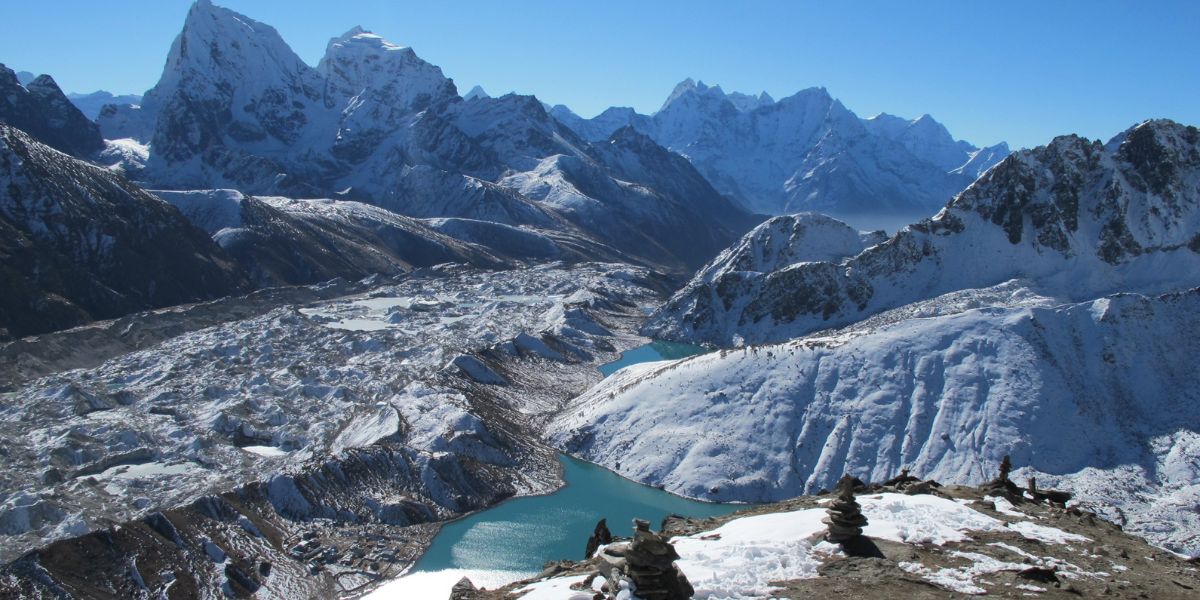
As you ascend, you’ll pass ancient monasteries, rhododendron forests, and glacier-fed rivers, eventually reaching Everest Base Camp. From there, the trail crosses the dramatic Cho La Pass (5,380m) to the Gokyo Valley, where you’ll encounter the mesmerizing turquoise Gokyo Lakes, a beautiful collection of high-altitude lakes. The lakes are surrounded by snow-capped peaks and offer stunning views, including Everest, Lhotse, Makalu, and Cho Oyu. It is a rewarding challenge for trekkers seeking high-altitude adventure, natural diversity, and cultural immersion, all in one unforgettable journey.
Highlights
- Visit both Everest Base Camp and the Gokyo Lakes, making this a more scenic and enriching adventure than the standard EBC route.
- Crossing Cho La Pass (5,380m) is a thrilling experience.
- Witness the best panoramic views of the Himalayas, including four 8,000-meter peaks, Everest, Lhotse, Makalu, and Cho Oyu.
- Experience vibrant Sherpa culture in Namche Bazaar.
- Visit ancient monasteries and traditional villages.
- Land at the World’s highest-altitude airport.
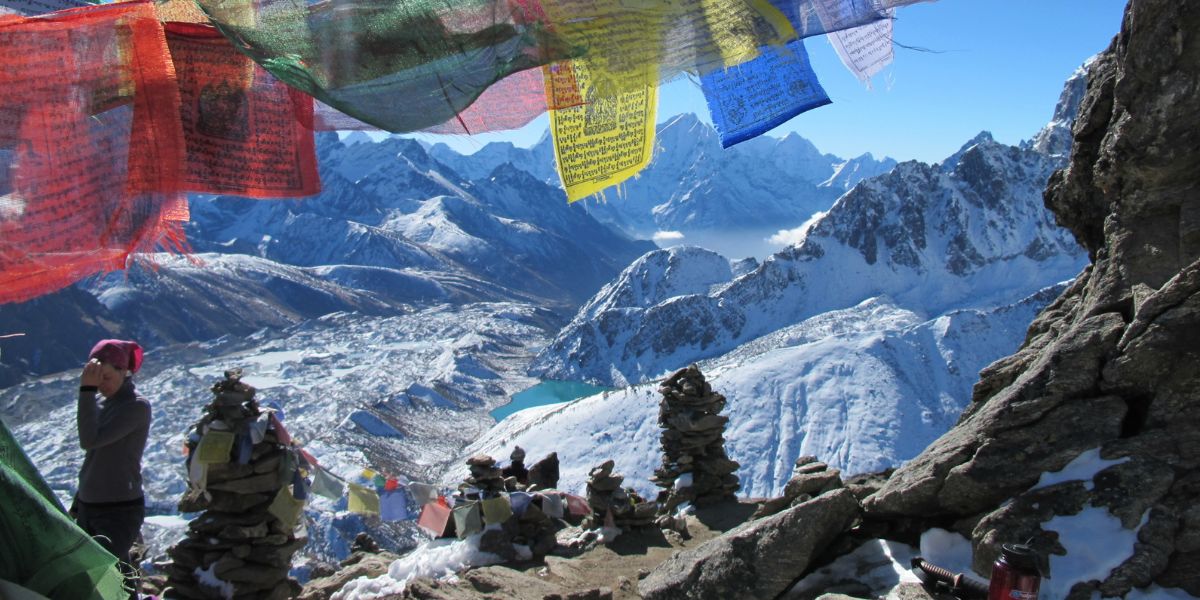
- Hike to Gokyo Ri (5,357m) for panoramic mountain vistas.
Includes
- Airport Pickup and Drop off
- 3-star hotel in Kathmandu
- Domestic Flights (Kathmandu – Lukla – Kathmandu)
- Accommodation in Teahouse during trekking
- All Standard Meals (B, L, D) during the trek.
- Government License holder English Speaking guide)
- Porter to help with luggage. (2:1)
- Coverage of Guides and Porters, Their meals, insurance, salary, lodging, transportation, flight and other necessary equipment.
- Sagarmatha National Park entry permit fee
- Local Municipality fees.
- All government taxes
- Assistance in arranging rescue operation in case of emergency
- Mountain Routes T-Shirt
- Farewell Dinner at the end of the trek
Excludes
- International flight airfare
- Visa fee
- Travel Insurance ( High altitude rescue and evacuation)
- Excess baggage charges(Limit is 9kg per Person)
- Meals in Kathmandu
- Extra night accommodation in Kathmandu due to early arrival, late departure, early return from trekking.
- Personal expense (snacks, boil bottle water, hot and cold drinks, hot shower, Alcohol, Wi-Fi, telephone call, battery re-charge )
- Personal clothing and gear
- Tips for guide and porters
- Additional costs due to natural calamities
EBC and Gokyo Trek Itinerary 17 Days
-
Day 1:
Arrival at Kathmandu (1,400m / 4,600 ft)
-
Day 2:
Lukla ( 2,840 m 9,318 feet) to Phakding (2,610 m / 8,563 feet)
-
Day 3:
Phakding to Namche Bazaar ( 3,440 m / 11,286 ft)
-
Day 4:
Namche Bazaar Acclimatization walk to Everest View Hotel ( 3,880 m / 12,730 ft)
-
Day 5:
Namche Bazaar to Phortse 3680 m / 12,074 ft
-
Day 6:
Phortse to Dingboche (4,410 m / 14, 469 ft)
-
Day 7:
Dingboche Acclimatization walk to Nangkartshang Peak (5,083m / 16,667 ft)
-
Day 8:
Dingboche to Lobuche (4,910m 16,109 ft)
-
Day 9:
Lobuche to Gorak Shep (5,125 m / 16,814 ft) and EBC 5,364 m/ 17,598 ft)
-
Day 10:
Gorakh Shep to Kalapathar ( 5,540m / 18,176 ft) and Gorakh Shep to Dzongla (4830m / 15,846 ft)
-
Day 11:
Dzongla to Thangnak (4700m / 15,420ft) via Cho La Pass (5,420m / 17,782 ft)
-
Day 12:
Thangnnak to Gokyo (4750 m / 15,584 ft)
-
Day 13:
Gokyo Valley Side Hike to Gokyo Ri (5,357m / 17,575ft) and to Macchermo (4,470 m /14665 ft)
-
Day 14:
Macchermo to Namche Bazaar ( 3,440 m / 11,286 ft)
-
Day 15:
Namche Bazaar to Lukla (2,840 m 9,318 ft)
-
Day 16:
Lukla to Kathmandu (1,400m / 4,600 ft)
-
Day 17:
Depart Kathmandu
-
Day 1 : Arriving at the capital-Kathmandu (1400m)
The very first day of the trek begins with you arriving at the capital of Nepal – Kathmandu. Our representatives will receive you at the airport. They will help you get to your respective hotels and understand the trekking route and schedules. After reaching your hotel, you can rest for a while, then explore the beautiful city of Kathmandu.
-
Day 2 : Fly to Lukl and Trek to Phakding (2610m) Trip Duration: 03-04 hrs
On our second day of the trek to Gokyo Lake, we will have an early breakfast and then head to the airport. Today, we fly about 35 minutes to Lukla. After landing at Lukla, we meet our team. It consists of our guides and the porters who help us throughout the trek. From Lukla, we trek to Phakding. The trek is a gradual descent to Phakding via Chheplung and Ghat village. Then, it follows a gentle climb up the mountainside of the Dudh Koshi river. The whole hike takes us about 3 hours and is pretty straightforward. Upon reaching Phakding, we explore nearby places and then rest there for the night to continue our trek the next day.
-
Day 3 : Phakding to namche Bazar (3440m) Trip Duration: 06-07 hrs
On our 3rd day of the trek, the day begins with an early breakfast. Then, we hike from Phakding to Namche Bazar, where we reach the confluence of two glacial rivers on the trail: Dudh Koshi and Bhote Koshi rivers. While continuing our trek further, we have an excellent view of Mt. Everest (8848 m) and Mt. Lhotse (8516 m), finally reaching Namche Bazar. The trek traverses through beautiful pine forests and crosses many suspension bridges and Sherpa villages. Surrounded on three sides by mountains, Namche Bazar is the region’s central hub for food and other essential items needed for the trekkers and people living there.
-
Day 4 : Acclimatization at Namche Bazar
On day 4 of our trek, we stay at Namche Bazar to adapt and adjust to the region’s climatic conditions. An extra day at Namche helps to acclimatize and tackle high altitude sickness. We will adequately utilize this time by exploring the town and visiting nearby places. The town of Namche Bazar offers a variety of cyber cafes and restaurants, and we can also get insight into the culture and traditions of the native Sherpas. The excursion outside the town of Namche Bazar includes visiting places such as the Sherpa Culture Museum, Sagarmatha National Park, Namche Monastery and, Tenzing Norgay Memorial Museum, Everest View Hotel. This extra day at Namche allows for diving deep into the Sherpas’ culture, religion, and beliefs. In addition, one can also enjoy the magnificent sunrise view over the Himalayas, including Mt. Everest, Mt. Lhotse, Mt. Nuptse, Mt. Ama Dablam, Mt. Thamserku, Mt. Kongde, and so on.
-
Day 5 : Namche Bazar to Phortse (3680 m) Trip Duration: 05-06 hrs
The trek from Namche Bazar to Phortse is a relatively straightforward trek passing through Mong La. From Mong La, the trek heads downhill to Phortse Tenga. We then cross the Dudh Koshi River and start a steep uphill climb to the Phortse village. Phortse village is an alternative path to the Everest Base Camp. The breathtaking views of the Himalayas – Everest, Nuptse, Lhotse, Ama Dablam, Thamserku, and Kwangde, will serve as our push while trekking. Phortse is also known as one of the most beautiful places in the Everest region trek.
-
Day 6 : Phortse to Dingboche (4410m) Trip Duration: 06-07 hrs
On day 6 of our Everest trekking, we trek from beautiful Phortse village to the tea-house settlement of Dingboche. The trail leads parallelly with the canyon on the Imja Khola river. Then, we follow a gradual climb up towards the village of Tengboche, followed by a visit to the Tengboche monastery – one of the oldest in the region. Trek becomes tricky in the afternoon as the trail gives way to dry, deserted mountains. Finally, following the trail, we reach Dingboche.
-
Day 7 : Acclimatization at Dingboche
On the 7th day of our trek, we acclimatize at Dingboche to adapt to the region’s climate. The best way to do this is to hike higher and sleep lower. Therefore, we will utilize this day by hiking to Nangartshang hill. Due to the high altitude of Nangartshang hill, it is recommended to spend at least six days acclimatizing in the Everest region, before climbing it. The hike to Nangartshang Hill is one of a kind, as it gives us a magnificent view of Mt. Makalu (8463 m) and Mt. Ama Dablam. We can enjoy the beautiful sunset from the hill and then return to the village to stroll around and enjoy our stay there. We are staying at Dingboche.
-
Day 8 : Trek to Lobuche (4910m) Trip Duration: 04-05 hrs
After two nights at Dingboche, we finally head out to Lobuche. The trek begins with a gentle climb towards the Pheriche valley. Mountains Tawoch and Cholotse greet us on our way there. From Pheriche, we follow the trail through Thokla Pass. The central point of attraction of Thokla Pass is the extensive collection of tombstones and memorials to lost climbers and Sherpas. Along the way, another fantastic encounter is the Khumbu glacier. The magnificent view of the Khumbu glacier keeps us cruising with overwhelming energy and excitement. After walking along the trail, we finally reached Lobuche. We will stay the night there.
-
Day 9 : Lobuche to Gorak Shep (5,125 m) – Everest Base Camp (5,364) Trip Duration: 07-08 hrs
Today is the day we will finally be reaching our long-awaited destination – Everest Base Camp or EBC. With an early breakfast at Lobuche, we hit the road and trek to EBC via Gorakshep. It is one of the most rewarding sections of our whole journey. First, we will head out to Gorakshep. At Gorakshep, there is a small settlement where we eat our lunch for the day. Gorakshep is the last tea-house settlement on this trekking trail. After lunch at Gorakshep, we start the trek to Everest Base Camp. The trek from Lobuche to Everest Base Camp is exhausting, as it requires us to pass through the moraine of the Khumbu glacier. But it provides trekkers with a magnificent view of Mt. Everest, Mt. Mahalangur, Mt. Lingtern, Mt. Khumbutse, Mt. Nuptse, and others. It is sure to be a once-in-a-lifetime experience. After enjoying the view closely, we head back towards Gorakshep and stay the night there.
-
Day 10 : Trek from Gorak Shep to Kala Patthaar (5,545m) to Dzongla (4,830m) Trip Duration: 07-08 hrs
Day 10 of the journey marks the day we travel to Kala Patthar to view the golden sunrise. Kala Patthar is the best vantage point to view sunrise and sunset. The hike to Kalapatthar takes us about 3 hours. Kala Patthar offers the best view of Mt. Everest, Mt. Pumori, Mt. Lingtren, Mt. Khumbetse, Mt. Nuptse, Mt. Lhotse, Mt. Ama Dablam, Mt. Thamserku, and many more during the sunrise and the sunset Golden sun rays kissing the mountain tips are astounding scenery that leaves most travellers mum. After enjoying the epic sunrise from Kala Patthar, we return to Gorakshep. After lunch at Gorakshep, we trek to Dzongla. From Gorakshep, we follow the trail to Lobuche. Nearby the Lobuche Base Camp, we have two ways ahead of us, one leading us to Pheriche and the other reaching Dzongla. It is an uphill climb and will take around 2 hours to reach
-
Day 11 : Dzongla to Thagnak (4700m) Trip Duration: 08-09 hrs
With an early breakfast at Dzongla, we head out to Thagna, crossing the Cho La pass (5340 m). Heading out early in the morning gives you the advantage of a nice view before the unpredictable afternoon weather kicks in. Today’s trek is a bit stretchy, but having already trekked to Everest Base Camp, it will not be that difficult. However, crossing the Cho La pass can be difficult, especially if the weather is not favourable. The climb to the top is challenging, but the fantastic view will make up for it. After reaching Thagnak, we rest there for a night.
-
Day 12 : Trek from Thagnak to Gokyo (5,750m) Trip Duration: 07 hrs
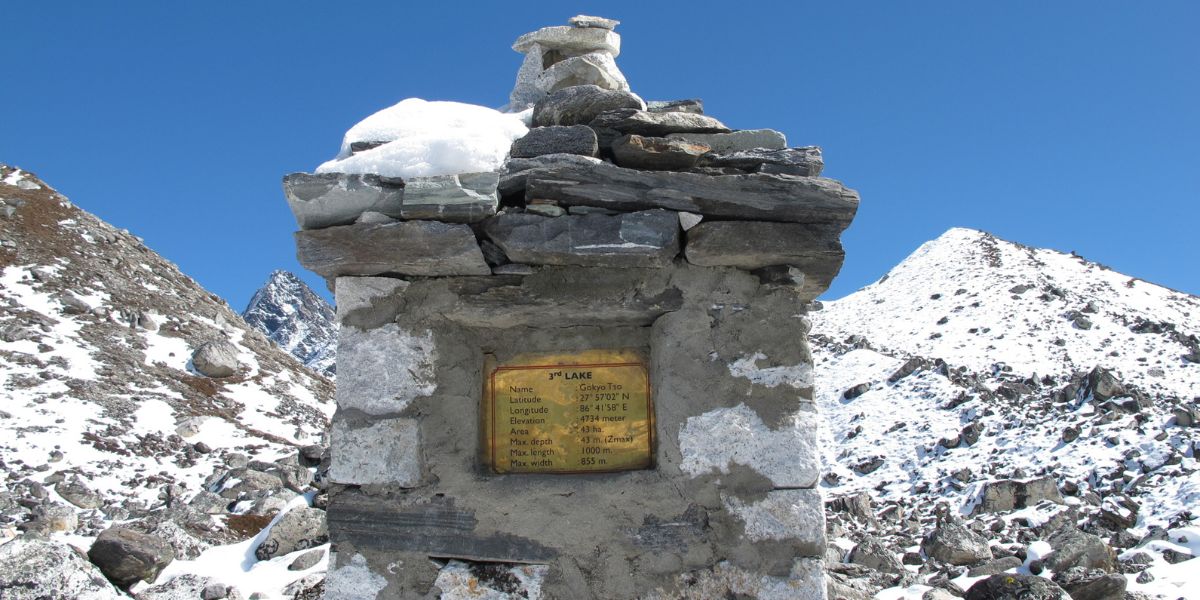
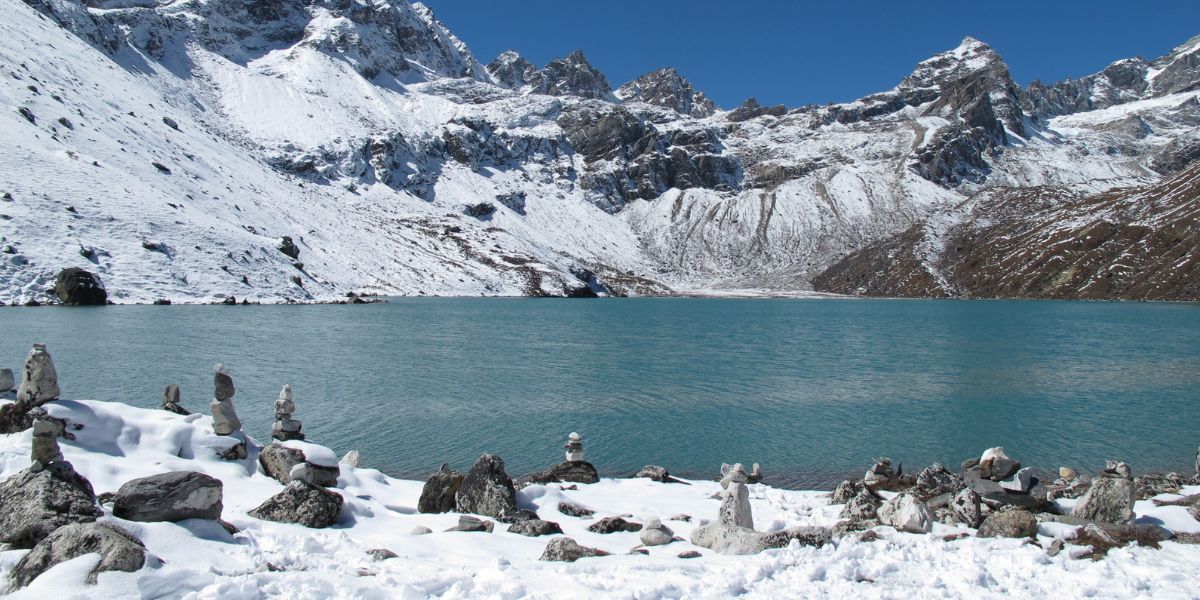
On day 12 of our journey, we start from Thagna to Gokyo. First, we cross the moraines of the Ngozumpa glacier. Then, the magnificent view of the turquoise lakes of Gokyo leaves us stunned. Next, we traverse through the second Gokyo lake, which is just as beautiful. Just a short distance from the third Gokyo lake lies the small settlement of Gokyo village, where we will be staying the night. An afternoon sidewalk to the 5th Gokyo Lake – Ngozumpa Tsho is completed during the afternoon. It is to free us some time tomorrow when we trek to Machhermo.
-
Day 13 : Gokyo to Gokyo Ri, and Trek to Machhermo (4,470 m ) Trip Duration: 07 hrs
On day 13 of the Gokyo Lake trek, we ascend the Gokyo Ri peak to view the astonishing sunrise. After breakfast, we climb the peak and enjoy the beautiful sunrise. The peak allows us to see the panoramic view of the mountains from all sides. The Himalayan range includes Mt. Everest, Mt. Cho-Oyu, Mt. Lhotse, Mt. Gyachung, Mt. Makalu, and Mt. Nuptse, as the sun’s rays slowly bring warmth to these cold mountains. After watching the sunrise, we descend to Gokyo village, have our lunch, and then head out to Machhermo. The trek from Gokyo Lakes to Machhermo takes us about 4 hours. Upon reaching Machhermo, we will be staying the night there.
-
Day 14 : Machhermo to Namche Bazar (3,440 m) Trip Duration: 07-08 hrs
On day 14 of our journey, we head from Machhermo to Namche Bazar. It takes us about 07-08 hours. We then traverse through Dole and Phortse Tenga, passing through Rhododendron forests and reaching Namche Bazar. The trail descends gently to Dole and then steeply descends to Phortse Tenga. Through the Rhododendron forest, the path immediately escalates steeply to Mongla Danda. We will also enjoy some good views of the peaks all along the way. From Mongla Danda, we follow a gentle descent up to Kyanjoma (3500 m), following short ups and downs to Namche Bazar, where we spend a night at Namche.
-
Day 15 : Trek from Namche Bazar to Lukla (2,840m) Trip Duration: 06-07 hrs
Today’s trek from Namche Bazar to Lukla will take about 6 hours. The trail leads us slowly to Phakding, crossing suspension bridges. We will also walk through pine and rhododendron forests, admiring nature. Finally, we reach Lukla in the afternoon. Today, we bid farewell to our team, guides, and the porters, who helped us along the way—another night at Lukla.
-
Day 16 : Lukla to Kathmandu Trip Duration: 35 minutes flight
We fly from Lukla to Kathmandu after finishing an early morning breakfast. It will take us about 35 minutes to reach the capital. Upon reaching Kathmandu, team members from Mountain Routes will receive us at the airport to take us to our respective hotels. After lunch, you can rest for a while, then head out to explore the beautiful city of Kathmandu. You can also do some shopping today, as this is your last night in Nepal. At night, you can go and explore Thamel’s nightlife. A good night’s sleep is all that is left for the day.
-
Day 17 : Departure
It’s the final day of your trip, and today, you’ll be heading back home. We’ll pick you up from your respective hotels and then take you to the airport. We’ll share goodbyes today and part ways. With all the fantastic memories and excellent experiences, you’re heading home. Having some part of you moved, you’ll board your plane in the last two weeks with a fantastic story to pass down through generations.
Start and End of the Trek
Your Everest Gokyo adventure begins with an unforgettable early morning flight from Kathmandu to Lukla. It is a thrilling 30-minute journey that lands at one of the world’s highest and most dramatic airstrips. Lukla marks the gateway to the Khumbu region and the starting point of your trek. After meeting your trekking crew in Lukla and finalizing gear, you’ll begin a scenic descent to Phakding (2,610m), passing through pine forests, suspension bridges, and traditional Sherpa settlements. Along the way, soak in your first views of snow-capped peaks, the Dudh Koshi River, and the vibrant Buddhist culture that defines this legendary trail.
After completing your journey through Everest Base Camp, crossing Cho La Pass and Gokyo Lake, your trek brings you back to Lukla via Namche Bazaar. This return route offers a chance to reflect on your epic journey through the Himalayas and celebrate your achievements with your team. The following morning, you’ll take a return flight from Lukla to Kathmandu, enjoying one last bird’s-eye view of the mountains you just explored on foot. Once in Kathmandu, you’ll be transferred to your hotel, where you can relax, enjoy a hot shower, and explore the vibrant capital city or shop in Thamel.
Best Time to Trek Everest Base Camp and Gokyo Lake Trek
The best time to trek in Nepal largely depends on the season, with spring (March to May) and autumn (September to November) offering the most favourable conditions for trekking in the Himalayas. Spring is a popular trekking season thanks to stable weather, warming temperatures, and excellent visibility. During this time, the trails come alive with blooming rhododendrons, Nepal’s national flower, creating colourful landscapes against the backdrop of snow-capped peaks. Temperatures at higher elevations typically range from -10°C to 15°C, making it ideal for treks like the Annapurna Circuit, Everest Base Camp, and Langtang Valley.
Autumn, from September to November, is widely regarded as the best season for trekking in Nepal, offering clear skies, dry weather, and the year’s best mountain views. Post-monsoon clarity enhances visibility, and the temperatures are crisp yet manageable, ranging from -15°C to 12°C in alpine regions. This is also festival season in Nepal, adding cultural vibrancy to your trekking experience.
Winter treks (December to February) are possible, especially in lower altitude areas, but come with challenges. While the skies remain mostly clear and the views are sharp, extreme cold and the risk of snow-covered trails may lead to the closure of high-altitude lodges and passes. Trekking in winter is best suited for experienced hikers looking for solitude and peaceful trails, but it is not recommended for beginners. Usually, the summer season is also not recommended, especially in regions like Annapurna and Everest. It is due to heavy rainfall, muddy trails, leeches, and frequent flight cancellations caused by poor visibility.
What to expect during the EBC with the Gokyo trek
This trek offers some of the most breathtaking views in the world. It takes place in the Khumbu region of Nepal, which is home to Mount Everest (8848m) and its surrounding peaks. However, this trek requires a lot of preparation before embarking on the journey.
First of all, this trek requires a lot of physical effort and stamina. This trek demands a good fitness level as you ascend to a higher altitude. Also, you should be fit enough to handle the extreme weather conditions. It is usually not recommended for beginners due to its high altitude climb and extreme weather conditions.
In addition, you should ensure that you have all the necessary equipment, permits, and clothing required for this trip. Finally, you visit the ancient monasteries of Khumjung and Namche Bazaar, where you can shop for local goods and explore the culture of this remote region.
Once you reach Namche Bazar, you leave your comfort zone and enjoy nature’s wilderness. There are tea houses as well as luxurious lodges on the trail. Trekkers can enjoy delicious Nepalese cuisine at the lodges along the way. The food is simple but filling. There are plenty of options available, from high tea to Western-style meals. All accommodation is comfortable and clean.
Everest Gokyo Trek Cost
The 17-day EBC and Gokyo trek price can range from $1,500 to $2,200 USD, depending on group size, services, and whether you’re booking a package with international companies or local operators. The cost includes permits, domestic flights, meals, guides, porters, and lodging. The package for Everest Base Camp with Gokyo Lakes from Mountain Routes costs USD 1750 per person. It includes a comprehensive range of services to ensure a smooth and enjoyable trekking experience.
Approximate Cost Based on Group Size with Mountain Routes
| Group Size | Cost per Person (USD) |
| Solo Trekker | $1,750 |
| 2–3 People | $1,650 – $1,700 |
| 4–6 People | $1,550 – $1,600 |
| 7+ People (Group) | $1,500 – $1,550 |
Permits Required for the Trek
To complete the EBC with the Gokyo Lake trek, you’ll need a few essential permits. These are mandatory for all trekkers entering the Everest region, and their costs are usually included in most trekking packages.
Sagarmatha National Park Entry Permit: This is required to enter the national park area, which covers most of the EBC and Gokyo trekking routes. It costs approximately about USD 25 (NPR 3,000) per person.
Khumbu Pasang Lhamu Rural Municipality Permit: Introduced in place of the old TIMS card, this is required by the local government. It costs about USD 17( NPR 2,000)per person and is payable in Lukla.
Everest Base Camp and Gokyo Lakes Trek Difficulty
The Everest Base Camp and Gokyo Lakes Trek is considered moderately to highly challenging, making it suitable for trekkers with a good level of physical fitness and some prior hiking experience. The trail covers rugged terrain, high-altitude passes like Cho La (5,420m), and long daily walking hours ranging from 6 to 8 hours. While the trek does not require technical climbing skills, the combination of steep ascents, rocky trails, and significant elevation gain demands strong cardiovascular endurance and mental resilience. Altitude is a major factor, with the trek reaching heights above 5,000 meters at several points, including Everest Base Camp, Kala Patthar, Cho La Pass, and Gokyo Ri. Proper acclimatization, a steady pace, and good preparation are essential to successfully complete this rewarding but physically demanding adventure.
Altitude & Acclimatization
One of the key challenges of the Everest Base Camp with Gokyo Lake trek is the high altitude. The trek starts in Lukla at 2,840 meters, and gradually ascends to the highest point at Kala Patthar (5,540m). Along the way, you’ll reach significant elevations such as Namche Bazaar (3,440m), Dingboche (4,410m), and Everest Base Camp (5,364m). The route also includes the iconic Cho La Pass (5,420m) and a scenic ascent to Gokyo Ri (5,357m). To ensure your safety and success, our itinerary includes a carefully planned acclimatization strategy. This includes scheduled rest days in Namche Bazaar and Dingboche, as well as following the “climb high, sleep low” principle.
Our perfectly crafted EBC and Gokyo trek itinerary allows for gradual altitude gain, and experienced guides constantly monitor your health for signs of altitude sickness. We also maintain flexibility in the itinerary to accommodate weather delays or altitude-related issues, giving you the best chance to complete the trek safely.
Physical Fitness Requirements
Trekking to Everest Base Camp with Gokyo Lakes and Cho La Pass is a rewarding challenge that requires a good level of physical fitness. The trek is rated as moderate to challenging, suitable for those who are physically active and have prior trekking experience. While technical climbing is not involved, you’ll be walking for 6 to 8 hours per day on steep, rocky, and uneven terrain at high altitudes.
Previous experience with multi-day hikes is highly recommended, as this trek demands mental resilience and sustained stamina. A strong cardiovascular system is essential, as the reduced oxygen at higher elevations can make breathing more difficult. Anyone in good health, with adequate preparation and determination, can complete this trek safely with the right mindset.
Accommodation and Meals
During your Everest Gokyo trek, accommodation is provided in cozy teahouses and lodges that are scattered along the trail. These are basic but comfortable, offering twin-sharing rooms with blankets and pillows. Most teahouses have shared bathrooms, and hot showers are available for an extra charge (around USD 3–5). In Kathmandu, your stay typically includes 2 nights in a 3-star hotel, with amenities like private bathrooms, Wi-Fi, and breakfast. This gives trekkers a nice contrast between urban comfort and the rustic Himalayan experience.
Throughout the trek, you’ll enjoy three standard meals per day (breakfast, lunch, and dinner). Meals are freshly prepared and typically feature local Nepali cuisine as well as some international options. Common dishes include:
- Dal Bhat (rice and lentils)
- Noodles and pasta
- Fried rice
- Eggs, toast, and porridge for breakfast
- Seasonal vegetables and sometimes yak cheese in Gokyo
Drinking water is available in the form of boiled or filtered water at teahouses (some charge around USD 1–3 per liter), or you can use water purification tablets or filters for stream water.
Wi-Fi and Internet Access on the Everest Gokyo Trek
Staying connected while trekking in the Himalayas is possible, but the quality and availability of internet access vary greatly depending on location and altitude. During your Everest Gokyo trek, Wi-Fi is available at most teahouses and lodges along the route, though it often comes at an additional cost and is slower than in urban areas. In lower-altitude villages such as Lukla, Phakding, and Namche Bazaar, many teahouses offer relatively stable Wi-Fi for around USD 2–5 per day. As you ascend higher toward Dingboche, Lobuche, Gorakshep, and Gokyo, connections become less reliable and more expensive, ranging from USD 5–10 for limited usage.
For better and more consistent connectivity throughout the EBC Gokyo trek, some trekkers opt to purchase a local Ncell or NTC SIM card in Kathmandu before the trek. While mobile coverage is available in some areas, it becomes patchy or non-existent at higher altitudes and around Cho La Pass or Gokyo Ri. While internet access is available, this remote and rugged region encourages you to disconnect from the digital world and immerse yourself fully in the majestic landscapes of the Everest Base Camp and Gokyo Lakes trek.
Alternative Trekking Options for Gokyo Lakes and Everest Base Camp
If you’re interested in the Gokyo Lakes and Everest Base Camp region but are looking for different experiences or shorter durations. In that case, several alternative treks offer stunning views, cultural encounters, and high-altitude adventures:
- Everest Base Camp Trek (12-14 Days): It is ideal for those with limited time, this classic trek skips the Gokyo Valley but still brings you to the foot of Mount Everest and Kala Patthar. It’s perfect for first-time trekkers wanting to reach the base of the world’s tallest mountain. You can choose the budget ebc trek package options or ebc by road package as well.
- Gokyo Lakes Trek (12 Days): This trek focuses solely on the Gokyo Valley, its turquoise glacial lakes, and panoramic views from Gokyo Ri. It avoids the busy EBC trail and offers a more peaceful, off-the-beaten-path experience.
- Three Passes Trek (18-20 Days): This circuit is a more challenging alternative for experienced trekkers. It includes Renjo La, Cho La, and Kongma La passes, covering both the EBC and Gokyo regions with unparalleled high-mountain scenery.
- Everest View Trek (5-7 Days): A short and relatively easy trek that still offers spectacular views of Everest and surrounding peaks. Great for families or those wanting a taste of the Khumbu region without going too high.
Packing List Essentials
Packing smart is key to a successful Everest Base Camp with Gokyo Lake trekking experience. As you’ll be trekking through varied terrain and extreme altitudes, having the right gear ensures safety, comfort, and performance. Here’s a list of essentials you’ll need for the EBC with Gokyo Lake trek:
Clothing
- Base Layers: Moisture-wicking thermal tops and bottoms (2–3 sets)
- Insulating Layers: Fleece or down jacket for warmth
- Outer Layer: Waterproof and windproof jacket and trousers
- Trekking Shirts: Lightweight, quick-dry shirts (3–4)
- Trekking Pants: Comfortable and durable (2–3 pairs)
- Gloves: Inner liner gloves and insulated waterproof gloves
- Hat/Cap: Warm beanie and sun hat
- Buff or Neck Gaiter: For dust and cold protection
- Underwear and Socks: Several pairs of moisture-wicking socks and comfortable underwear
Footwear
- Trekking Boots: Well-broken-in, waterproof, and supportive
- Camp Shoes or Sandals: For relaxing at teahouses
- Gaiters: Optional, but useful for snow or muddy trails
Gear and Equipment
- Backpack: 35–45L daypack with rain cover
- Duffel Bag: Carried by porters (provided by most trekking companies)
- Sleeping Bag: Rated to at least -15°C (can also be rented in Kathmandu)
- Trekking Poles: Strongly recommended, especially for downhill and Cho La Pass
- Headlamp: With extra batteries for early morning hikes or power outages
Personal Items
- Water Bottles or Hydration Bladder: Minimum 2L capacity
- Water Purification Tablets or SteriPen
- Snacks/Energy Bars: For extra energy during long walks
- Toiletries: Toothbrush, toothpaste, wet wipes, quick-dry towel, lip balm, etc.
- Sunscreen & Lip Balm: High SPF for UV protection
- First Aid Kit: Include altitude medication (Diamox), pain relievers, band-aids, etc.
- Personal Medications: Carry enough for the duration of the trek
Electronics & Accessories
- Camera/Phone: To capture stunning views
- Power Bank: Electricity is limited and expensive at higher altitudes
- Universal Adapter
- Travel Insurance: With coverage for high-altitude trekking and emergency evacuation
Documents
- Passport & Passport Copies
- Trekking Permits: (Sagarmatha National Park Permit and Local Permit)
- Travel Insurance Documents
- Flight Tickets (Domestic and international)
Need for Travel Insurance for Trek
Travel insurance is essential for anyone undertaking the Everest Base Camp with Gokyo Lake trek. It covers unexpected emergencies that may arise in the remote and high-altitude regions of the Himalayas. The trek involves significant altitude gain, reaching elevations above 5,000 meters, where the risk of altitude sickness, weather-related delays, and physical injuries increases. A comprehensive travel insurance policy should include coverage for high-altitude trekking (up to 6,000 meters), emergency medical expenses, helicopter evacuation, trip cancellations, and loss or theft of belongings. Without proper insurance, emergency rescues like helicopter evacuations, common in cases of Acute Mountain Sickness (AMS), can cost thousands of dollars. Therefore, having travel insurance isn’t just a precaution; it’s a vital part of planning a safe and stress-free EBC Gokyo trek.
Everest Base Camp and Gokyo Lake: FAQ
The combined EBC with Gokyo Lake trek offers the best of both worlds – you’ll reach Everest Base Camp and explore the pristine Gokyo Valley with its stunning turquoise lakes. You’ll cross the challenging Cho La Pass (5,420m), summit both Kala Patthar (5,540m) and Gokyo Ri (5,357m), and see four of the world’s eight-thousanders: Everest, Lhotse, Makalu, and Cho Oyu.
Gokyo Lake trek is more determined and strenuous, physically challenging, and has several high passes to cross over than the standard EBC trek, requiring a certain degree of robustness. Nevertheless, it’s a more vigorous long walk, and you can catch sight of the extended southwestern side of Mount Everest from Gokyo RI(17,575 ft, 5,357 m), paying back for your effort by nature.
We are elevating at almost 5000m above sea level, so one should be in very sound health and fit to hike at high altitudes and should accustom themself to a vigorous walk about 7-9 hours per day. Previous trekking practice at high altitudes is required. You should start hiking practice and work out for at least two months.
There are rest days in the journey, and acclimatization is essential to make your body familiar with the existing environment. The variation of climatic conditions and altitude might lead to altitude sickness. Namche Bazaar at 3440 m will be the perfect destination for acclimatization. Later on, to familiarize more with the existing environment as we move ahead, we have to take one more rest day at around 4800m.
“As you move higher, you have to comfort yourself naturally.”
We start our journey from Lukla and reach different stops. Therefore, you can experience similar accommodation facilities with various price variations.
As you start to elevate, there are no convenient means to carry raw material, so even if you are planning to spend your money extravagantly or pay thousands of dollar bills, we apologize from our end. You will be inside the tea house in the evenings, nights, and every morning when the room temperatures will not be less than 5 degrees Celsius.
How about freshly brewed coffee at the world’s highest bakery cafe? Gokyo offers a beautiful inn service with an extensive food menu.
Accommodations on the EBC with the Gokyo Lake trek are primarily teahouses offering basic twin-sharing rooms with shared bathrooms. They are clean and cozy, often heated in common areas. Meals typically include traditional Nepali dishes like Dal Bhat, noodles, soups, pasta, and some Western options such as pancakes and eggs. While food is simple, it’s hearty and filling, with vegetarian meals being the safest and most common choice at higher altitudes.
On cold December nights, the temperature can fall up to -25 degrees Celsius. However, during the Autumn season, the temperature can rise to 20 degrees Celsius on warm sunny days.
This trek is rated moderate to challenging and is not recommended for complete beginners. You should have previous multi-day hiking experience, good fitness levels, and mental preparation for high altitude. If you’re new to trekking, consider doing a shorter Nepal trek first, such as the Annapurna Base Camp or Langtang Valley treks.
Why Mountain Routes ?
- Local Support
- Instant Response
- Customized Packages
- Friendly and Professional Guides
Not satisfied with what we offer ?
We can customize the trip for you.
EBC and Gokyo Trek Map
Destination Path
Return Path





 Chat on WhatsApp