
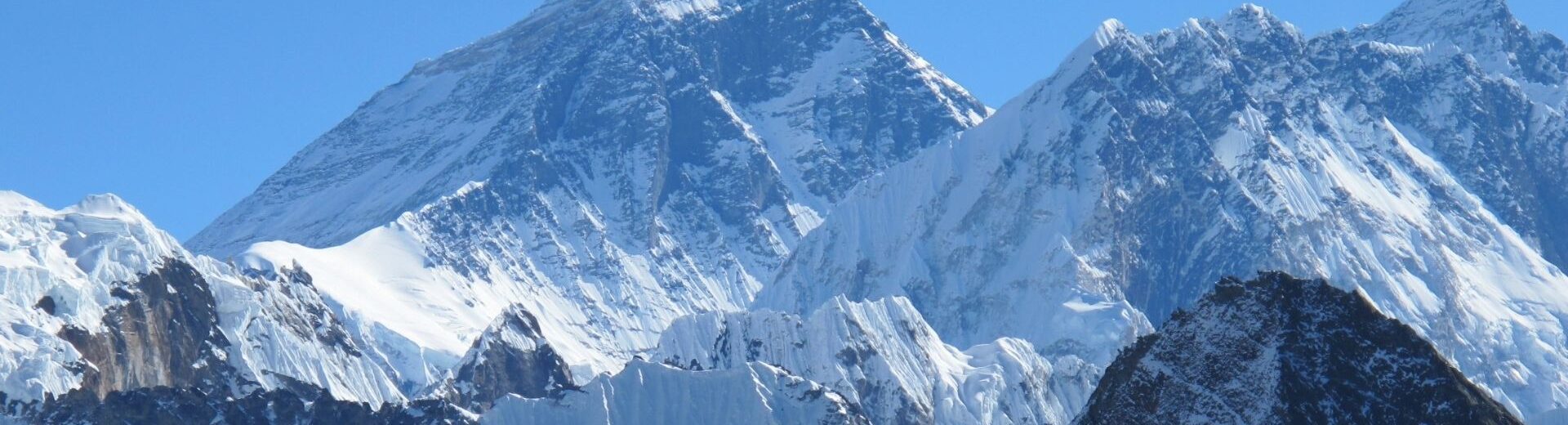
Everest Base Camp Trek Itinerary: 10, 12, 14 and 17 Day Routes
The Everest Base Camp trek itinerary comes in many styles. You can pick a short 12 day plan, a longer road entry, a helicopter return, or a combined route with Gokyo Lakes. You can also select a luxury version if you want better lodges and more comfort.
All itineraries follow the same main trail between Lukla and Everest Base Camp. The differences appear in the number of walking days, the pace of the height gain, and the return method. Some routes use flights both ways for speed.
Other routes use the road for a slower and calmer start. Some plans save days by adding a helicopter ride back to Lukla or Kathmandu.
The right Everest Base Camp trek itinerary depends on your time, your fitness, and your travel style. Each route below carries a clear purpose. You can read them and pick the one that feels suitable for you.
How to Choose the Right Everest Base Camp Itinerary
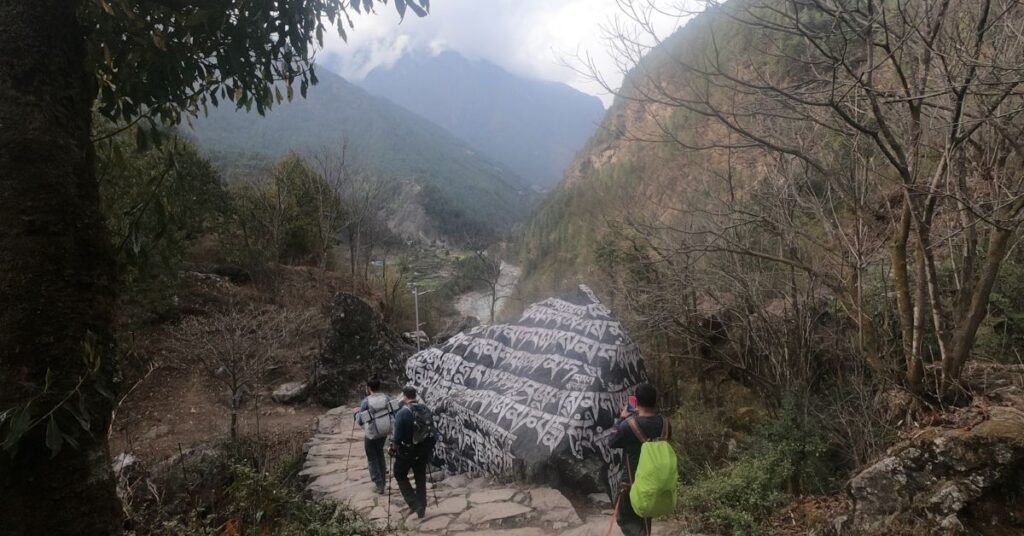
Many trekkers start by looking at the standard Everest Base Camp trek plan. This route takes around 14 days with two acclimatization days. From that base, you can cut some days, add side trips, or change how you enter and exit the region.
The 12 day budget Everest Base Camp trek works best for strong walkers who want to keep the trip compact. The Everest Base Camp trek by road suits trekkers who want to avoid the Lukla flight and see more lowland villages. The EBC trek with helicopter return saves time and reduces downhill walking.
The Everest Base Camp and Gokyo Lakes trek adds more viewpoints and a high pass. A luxury Everest Base Camp trek follows a similar route but uses higher quality lodges and more comfort.
It helps if you think about your priorities. Some people want the lowest cost. Some want maximum scenery and high passes. Others care more about comfort and sleep quality. Once you know your main goal, the itinerary choices become easier to compare.
Overview of All Everest Base Camp Trek Itinerary Choices
Below is a quick overview of the main options. The detailed day-by-day plans follow in the next sections.
- 12 Day Budget Everest Base Camp Trek
Fast, focused, and cost-friendly. Still includes Everest Base Camp and Kala Patthar. - Everest Base Camp Trek by Road (16 Days)
Starts and ends by road through Salleri, avoids Lukla flights, and uses quieter trails. - EBC Trek with Helicopter Return (10 Days)
Walks in on the classic route and returns by helicopter to save days. - Everest Base Camp and Gokyo Lakes Trek (17 Days)
Combines base camp, Kala Patthar, Cho La Pass, and Gokyo Lakes. - Luxury Everest Base Camp Trek (around 14 Days)
Uses better lodges, more comfort, and a slower, smoother pace.
12 Day Budget Everest Base Camp Trek Itinerary
The 12 day EBC trek route follows the classic path from Lukla to base camp and back. You stay in local teahouses, keep services simple, and follow a smart acclimatization plan. Hike to Everest Base Camp and Kala Patthar.
You still spend nights in key villages like Namche and Dingboche.
This plan works well for fit trekkers who do not need extra side trips or extra rest days. It suits you if you want to manage costs and time yet still follow a safe height gain plan. Local teahouses run by Sherpa families host your stays.
A guide and porter team helps you manage the trail and your bags.
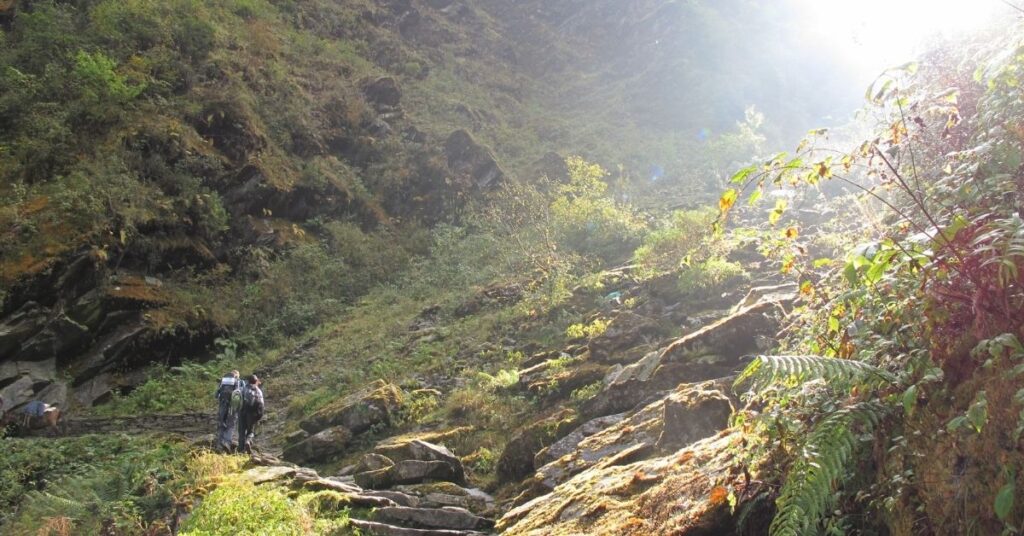
12 Day Everest Base Camp Trek: Day by Day
Day 1: Flight to Lukla and Trek to Phakding
You fly from Kathmandu to Lukla. The flight takes about 30 to 40 minutes. From Lukla, you start the trek and follow the trail down to Phakding. The walk feels gentle and passes small villages and the Dudh Koshi River.
Day 2: Phakding to Namche Bazaar
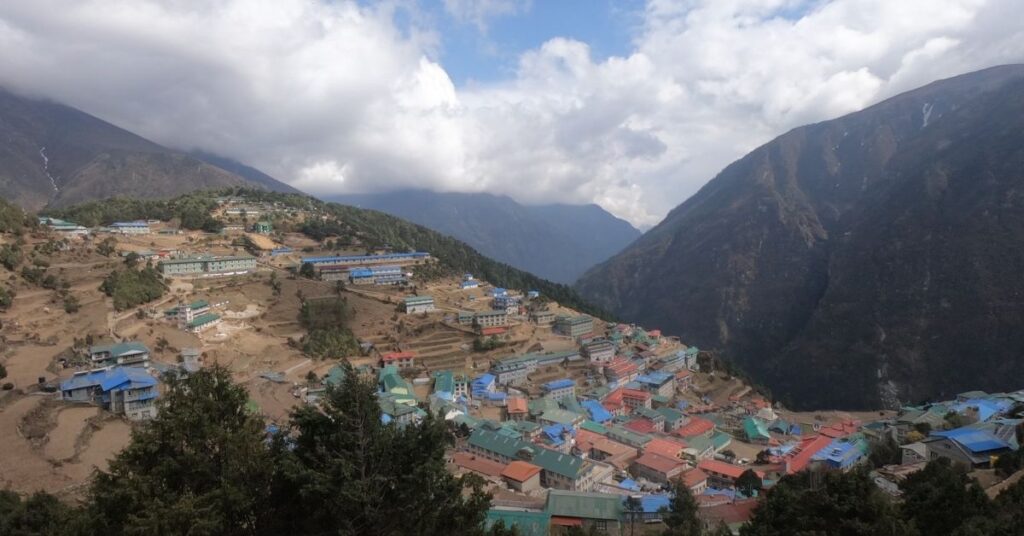
You follow the river and cross high suspension bridges. You enter Sagarmatha National Park at Monjo. A steep climb up Namche Hill brings you to Namche Bazaar at 3,440 meters. This is the main hub of the region.
Day 3: Acclimatization Day in Namche
You stay a second night in Namche to adjust to the height. A side hike to the Everest View Hotel or Khumjung gives you higher exposure. You sleep back in Namche after the hike. This supports the “climb high, sleep low” pattern.
Day 4: Namche to Tengboche
You walk along a contour trail with open views. After a gentle start, the path drops to the river and then climbs to Tengboche at 3,860 meters. Tengboche Monastery and views of Ama Dablam and Everest are the main highlights.
Day 5: Tengboche to Dingboche
The trail goes down through forest and crosses the river again. Then it climbs past Pangboche and Shomare and enters the wide Imja Valley. You reach Dingboche at 4,360 meters and settle in for the night.
Day 6: Acclimatization Day in Dingboche
You take a side hike to Nangkartshang Peak or a nearby ridge. The viewpoint sits above 5,000 meters. You return to Dingboche to sleep. This extra day helps your body prepare for higher ground.
Day 7: Dingboche to Lobuche
You head up the valley to Thukla for a meal stop. After that, you climb the Thukla memorial ridge, where stone monuments honor climbers. A gentle path then leads to Lobuche at around 4,940 meters.
Day 8: Lobuche to Gorakshep and Everest Base Camp
You follow a rocky trail along the moraine and reach Gorakshep at about 5,164 meters. After a short break, you hike to Everest Base Camp at 5,364 meters. You spend time at base camp, then walk back to Gorakshep for the night.
Day 9: Gorakshep to Kala Patthar and Pheriche
You start early for the climb to Kala Patthar at about 5,545 meters. The viewpoint offers one of the best close views of Everest. Then you descend back to Gorakshep for breakfast and continue down to Pheriche.
Day 10: Pheriche to Namche Bazaar
You walk back through Pangboche and Tengboche, then descend through forest. You return to Namche Bazaar. The air feels thicker and walking becomes easier.
Day 11: Namche to Lukla
You retrace the trail through Phakding and nearby villages. The final climb back to Lukla is steady. You spend your last night in the Everest region here.
Day 12: Fly Back to Kathmandu
You take the morning flight back to Kathmandu. The trek ends in the capital with time to rest and reflect.
14 Days EBC Trek (Standard and Most Popular)
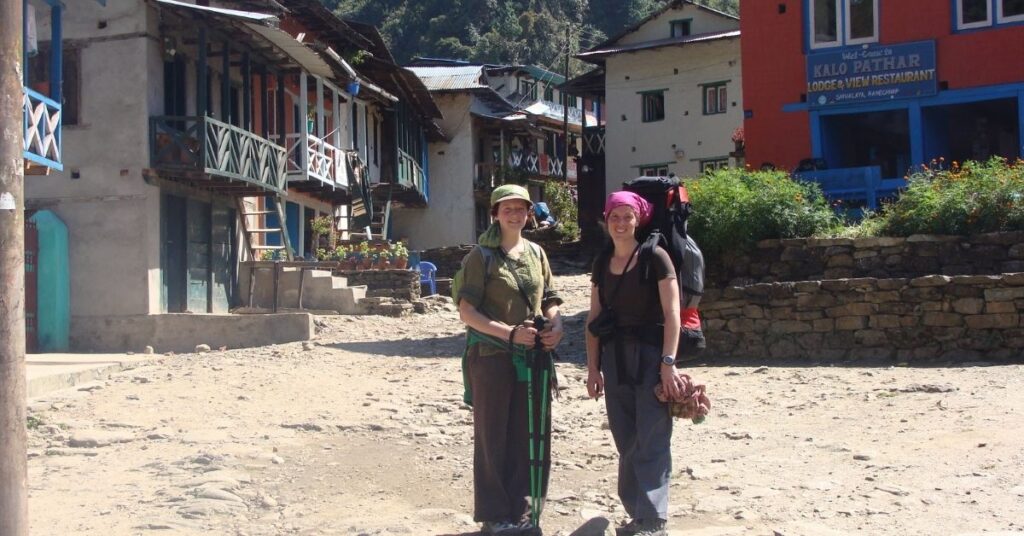
The 14-day Everest Base Camp trek is the most balanced way to reach base camp. It offers proper acclimatization, steady pacing, and enough time for your body to adjust at Namche and Dingboche. This is the itinerary most trekkers follow when they want a safe and comfortable experience.
14-Day Everest Base Camp Trek Itinerary
Day 1: Arrival in Kathmandu (1,400m / 4,600 ft)
Your journey begins in Kathmandu. The city feels lively with narrow alleys, temples, and colorful prayer flags. You meet your trek leader, check your gear, and prepare for the Himalayan trails. The goal of the day is rest and preparation.
Day 2: Lukla (2,840m) to Phakding (2,610m)
A short morning flight takes you to Lukla, the gateway to Everest. The air is fresh, and the mountains rise close. You start your trek with an easy walk through pine forests and small villages until you reach Phakding for the night.
Day 3: Phakding to Namche Bazaar (3,440m)
The trail follows the Dudh Koshi River and crosses several suspension bridges. The final climb to Namche is steep but rewarding. Namche Bazaar is the main Sherpa town with bakeries, shops, and wide views.
Day 4: Acclimatization in Namche (3,440m)
You take a short hike toward Everest View Hotel. The viewpoint opens to Everest, Ama Dablam, and Lhotse. You return to Namche for food and rest so your body adjusts to the height.
Day 5: Namche to Tengboche (3,860m)
The trail moves along a balcony path with mountain views. After a long descent to the river, you climb to Tengboche Monastery. The monastery is known for its peaceful prayer sessions and the view of Ama Dablam.
Day 6: Tengboche to Dingboche (4,410m)
You walk through Pangboche and Shomare. The trail enters the Imja Valley, and Dingboche appears with wide fields and stone walls. You stay here for acclimatization.
Day 7: Acclimatization Hike to Nangkartshang Peak (5,083m)
A steep hike takes you to the ridge above Dingboche. The viewpoint shows Ama Dablam, Makalu, and Lhotse. You return for rest and hydration.
Day 8: Dingboche to Lobuche (4,910m)
You reach Thukla for lunch, then climb to the memorial ridge where monuments honor climbers. The trail continues to Lobuche beside the Khumbu Glacier.
Day 9: Lobuche → Gorak Shep → Everest Base Camp (5,364m)
You walk toward Gorak Shep on a rocky path. After lunch, you head to Everest Base Camp. The Khumbu Icefall rises in front of you. After photos and time at base camp, you return to Gorak Shep.
Day 10: Gorak Shep → Kala Patthar → Pheriche
A pre-dawn start leads to the top of Kala Patthar. Everest shines in golden light. After you descend, you walk back to Pheriche for the night.
Day 11: Pheriche to Namche
You return through villages and forests. The air feels warmer, and the walk becomes easier.
Day 12: Namche to Lukla
You retrace the route back to Lukla. It is your last day on the trail.
Day 13: Flight to Kathmandu
A short flight takes you back to Kathmandu. You can relax, shop, or explore the city.
Day 14: Final Departure
Your EBC trek ends with memories of high trails, Sherpa culture, and mountain sunrise views.
Everest Base Camp Trek by Road: 16 Day Itinerary
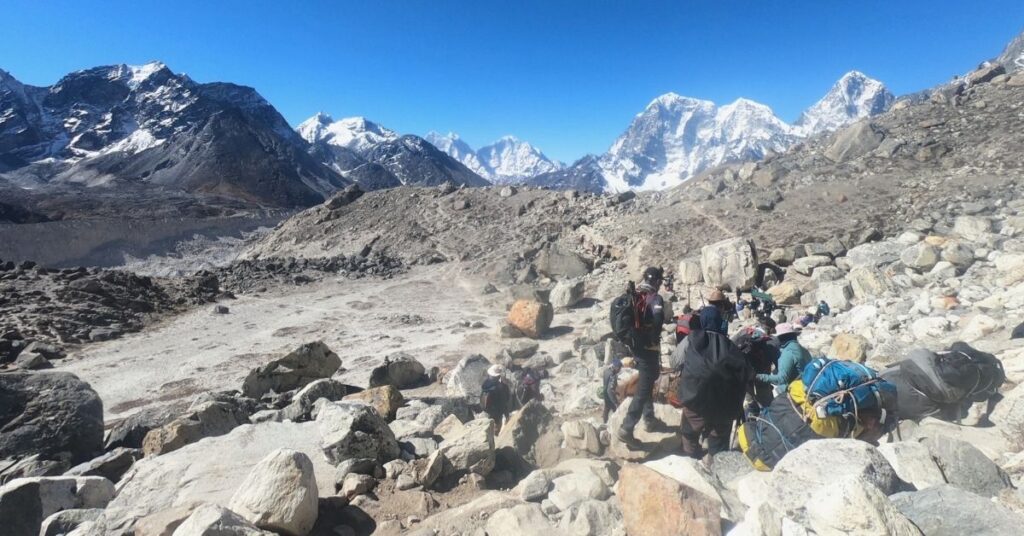
The Everest Base Camp trek by road replaces the flight to Lukla with a long drive. You travel from Kathmandu to Salleri and then by jeep to Surke. From there, you join the main trail near Phakding. This route suits trekkers who want to avoid flying or want to see lower hill regions along the way.
The journey takes more days than the standard trek. In return, you get a slower entry into the mountains and more time in mid-hill villages. You still follow a safe acclimatization pattern in Namche and Dingboche.
Everest Base Camp Trek by Road: Day by Day
Day 1: Drive from Kathmandu to Salleri (Phaplu)
You leave Kathmandu and drive to Salleri or Phaplu. The road journey takes about 8 to 10 hours. You spend the night here and rest.
Day 2: Drive from Salleri to Surke and Trek to Phakding
From Salleri, you drive to Surke. The road is rough and takes several hours. From Surke, you begin trekking toward Phakding. You join the regular Everest trail and stay in a teahouse.
Day 3: Phakding to Namche Bazaar
You follow the same route as the flight-based trek. You cross suspension bridges, pass Monjo, and climb to Namche Bazaar. The day is steady and rewarding.
Day 4: Acclimatization in Namche Bazaar
You stay another night in Namche. You hike up to Everest View Hotel or nearby ridges. Sleep lower in Namche again to help your body adjust.
Day 5: Namche to Tengboche
You walk along balcony style trails, then drop to the river and climb to Tengboche. The monastery and the views provide a strong reward after the climb.
Day 6: Tengboche to Dingboche
You pass Pangboche and Shomare and enter the broad Imja Valley. You spend the night in Dingboche. The village offers space and mountain views.
Day 7: Acclimatization in Dingboche
You hike to Nangkartshang Peak or another high point. You return to Dingboche to sleep. This rest helps you prepare for Lobuche and base camp.
Day 8: Dingboche to Lobuche
You continue toward Thukla and climb the memorial ridge. You then follow a gradual path to Lobuche. The Khumbu Glacier sits close by.
Day 9: Lobuche to Gorakshep and Everest Base Camp
You trek to Gorakshep along the moraine. After a short break, you continue to Everest Base Camp. You explore the base camp area, then return to Gorakshep.
Day 10: Kala Patthar and Trek to Pheriche
You climb to Kala Patthar for sunrise views of Everest. Then you hike back down to Gorakshep and continue to Pheriche. The lower height feels easier on your lungs.
Day 11: Pheriche to Namche Bazaar
You pass familiar villages and forests on the way back to Namche. The walk is long but downhill for most sections.
Day 13: Namche Bazaar to Chaurikharka
You leave Namche and walk down the main trail. You pass Monjo and Phakding and continue toward Chaurikharka. This spreads the descent across more days.
Day 14: Chaurikharka to Thamdanda
You trek down to Thamdanda, where the road begins again. Villages and farmland appear more often as you leave the high valley.
Day 15: Drive from Thamdanda to Kathmandu
You drive back to Kathmandu. The road takes several hours and gives you one last look at hill country before you reach the city.
Day 16: Departure
You rest or fly home. The long road-based Everest Base Camp trek ends.
EBC Trek with Helicopter Return: 10 Day Itinerary
The Everest Base Camp trek with helicopter return is ideal if you want to walk the classic route and save time on the way back. You trek from Lukla to Everest Base Camp and Kala Patthar. Then you board a helicopter and return to Lukla or Kathmandu. This plan reduces downhill walking and shortens the trip.
This itinerary suits trekkers with limited holiday time or those who want a mix of trekking and scenic flight. It still keeps acclimatization days in Namche and Dingboche.
10 Day Everest Base Camp Trek with Helicopter Return: Day by Day
Day 1: Arrival in Kathmandu
You reach Kathmandu and settle into your hotel. Meet your trekking team and check gear. You get a short briefing about the route and altitude.
Day 2: Flight to Lukla and Trek to Phakding
You take a scenic morning flight to Lukla. After landing, you start walking to Phakding. The path is gentle with river views and small villages.
Day 3: Phakding to Namche Bazaar
You follow the Dudh Koshi River, cross high bridges, and enter Sagarmatha National Park. The last climb up to Namche tests your legs. Namche rewards you with your first wide views.
Day 4: Acclimatization in Namche Bazaar
You hike to Everest View Hotel or Khumjung. You return to Namche for the night. This day supports healthy acclimatization.
Day 5: Namche to Tengboche
You walk along a balcony trail with open views of Everest and Ama Dablam. Then you drop to the river, cross it, and climb to Tengboche. The monastery and mountain background feel very special.
Day 6: Tengboche to Dingboche
You trek through forest and past Sherpa villages. The trail enters the wide Imja Valley. Dingboche stands among stone fields and offers big views.
Day 7: Acclimatization in Dingboche
You hike up a nearby ridge or to Nangkartshang Peak. You come back to Dingboche to rest. This day prepares your body for the higher section.
Day 8: Dingboche to Lobuche
You reach Thukla and climb the memorial ridge. Then you cross glacial terrain and reach Lobuche. The air feels much thinner now.
Day 9: Lobuche to Gorakshep and Everest Base Camp
You hike to Gorakshep and take a short rest. After that, you walk to Everest Base Camp. You enjoy the view of the Khumbu Icefall and nearby peaks, then return to Gorakshep.
Day 10: Kala Patthar and Helicopter Flight Back
You climb Kala Patthar early in the morning. The viewpoint offers close-up views of Everest at sunrise. After the climb, you return for breakfast. From a lower point like Lobuche or Gorakshep, you board the helicopter. The flight takes you back to Lukla or Kathmandu, which ends the trekking part of the trip.
Everest Base Camp and Gokyo Lakes Trek: 17 Day Itinerary
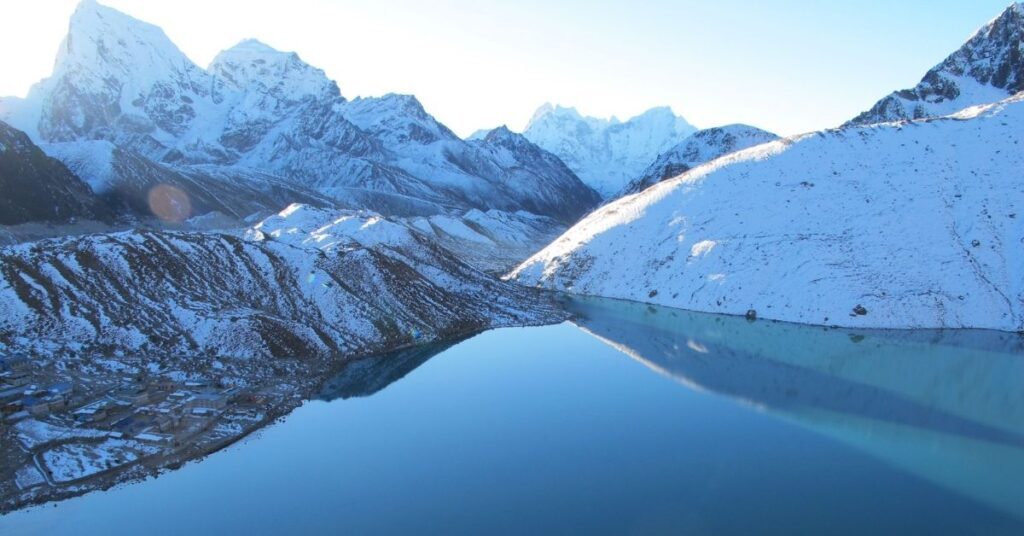
The Everest Base Camp and Gokyo Lakes trek combines two of the most famous routes in the region. You visit Everest Base Camp and climb Kala Patthar. Then cross Cho La Pass and enter the Gokyo Valley. You see turquoise lakes and climb Gokyo Ri for another wide view of Everest and nearby giants.
This itinerary suits trekkers who want more variety and have enough time for a longer adventure. It needs good fitness and comfort with longer days and a high pass.
Everest Base Camp and Gokyo Lakes: Day by Day
Day 1: Arrival in Kathmandu
You reach the capital and meet your team. You rest and prepare for the flight to Lukla.
Day 2: Flight to Lukla and Trek to Phakding
You fly to Lukla and start the trek. You walk to Phakding through forest and riverside paths.
Day 3: Phakding to Namche Bazaar
You follow the river, enter Sagarmatha National Park, and cross high bridges. A steep climb brings you to Namche Bazaar.
Day 4: Acclimatization in Namche Bazaar
hike to Everest View Hotel or similar points. You enjoy views of Everest, Lhotse, and Ama Dablam. You then return to Namche for the night.
Day 5: Namche to Tengboche
You walk a scenic contour trail and then descend to the river. After lunch, you climb up to Tengboche. The monastery and views make the effort worth it.
Day 6: Tengboche to Dingboche
You pass through Pangboche and Shomare and enter the Imja Valley. Dingboche sits at 4,410 meters and offers wide open views.
Day 7: Acclimatization in Dingboche
Hike to Nangkartshang Peak or another viewpoint. You return to Dingboche to sleep. This day keeps your acclimatization on track.
Day 8: Dingboche to Lobuche
Walk to Thukla and climb the memorial ridge. From there, you follow the trail to Lobuche. The glacier lies close to the village.
Day 9: Lobuche to Gorakshep and Everest Base Camp
You trek to Gorakshep and take a short pause. Then you walk to Everest Base Camp at 5,364 meters. You return to Gorakshep for the night.
Day 10: Kala Patthar and Trek to Dzongla
You climb Kala Patthar early and watch sunrise over Everest. After that, you descend back to Gorakshep and then head toward Dzongla. This small village stands near the base of Cho La Pass.
Day 11: Dzongla to Thangnak via Cho La Pass
Climb to Cho La Pass at around 5,420 meters. The day is long and includes rock, ice, and snow. You then descend to Thangnak and rest in a teahouse.
Day 12: Thangnak to Gokyo
You cross glacial terrain and reach the first Gokyo Lake. You continue to Gokyo village beside the main lakes. The blue water and white peaks create a very strong scene.
Day 13: Gokyo Ri and Trek to Machhermo
You climb Gokyo Ri early for wide views of Everest, Cho Oyu, and the Gokyo Lakes. After the climb, you descend and walk down the valley to Machhermo.
Day 14: Machhermo to Namche Bazaar
You move back through Dole and other villages. The trail descends to Namche Bazaar. You spend the night there and enjoy the lower height.
Day 15: Namche to Lukla
You walk back through Monjo and Phakding and return to Lukla. This is your last day on the trail.
Day 16: Flight Lukla to Kathmandu
You take the mountain flight back to Kathmandu and rest.
Day 17: Departure
You end the trek and leave with two major routes completed in one journey.
Luxury Everest Base Camp Trek: Comfort Focused Route
A luxury Everest Base Camp trek uses a similar route to the standard 14 day plan. The main difference lies in the level of comfort at each stop. You stay in higher quality lodges when possible. You get better bedding, attached bathrooms at lower heights, and better food options. Some days may be shorter to allow more rest.
This itinerary suits trekkers who want the Everest Base Camp experience with more comfort. It is helpful if you value sleep quality, hygiene, and quieter lodges.
A sample luxury plan may look like this:
- Flight to Lukla and trek to Phakding
- Phakding to Namche with stay in an upgraded lodge
- Extra rest or flexible acclimatization walks from Namche
- Stays in selected lodges in Tengboche, Dingboche, Lobuche, and Pheriche
- Optional helicopter exit from a planned point if weather allows
You still visit Everest Base Camp and climb Kala Patthar. You still follow safe height gain rules. The main upgrade sits in where you sleep, what you eat, and how much support you receive from the team.
Comparing Everest Base Camp Trek Itineraries
When trekkers compare all these options, a few points stand out. Trip length, return style, and side routes shape the final choice.
- Trip Length
Ten days works if you choose a helicopter return.
Twelve days fits a compact classic trek.
Fourteen days suits a standard route with more rest.
Seventeen days fits a base camp and Gokyo combo. - Access Route
Flight both ways gives speed but depends on weather.
Road entry through Salleri takes more time but avoids flight delays. - Return Style
Walking back suits those who want full trail exposure.
Helicopter return suits those who want to save time and reduce strain. - Add-On Routes
Gokyo Lakes and Cho La Pass add variety and challenge.
Pure base camp routes keep it simpler. - Comfort Level
Budget routes use standard teahouses.
Luxury routes use higher grade lodges where possible.
Weather, Acclimatization and Ideal Season
All these itineraries share the same mountain weather pattern. Spring and autumn bring clear skies and stable conditions. Winter brings cold nights and frozen ground. Monsoon brings clouds and rain at lower heights.
No matter which route you choose, acclimatization days in Namche and Dingboche stay very important. They help you adjust to the thin air and keep the journey safe. Trekkers can also review a guide to Everest Base Camp weather and temperature to choose their ideal month.
Cost Overview for Different EBC Itinerary Styles
The total cost changes by route. A budget Everest Base Camp trek with teahouse stays and a simple service level has the lowest price. A classic 14 day trek sits in the middle range. A road-based trek can balance cost and reliability if flights worry you. A helicopter return and luxury lodge plan will cost more but offer more comfort and speed.
You can guide readers to a detailed article on how much it costs to trek Everest Base Camp. You can also connect them to focused pieces on food, drink, and accommodation cost on the EBC trek to show how daily expenses change along the trail.
Training and Preparation for Any EBC Itinerary
Every itinerary to Everest Base Camp needs preparation. The trek is not a technical climb, but you walk for many days at height. Your body needs steady cardio fitness and leg strength. It helps if you train with hikes, stair climbing, and light strength sessions before the trip.
You can remind readers to follow guidance from a full guide on how to train for the Everest Base Camp trek. That kind of resource makes the choice of itinerary feel more realistic. It shows readers that they can reach base camp with the right pace and plan.
FAQs
Which Everest Base Camp itinerary is best for beginners?
The classic 14 day plan works best for most beginners. It has two acclimatization days and a steady pace. It also gives enough time to rest and enjoy the villages.
Is the 12 day Everest Base Camp trek safe?
The 12 day route can be safe if you have good fitness and follow a proper pace. It still keeps acclimatization days in Namche and Dingboche. It suits strong walkers who do not want side trips.
Who should choose the road-based Everest Base Camp trek?
The road route fits trekkers who want to avoid flights or have had delays in Lukla before. It also suits people who like to see hill villages and landscapes on the way in and out.
Is the EBC trek with helicopter return worth it?
The helicopter return saves several days of walking. It also gives a new view of the mountains from the air. It is a good choice if you have limited time or want to reduce strain on knees during the descent.
When is the best time to trek to Everest Base Camp and Gokyo?
Spring and autumn work best for the combined route. These seasons offer clear passes on Cho La and good views around Gokyo Lakes. Winter can be risky on high passes and monsoon brings poor visibility.





 Chat on WhatsApp