| Duration: 60 day | Max Altitude: 8849m | ||
| Group Size: 2-13 | Location: Everest | ||
| Difficulty: extreme | Per Day Walk: 6-8hrs | ||
| Accommodation: Tea Houses/Lodges |
Everest Expedition
The Everest expedition is an adventurous mountaineering voyage in the Himalayas. Every alpinist dreams of standing on the top of Mount Everest, and our Everest expedition package will help you make this dream come true.
We, Mountain Routes, are one of the most reliable and trustworthy local Nepalese companies for the Mount Everest expedition. We work with veteran Sherpas who have climbed Everest many times and are experts on the Everest route.
Climbing Everest is not easy and definitely not straightforward. It requires meticulous planning, precision, strong logistical support, and a good network with rescue providers, the Nepal government, and other expedition parties.
We have all of these things. Not only that, we have up-to-date tech and a tactical approach to climbing Mt. Everest, which ensures a high success and safety rate. We provide IFMGA guides and an ample support crew to climb with you.
If you are serious about climbing Everest and looking for a reliable climbing partner, we could be your best choice. The Mt. Everest expedition is a lifetime activity, and we make sure you live every moment of this trip vigorously.
You don’t climb Everest because it’s there. You climb because it shows you what’s in you. So, join us on our Everest expedition 2026 and find out what you are capable of!
The Everest Expedition: Why it’s Worth Every Step
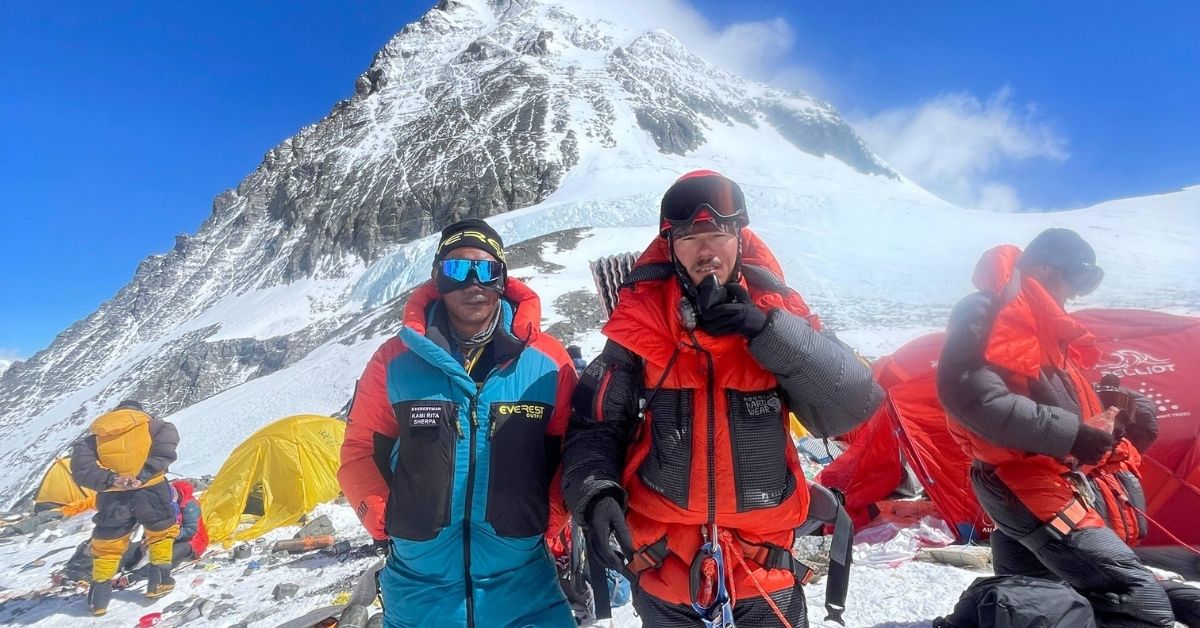
The Everest expedition is the ultimate adventure a human can embark on. It is a transformational journey that will reshape your body, mind, limits, and perspectives.
While there are real-life-threatening risks during the Everest expedition, it also offers incredible, unparalleled rewards. If you are well-prepared and supported by a strong local team like us, you can climb Mount Everest successfully and safely.
- Everest climbing is the ultimate test of human potential. It pushes you beyond your limits, develops mental resilience, and lets you join the<0.1% of humans who have stood at 8,849 meters.
- The stakes are very high during the Everest expedition. You will experience the Death Zone and conquer it. The climb will shape your mental and decision-making dynamics for good.
- Your perspective on life, humans, and privileges will shift. You will see the much grander side of the Earth and experience your highest consciousness.
- The cultural immersion is also excellent during the Everest expedition. Nepalese heritage and traditions wrap each step of the journey.
- You will experience 89% improved risk assessment skills and 76% significant life changes by the end of the expedition.
- Finally, you will have a story worth telling for generations.
Your 60-day Everest Expedition Itinerary: Starting from Kathmandu to the Everest Summit
-
1:
Days 1 to 4: Arrival, Welcome, and Gear Prep in Kathmandu
-
2:
Days 5 to 10: The Lukla flight and Trekking to Everest Base Camp along the Khumbu Glacier
-
3:
Days 11 to 14: Acclimatization, Training, and Puja Ceremony
-
4:
Days 15 to 50: Acclimatization Rotations and Summit Push, with Full Support
-
5:
Days 51 to 60: Safe Descent, Celebration, and Return to Kathmandu
-
1. Days 1 to 4: Arrival, Welcome, and Gear Prep in Kathmandu
You will spend the first four days in Kathmandu, getting rid of your jet lag, exploring the city, embracing the Nepalese hospitality, and definitely preparing gear for the expedition.
There will be multiple expedition briefings, weather talks, and shopping.
-
2. Days 5 to 10: The Lukla flight and Trekking to Everest Base Camp along the Khumbu Glacier
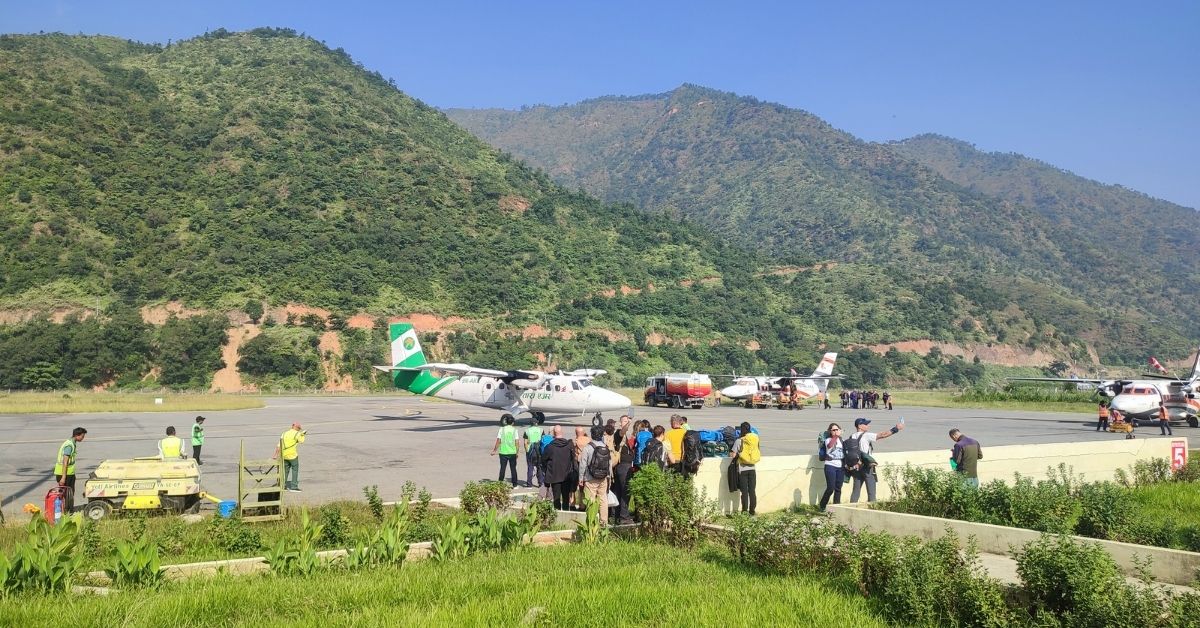
You will fly to Lukla and spend the remaining days hiking to Everest Base Camp through rhododendron-covered foothills and beautiful Sherpa villages. It is a great time to acclimate, meet the locals, and experience the mountain lifestyle.
Route: Lukla/Phakding → Namche Bazaar → Tengboche → Dingboche → Lobuche → EBC via Gorak Shep
-
3. Days 11 to 14: Acclimatization, Training, and Puja Ceremony
You will then spend a few days acclimatizing at the Everest Base Camp. Our support crew will already be waiting for us at the base camp. So, by the time you reach EBC, the tents and warm food will be ready to welcome you.
You will get some climbing training from your leader. He will show you all the gear you will use during the climb and how to use it. Likewise, we will explain the route condition and share the acclimatization rotation plan.
Before you begin the acclimatization rotation, we will do a puja ceremony to honour the mountain and bless ourselves for a safe and successful expedition.
-
4. Days 15 to 50: Acclimatization Rotations and Summit Push, with Full Support
In the next few weeks, you will spend time ascending to higher camps and descending to base camp to spend the night. It is essential to acclimatize and avoid acute mountain sickness during the summit push.
We do acclimatizations to adapt our bodies to thin air and low oxygen levels. It also helps us to boost our confidence because we climb Khumbu Ice Fall and ascend up to Camp III before the final push.
We will wait for the optimal summit window and push as soon as it opens.
-
5. Days 51 to 60: Safe Descent, Celebration, and Return to Kathmandu
For the final 10 days, you will spend descending from the mountain while collecting all your garbage.
At the Everest Base Camp, our remaining crew will welcome you with celebratory drinks, and now, the only thing remaining is to celebrate.
You will descend to Lukla and fly back to Kathmandu. In Kathmandu, too, we will have a celebration dinner and hand over the Everest summit certificate issued by the Nepal government.
Includes
✔ 1:1 Sherpa support (summit push only)
✔ 8 bottles of oxygen (7L each) + spare mask/regulator
✔ Base Camp medical team
✔ Group gear (tents, ropes, ladders)
✔ Private tent at all camps
✔ 8 oxygen bottles (7L Poisk cylinders)
✔ Dedicated weather forecaster
✔ Guaranteed helicopter evacuation
Excludes
❌ International flights (USD 1,500 to USD 3,000)
❌ Personal gear (USD 8,000 to USD 15,000 if buying new)
❌ Nepal visa & travel insurance (USD 500 to USD 1,000)
❌ Summit bonus for Sherpas (USD 1,500 to USD 2,000 customary)
Everest expedition via South Col route
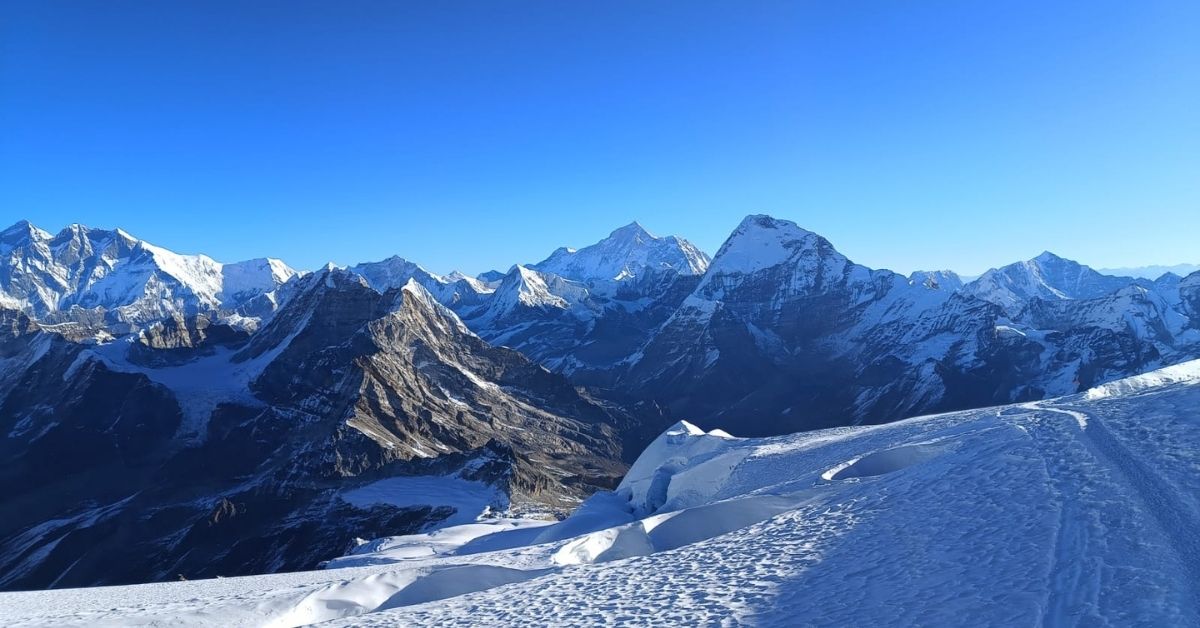
Mountaineers primarily use the South Col route (on the Nepalese side) to climb Mt. Everest. It is less risky than the North route on the Chinese side, and obtaining permits is also less complicated.
While climbing Mount Everest via the South Col route, you will make four camps between Everest Base Camp and the summit. Each camp is strategically positioned to provide the best acclimatization opportunity and a safe camping location.
Everest Base Camp: 5,364 m/ 17,598 ft
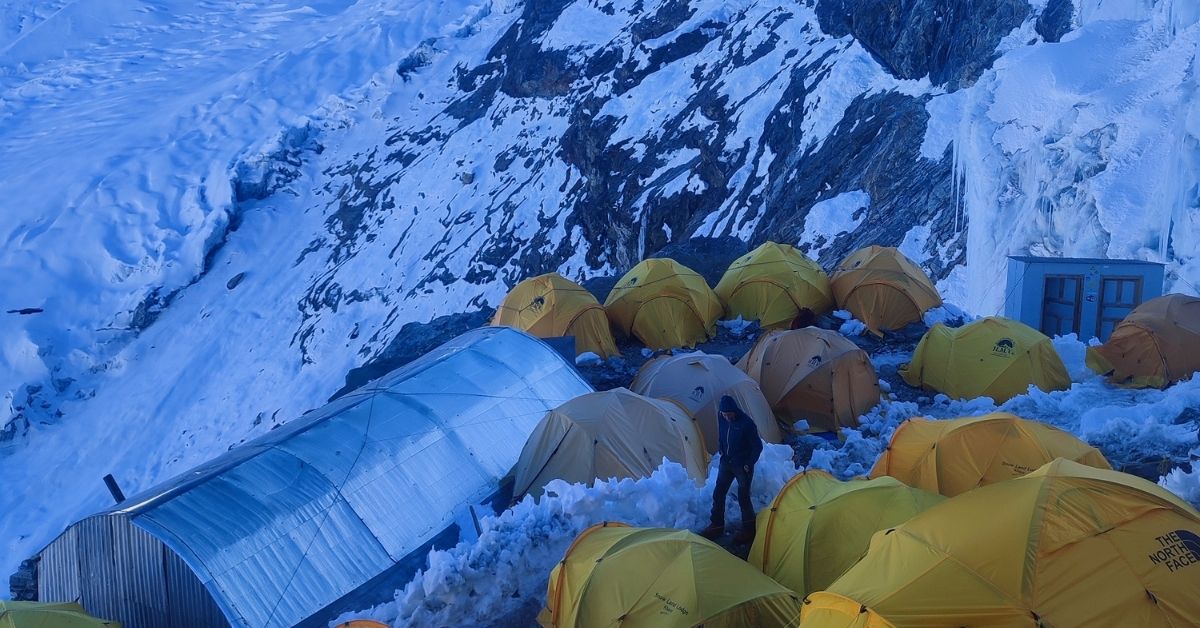
The Everest Base Camp is a permanent camp. It means we have everything here, from food and fuel to gear, a kitchen team, a medical team, weather experts, and more.
During the Everest expedition, you will spend the longest time at the Everest Base Camp. Here, you will rest, acclimatize, improve your climbing techniques, learn about the route, and do acclimatization rotations.
About Everest Base Camp: It is a moving glacier located at the foot of the Khumbu Glacier. It flows down from the Western Cwm. The Everest Base Camp by road terrain is rugged with moraines, rocks, and glaciers.
Camp I: 6,065 m/19,898 ft
Camp I is situated above the Khumbu Icefall on a rocky outcrop. To reach Camp I, you have to cross the Khumbu Icefall, which is one of the most technical sections of Everest.
The Khumbu Icefall is a 2,000 ft moving ice with deep chasms, ice seracs, and torrential slides off. One of the first things you will do while staying at the Everest Base Camp is learn and practice crossing the Khumbu Icefall. You will climb it several times throughout the Everest expedition.
Camp II: 6,492 m/21,299 ft
Camp II is situated above the Western Cwm. This camp is strategically placed on a broad ridge along a moraine at the lower part of the west edge. The huge face of Lhotse protects the area.
While climbing to Camp II, you will follow steep ice cliffs and cross deep crevasses. Camp II is our first semi-permanent camp after the base camp. So, we will gradually bring our climbing supplies here for further camps.
At Camp II, we will set up a dining area, kitchen, washroom, and sleeping tents. You will spend a good number of days at Camp II before pushing towards the summit.
Camp III: 7,470 m/24,500 ft
Camp III is located above the Lhotse Face, so you have to climb the Lhotse Face to reach here. This is a tricky route, and high elevation makes climbing challenging.
We will gain almost 1000 meters from Camp II to Camp III. The route is unstable and has steep, icy slopes of 30-40 degrees.
We climb with supplemental oxygen, but we will not use it until climbers must need it. Our goal is not to use supplemental oxygen at Camp III because we have to train our body and mind for further elevation gain.
At Camp III, we will spend a handful of nights before climbing to Camp IV. It will be our second semi-permanent camp.
South Col (Camp IV): 8,000 m/26,300 ft
Camp IV will be on the South Col. It will be our last camp before the Mount Everest summit. Our camping site will be situated on a narrow saddle between Everest and Lhotse.
From here, the Everest summit is on the north, and the Lhotse summit is on the south. Leaving Camp III, you will climb two rock sections.
The first is the infamous Yellow Band. It is an interlayer of marble, phyllite, and schist rock. The second section is the Geneva Spur, which is an anvil-shaped rib of black stone.
Most climbers do not need supplemental oxygen support till Camp IV. Breathtaking at 8,000 meters will not be easy, but you have to push yourself to naturally breathe as much as you can for the final 849-meter climb.
Summit: 8,8489 m/29,032 ft (1 hour or less)
From Camp IV, we can reach the Everest summit in one hour of climbing. We will wait for the optimal weather window and push toward the summit as soon as we get a signal from our weather experts.
On the summit day, we will start climbing at 1:00 AM using headlights. Using the fixed ropes, you will follow your guide’s lead and climb the Balcony. It is a small platform at 8,400 meters (27,500 ft).
From here, you will follow the southeast path that leads to the famous Hillary Step. It is a 12-meter (40-foot) rock face. After climbing the Hillary Step comes the south summit and the central panel.
The final climb from here will take you to the true summit of Mt. Everest, which is a moderate snow slope. Climbing this 849 meters will be very demanding due to high elevation, narrow path, strong wind, cold, and sun exposure, but you will do it.
You will not spend much time at the summit and will begin descending to lower camps following the same route. You have to be extra careful while descending as well.
When to Climb Everest: Seasons, Weather, and What to Expect
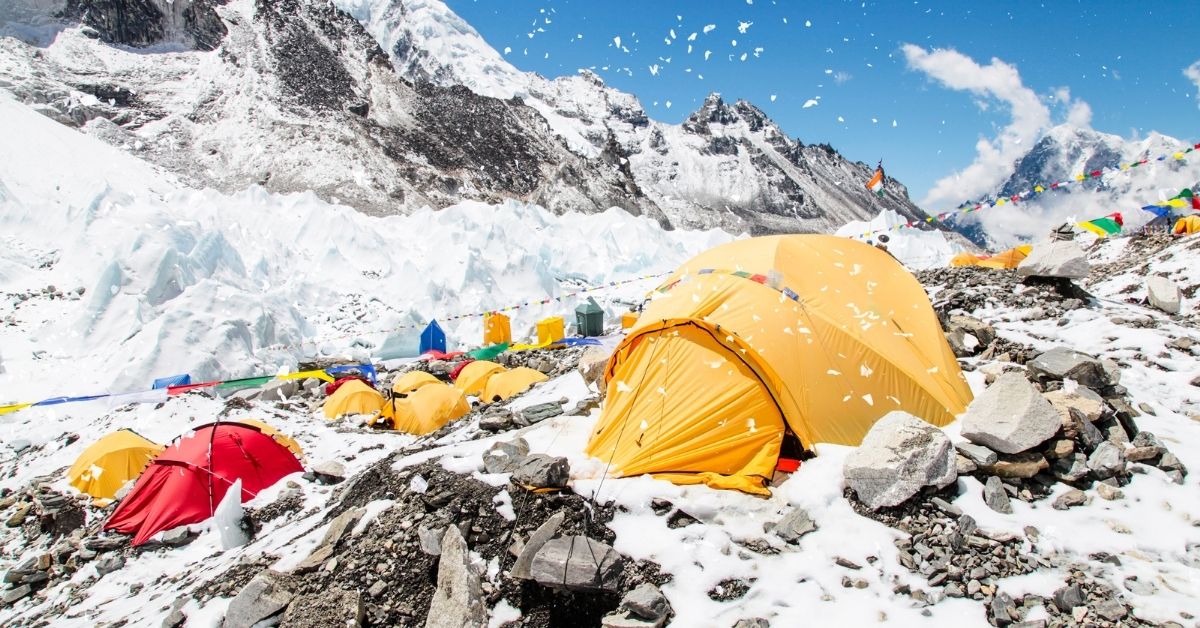
Mt. Everest is generally climbed between late April and late May. By mid-June, most climbers are already in Kathmandu. Between late April and late May, the summit window is around mid-May.
Once the summit window opens, mountaineers waiting in line to summit Everest start climbing one after another.
As the summit window is short, most of the climbers have to push together, which results in a long line of climbers on the way to the Everest summit that we have been seeing on social media for the past few years.
Weather conditions on Mount Everest
During the Mount Everest expedition, climbers face some of the most intense and unpredictable weather on Earth.
With the rise in elevation, the climate gradually changes into an Arctic desert with sub-zero temperatures, hurricane-force winds, and sudden snowstorms.
The weather conditions vary at different elevations and seasons. Altitude, season, and time of day highly affect the weather conditions on Mt. Everest.
✔ Altitude: Higher altitude = thinner air = cold, 200+ mph wind, less oxygen, and high UV radiation
✔ Season: Spring best & winter deadly (drastic temperature difference from scorching sun to deadly cold)
✔ Time of day: Midday sun can burn skin, and nights are brutally cold
Temperature variation by altitude
With the rise in elevation, the temperature drops. Due to direct sunlight, the climate may feel 10°C to 15°C warmer, but cold winds counterbalance the warmth.
Likewise, above 8,000 meters (Death Zone), the body loses heat faster than it can produce it, which makes the climbing environment even tougher.
| Elevation | Avg. day temperature | Avg. night temperature | Wind |
| Everest Base Camp (5,364 m/17,598 ft) | 5°C to 5°C (23°F to 41°F) | -15°C (5°F) | Feels 5–10°C colder |
| Camp II (6,400 m/20,997 ft) | 10°C to -5°C (14°F to 23°F) | -25°C (-13°F) | Feels -30°C (-22°F) |
| South Col (8,000 m/26,247 ft) | -20°C (-4°F) | -35°C (-31°F) | Feels -50°C (-58°F) |
| Summit (8,849 m/29,032 ft) | -25°C to -35°C (-13°F to -31°F) | -50°C to -60°C (-58°F to -76°F) | Feels -70°C (-94°F) with wind |
Wind: The Silent Killer
Once you go above Camp III, you will encounter some serious wind exceeding 200+ mph (322+ km/hour) in winter.
In May, this wind calms down for a very short time, giving the summit window to mountaineers. The high wind also creates whiteout conditions due to blowing snow, which reduces visibility.
*To reach the summit of Mt. Everest safely, the wind must be below 50 km/hour.
| Season | Wind speed | Impact on climbers |
| Spring (Apr–May) | 30–80 km/h (20–50 mph) | Calmest period (summit window) |
| Autumn (Oct–Nov) | 50–100 km/h (30–60 mph) | Riskier than spring |
| Winter (Dec–Feb) | 100–200+ km/h (60–125+ mph) | Impossible for most climbers |
| Monsoon (Jun–Sep) | 20–50 km/h (12–30 mph) | Heavy snow and no wind are the issues |
Snowfall, storms, and avalanche risks
- Spring: Light to moderate snowfall, avalanche risk in the Khumbu Icefall and Lhotse Face
- Autumn: Less snow, but colder and black ice on the Lhotse Face makes climbing harder
- Summer/monsoon: Heavy snowfall and high avalanche danger
- Winter: Heavy snowfall, extreme cold, and jet streams
Weather challenges that climbers face during Mt. Everest climbing
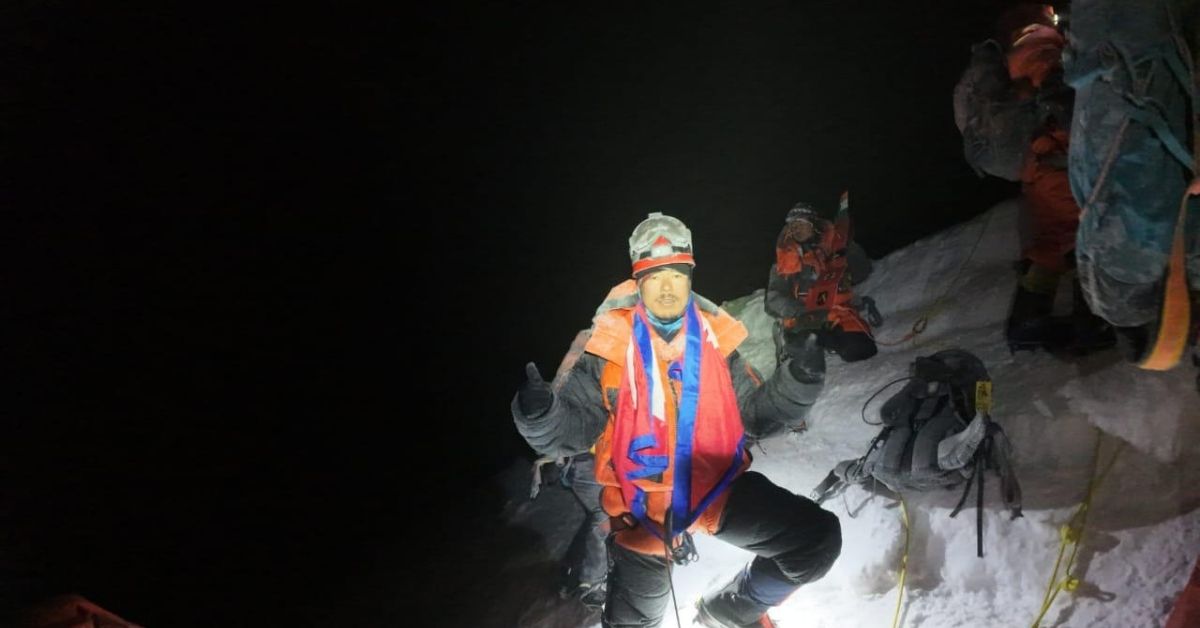
- Whiteouts are caused by blowing snow or thick clouds. It can lead to disorientation, getting lost, and falling.
- Thunderstorms and lightning. These are rare events but quite deadly. Most likely to happen between the base camp and Camp II.
- UV burns and solar radiation. It can cause snow blindness.
- Sudden weather changes. A sunny morning can change into a blizzard.
How climbers survive the extreme weather during Mt. Everest climbing expedition
✔ Layered clothing: Down suits, balaclavas, heated gloves, snow sunglasses
✔ Oxygen tanks: Regulates blood and prevents altitude sickness and frostbite
✔ Weather forecasts: A Dedicated professional team to study weather and predict drastic changes
✔ Turn back: Turning back is not giving up on Everest. It is playing smart. Turn back and climb again when the weather is favourable.
Remember that you cannot win the weather in the Himalayas, and stubbornness leads to most deaths.
Why do most climbers aim to summit Everest in mid-May?
- Stable weather and warmer temperatures: During mid-May, the weather stabilizes in the Himalayas, and the temperature is perfect. The weather window opens for a very short period and allows climbers to reach the summit of Mt. Everest.
- Low wind: As you touch 6,000 meters and go above this elevation, you will face strong wind. In mid-May, the wind is not as strong as in other months and is manageable.
- Safe route conditions: Ice and snow conditions are much more predictable during mid-May. The route is stable, and the risks of avalanches are low.
What to expect while climbing Mt. Everest in spring?
Due to favourable weather conditions, spring is the peak time for climbing 8,000-meter mountains in the Himalayas. The weather will still be extreme, but not unsafe and erratic like other seasons.
Things you can expect while climbing Mt. Everest in spring are:
- Crowd: The best weather and less risk attract the majority of mountaineers wishing to reach the top of Everest in spring. So, there can be a long queue at the Hillary Step and other bottlenecks.
- Temperature: In terms of temperature, you can expect -5°C to 5°C (23°F to 41°F) during the day and -15°C (5°F) at night at the Everest Base Camp. Likewise, at the Everest summit, you can expect -25°C to -35°C (-13°F to -31°F), but the climate will feel much colder due to wind chill.
- Short weather window: Many climbers do not realise that the weather window only stays for 2 to 4 days. It is the golden period when the weather remains calm for 2 to 4 days, and everyone pushes towards the summit during this period.
Is the Everest climbing challenge right for you? Are you ready for this once-in-a-lifetime journey, and do you meet all the requirements?
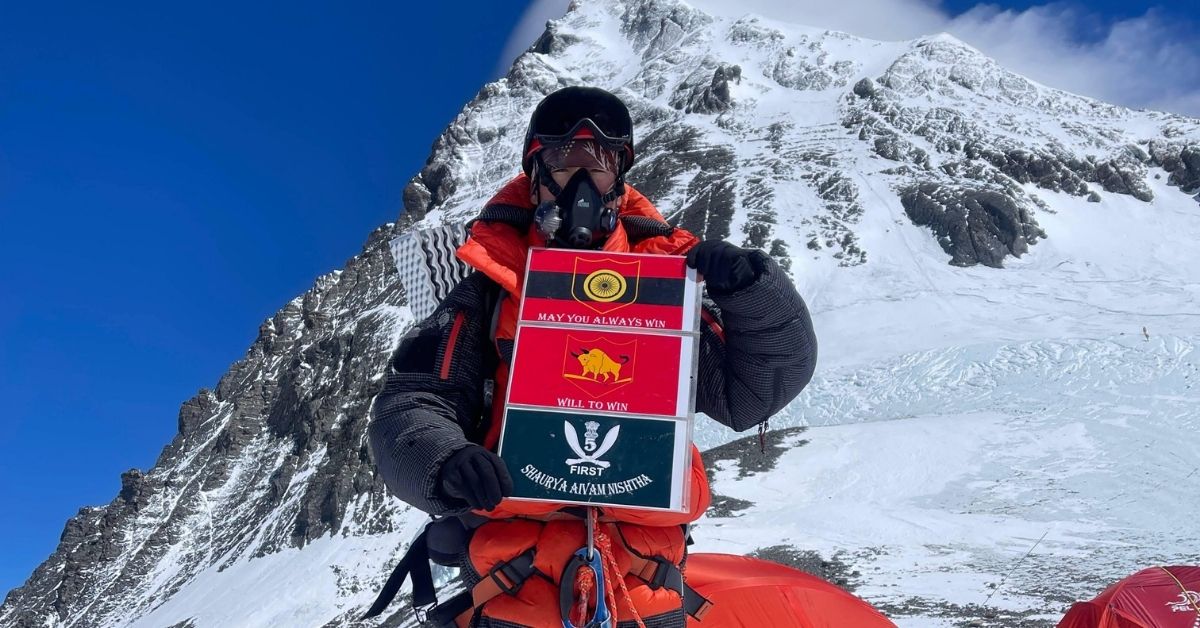
Climbing the tallest mountain on Earth is more than just a physical challenge. It pushes you beyond human limits and tests your mental endurance.
In addition to that, expedition Everest demands time commitment, substantial finances, and discipline. In short, climbing Everest is not for a normal person. This extraordinary venture demands extraordinary humans!
Physical and mental requirements
You need elite strength, stamina, and endurance to climb Everest. Climbers have to carry around a 20kg backpack for 6-8 hours at high altitude. Likewise, they need to endure extreme cold & exhaustion for weeks and potential sleep deprivation.
At the Everest Base Camp, you will have a quite comfortable stay, but at higher camps, discomforts like freezing temperatures, no showers, etc, increase.
Even at rest, you will be constantly fighting your urge for modern conveniences. The thought of giving up is common, but fighting it and continuing the journey is important.
Are you capable of handling these things? Not only that, but have you summited a 6000-meter and 7000-meter mountain yet? This is the physical and mental requirement for Mt. Everest.
What level of experience and preparation is required to join the Everest expedition?
Climbing Everest is not for everyone, especially not for beginners. You need to have previous climbing experience and proven experience with crampons, glaciers, and fixed-line climbing.
Likewise, you have to be confident and familiar with technical climbing and gear. Below, we have made a list of requirements for Mt. Everest climbing:
A 7000-meter altitude experience
Anyone who wants to climb Mt. Everest must have a 7,000-meter mountain experience. You can climb a 7,000-meter mountain in Nepal or any other country. It is a new rule set by the Nepal government during the 2025 climbing season.
Physical training
You have to start training 9 to 12 months in advance of departure. Gym workouts and cardio are not enough. You also have to stimulate the challenges and environment you will experience on Everest.
Advanced trekking and peak climbing (5000 m to 6000 m) is highly recommended. Likewise, you can look for training centres that can help you train for extreme environments. High-volume but low-intensity training is recommended.
Mindset
During the Everest expedition, you will be in a stressful environment for around 2 months. Your psychological and emotional state must be strong and ready to face a multitude of challenges.
Physical training will help you a lot to push your mental endurance. In addition to that, you gotta start picturing yourself on the mountain facing extreme cold, strong wind, and high altitude.
Regulate your stress level, practice long breathing, and combine yoga/meditation in your training routine.
Technical ice and rock climbing skills
When did you last climb a technical ice or rock? If it is too long ago, you need to brush your skills. Practice self-arrest (stopping a fall on ice), ladder crossing, ascending and descending using fixed ropes (jumaring and rappelling), etc.
Medical & health preparation
Get a full-body medical exam before departure and consult with your doctor. Share your Everest expedition plans and get his advice.
If you have any pre-existing medical conditions, make sure you first meet with your doctor and then only book the trip. Individuals with heart, lungs, etc, issues should be more cautious.
Gear preparation and testing
You need a special summit suit, Gore-Tex shells, heated gloves, summit boots, technical climbing gear, and many other things for the Everest expedition.
We have shared a full list of things that are required during the Everest expedition below. Follow the list while arranging them. You can also rent many gear in Kathmandu. Kindly talk to us for more information.
Who should not attempt Everest?
❌ Beginners (no prior high-altitude climbs)
❌ Unfit individuals (unable to hike 8+ hours with a heavy load)
❌ Prone to panic or bad decisions
❌ Those with heart/lung conditions (altitude can be deadly)
The summit expedition cost: How much does it cost to climb Everest?
The cost of climbing Everest is high. It is one of the most expensive adventures in the world.
Though depending on the operator, the cost of an Everest expedition may vary by a few thousand dollars, it also means varying service grade and safety standards.
As you have already paid quite a high amount for the Everest expedition, do not cheap out on a couple of thousand dollars and jeopardize your safety and service quality.
Below, we have a breakdown of the approximate costs for things you will pay for during the Everest expedition:
✅ Everest climbing permit (mandatory) taken by the Nepal government: USD 15000 per climber
✅ Mountain Route’s Everest expedition package cost: USD 42500 per client
Why does climbing Everest cost so much?
- Logistics support in the death zone: Sherpas charge USD 600 per oxygen bottle x 5–10 bottles = USD 3,000 to USD 6,000
- Helicopter rescue: Costs up to USD 5000/hour
- Sherpa salaries: USD 8000 to USD 12,000 each
- Medical team: USD 15,000 per expedition
- Satellite comms: USD 10,000/expedition
- Icefall doctors: USD 50,000 to secure the Khumbu Icefall route
- The company’s service charge and all applied taxes during the expedition
Why Climbers Choose Everest Expedition with Mountain Routes?
Elite climbers trust Mountain Routes for Everest climbing!
Climbing Mt. Everest requires leadership, government expertise, precision, meticulous planning, and courage. With Mountain Routes, you will get all these things.
We do not just facilitate the expedition- we engineer each aspect of the journey, backed by our several years of experience and knowledge, technology, safety protocols, and veteran supervision.
You will climb safely and confidently with us. We celebrate our Everest expedition success when the climbers touch the summit and return to the base camp safely. Until then, we remain laser-sharp and support our climbers.
Here’s why climbers trust us for their Everest summit dreams:
Pre-climb health screenings & daily altitude monitoring
- We make sure our climbers go through a comprehensive medical check-up before departure. It helps us provide exceptional assistance and customized acclimatization plans for our climbers.
- At the base camp and higher camps, our medics monitor your health, which will allow us to prevent HAPE/HACE.
Unmatched safety and success rates
- We have a strict acclimatization and safety protocol that allows us to hold a strong success record on Mt. Everest.
- We have dedicated teams for everything, and no one interferes in each other’s work. It ensures everything goes smoothly.
24/7 weather monitoring
- Our summit push is very strategically planned. Our weather experts closely monitor the weather 24/7 and give us regular updates.
- We wait for the optimal weather window and push towards the summit to avoid storms and dangerous winds.
Expert Sherpa team with Everest DNA
- Our lead Sherpas have more experience on Everest than most Western guides. They have literally climbed and helped many reach the top of Mt. Everest and return safely.
- IFMGA certificate holders.
- 1:1 Sherpa-to-climber ratio.
- No “Ghost Sherpas” – We do not subcontract our team.
- Clear communication.
- Our Sherpas carry extra oxygen, fix your gear, and drag you to safety if you collapse. We do not turn back on you at the Hillary Step (unlike budget operators)!
Premium logistics and comfort
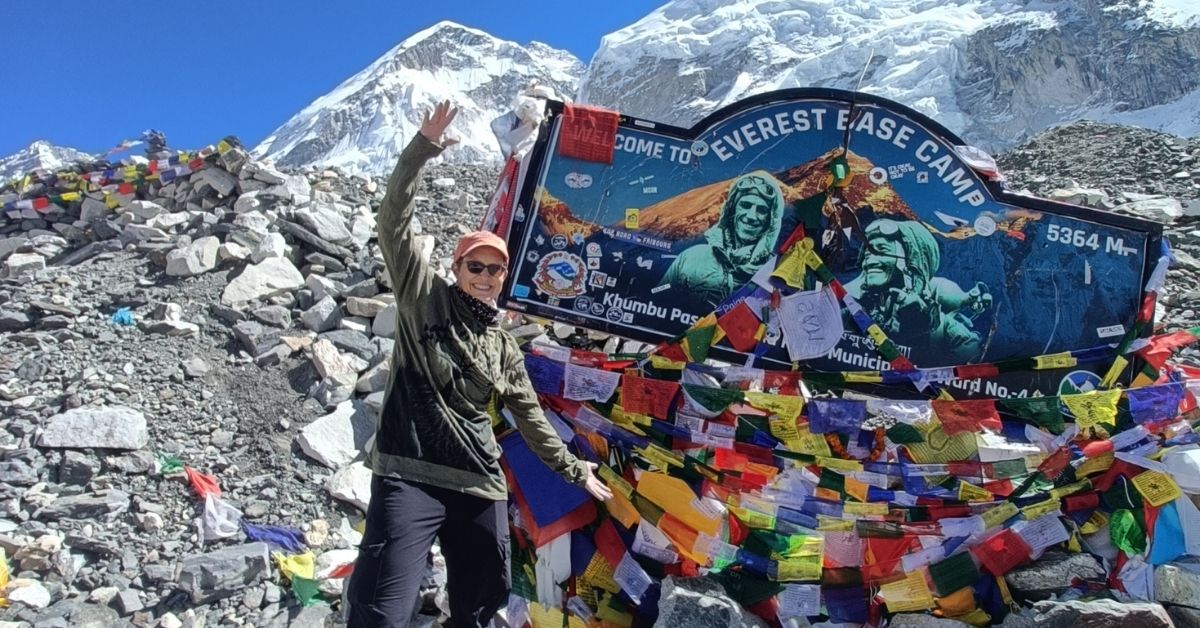
- Our Everest Base Camp service is unbeatable. You will have a very comfortable time here. Heated tents, soft mattresses, private chefs, high nutrition plan, hot showers, flush toilets, full arrangement of entertainment during downtime, freshly brewed coffee, bakeries, and fruits etc.
- High-end tents and climbing gear.
Financial security
- The Everest expedition is not a cheap voyage. Your money is safe with us.
All-inclusive Everest expedition package
- Unlike other Everest packages, our Everest expedition package includes everything. Climbers only have to take care of tips, international flights to/from Kathmandu, travel insurance, and their personal expenses.
- No hidden charges guaranteed.
- Satellite phones, backup oxygen, and HAPE/HACE med kits are all included in our package.
Locally rooted
- Mountain Routes is a Nepali travel company. We hold 10+ years of expertise in the Himalayas.
- We work with the best Nepali guides and porters known for their excellence in 8,000-meter climbing. You will get the best local team with us.
- Our local roots allow us to enrich the journey with Nepalese culture and tradition. From Puja, before the expedition begins, to the community’s trust and support, we will make sure you have the best Everest expedition experience.
WiFi access at Everest Base Camp
- We provide high-speed WiFi at Everest Base Camp (most teams offer no internet).
Ethical and sustainable climbing
- We climb consciously and follow the zero-waste policy during our expedition. We remove 100% of our trash (and others).
- Our Sherpas and support crew are well-paid. We do not exploit their hard work.
- We make sure our expedition team does not harm nature and honors Nepalese traditions.
Post-climb benefits
- Complimentary massage, hot showers, and a spa in Kathmandu.
- Summit certificate + professional summit video (shot by your Sherpa).
The gear you need for Everest from Head to Toe
Head & Hand
- Sun Cap
- Wool/Fleece Hat
- Balaclava
- Hand Warmer
- Neck Gaiter/High Neck
- Lightweight Synthetic Liner Glove
- Wind Stopper Fleece Gloves
- Summit Gloves Heavy Gloves (Mitten)
Upper Body
- Short-Sleeved Shirts/T-shirts
- Lightweight Top/Thermo Coat
- Midweight Top
- Heavyweight Top
- Synthetic or Fleece Jacket
- Down Insulated Jacket
- Windproof Jacket
- Gore-Tex Jacket
Lower Body
- Underwear
- Lightweight Long Underpants
- Midweight Long Underpants
- Heavyweight Long Underpants
- Trekking Pants
- Down/Synthetic Insulated Pants
- Gore-Tex Pants
- Trekking & Climbing Socks
- Summit Socks
Technical Devices/Climbing Gears (UIAA/CE Tested)
- Climbing Helmet
- Headlamp with Spare Batteries (Petzl/BD)
- Summit Down Suits (Kailas/Marmot/The North Face)
- Ice Axe Semi-technical
- Harness
- Carabiners (Both Lock & Unlock)
- Ascenders/Jumar
- Belay Device (ATC Guide/Figure of 8)
- Assistant Rope
- Tape Sling
- Ice Screw
- Summit Boot/One Sports Alpine Boot/G2SM
- Crampons
- 2 Sleeping Bag: -30 +C to -40 +C
- Thermarest Inflatable Mattress
- Thermarest Cell Foam Mattress
- Sun/Glacier Glasses UV Protection
- Snow Goggle UV Protection
- Extendable Trekking Poles (BD Alpine Flz)
First Aid Kit
- Sunscreen (-50 SPF)
- Lips Guard (-20/-50 Spf)
- Water Purification Tablets
- Baby Wipes or Wet Towels
- Handy Plaster
- Crack Bandage
- Tincture
- Lodine
- Strepsils
- Antibiotic
- Paracetamol
- Aspirin
- Sinex
- Anti-Diarrhoea Capsule/Eldoper
- Brufen/Ibuprofens
- Diamox
- Eye Drops
- Dexamethasone Tablets
- Zip-Lock Bags
Toiletries
- Hand Sanitizers & Hand Wash
- Wet Tissues
- Toilet Paper
- Comb
- Toothpaste
- Toothbrush
- Bath Soap
- Shampoo
- Moisturizers
- Laundry Soap
- Garbage Bag
Miscellaneous
- Swiss Knife
- Sandals
- Lightweight Hiking/Trekking Boots
- Camp Booties
- Rucksacks (45 – 55 Ltr.)
- 2 Duffel Bag
- Water Bottles
- Water Bladder
- Thermos/Flask
- Pee Bottle
- Pack Towel
- Umbrella/Rain Coat
- Spare batteries
- Waterproof Stuff Sacks
- Satellite Phone (if possible)
- Solar chargeable power bank (optional)
- Journal/Pen
- Book/Board Game
- Bars & Snacks
- Electrolytes
Travel Documents
- Valid Passport
- Valid Visa
- 4 PP Size Photo
- Insurance Paper (Medical & Rescue) & Contact Address
- Family/Company Contact Number & Address
- Credit Card
Reach the top of the World with Mountain Routes on the Everest Expedition
Are you ready to start your Mt. Everest journey? Book a free consultation with Mountain Routes, and let’s assess your readiness and plan your climb.
Our Everest Expedition 2026 and 2027 bookings are open. Limited spots are available. Get your seat now and start preparing with the guidance of our expert team.
“With us, there is no doubt, no guessing, no compromise, and no regret. The mountain doesn’t care if you succeed. We do.“ – Mountain Routes Team
FAQs
It costs around USD 42500 per person to climb Mt. Everest. The Everest expedition package price may differ from one operator to another, depending on the services they are providing and their safety standards.
Anyone who wants to climb Mt. Everest must have climbed at least one 6,000-meter (optional) and one 7,000-meter (mandatory) mountain.
At the Everest Base Camp, we provide satellite phones and WiFi service to our climbers to stay connected with their families. The network may get disturbed sometimes if the weather is erratic.
Likewise, at EBC, you will have access to charging and hot showers, but these services are limited at the higher camps, especially above Camp II. Phone signals are not reliable at higher altitudes
You will reach Everest Base Camp on the 10th day of the trip. From Lukla, you will reach EBC in seven days of walking.
Then, you will spend days 11 to 60 acclimatizing, resting, doing acclimatization rotations, summit Everest, and returning to Kathmandu.
Our Everest expedition duration is 60 days.
The “2 pm rule” on Mt. Everest is a safety guideline. As per the guideline, the climbers have to begin descending from the Everest summit by 2:00 PM, regardless of their progress.
After 2:00 pm, it is observed that weather conditions deteriorate rapidly on Mt. Everest. There are chances of strong winds, sudden storms, reduced visibility, and high risks of HAPE/HACE, accidents, and frostbite.
From the Everest Base Camp, you can climb Mt. Everest in five days if you are acclimatized and a summit window is available.
Yes, our Everest expedition package includes three meals a day during the Everest expedition with tea, coffee, fruits, desserts, etc. We personalize an excellent menu for the expedition period to support our climbers.
No, the Mt. Everest expedition is not suitable for all body types. It requires a high level of physical fitness, mental strength, previous climbing experience, endurance, and resilience.
Why Mountain Routes ?
- Local Support
- Instant Response
- Customized Packages
- Friendly and Professional Guides
Not satisfied with what we offer ?
We can customize the trip for you.





 Chat on WhatsApp