How to Climb Mount Everest: Complete Everest Training and Expedition Guide
Millions of people dream of climbing Mount Everest. Only a small number reach the summit. This happens because Everest is extremely hard to climb. The mountain tests the body and the mind at every step. A safe climb needs proper preparation. It also needs clear guidance and long-term mentorship. Strong stamina matters at every stage of the journey.
Mount Everest stands at an elevation of 8,848.86 meters. This height creates very low oxygen levels. The lack of oxygen makes simple movement slow and tiring. Breathing becomes hard above 8,000 meters. This zone is known as the death zone.
The body cannot adjust fully at this height. This altitude factor makes Everest far more difficult than most mountains. Training and planning help climbers manage these risks in a safer way.
Table of contents
- Essential Requirements Before You Start Everest Training
- Mountain Progression: Peaks to Climb Before Everest
- Physical Training for Mount Everest
- Technical Skills You Must Master
- The Everest Climbing Process: Route and Timeline
- Mental Preparation and What to Expect
- Permits, Logistics, and Choosing an Operator
- Your Path from Today to Everest Summit
- From Dream to Summit with Mountain Routes
Essential Requirements Before You Start Everest Training
You need a strong base before you start Everest training. This base includes past climbs, strong fitness, and money for the full expedition. Many climbers spend years building this base.
Experience Requirements
You need past high-altitude climbs before you attempt Everest. Climbers start with small peaks and move to higher peaks over time. This process helps your body learn how to work in thin air. It also helps you learn how to use ropes, crampons, and an ice axe. Most climbers have at least one climb above 7,000 meters. Some teams also ask for one 8,000-meter peak. Guides want to know that you can move well on mixed terrain. They also check your ability to handle long days in cold weather. Experience reduces risk on technical sections like the Khumbu Icefall, the Lhotse Face, and the upper ridge.
Physical and Financial Prerequisites
You need strong fitness before you go to Everest. You also need enough money for a full expedition. A standard Everest climb costs around USD 35,000 to USD 70,000 for most teams. Some private climbs cost more. The cost includes Sherpa support, oxygen, permits, gear, travel, and food. Your body must also be ready for long days at altitude. A full Everest summit day can last 10 to 14 hours. Some climbers lose strength fast due to low oxygen. Good fitness helps you stay steady. Training also helps you avoid altitude sickness.
Mountain Progression: Peaks to Climb Before Everest
You need a clear path of climbing progress before you attempt Everest. Everest climbing time shapes how climbers adapt to altitude and extreme weather step by step.
The Climbing Progression Path
Phase 1: Basic High-Altitude Experience (6,000–7,000m)
This phase builds your basic altitude skills. Good peaks include Island Peak, Mera Peak, Lobuche East, Kilimanjaro, Elbrus, and Aconcagua. These climbs help you learn glacier travel. They also teach you how to manage cold nights and long routes. At these heights, your body learns how to deal with reduced oxygen.
Phase 2: Advanced High-Altitude (7,000–8,000m)
This phase prepares you for long climbs with harsh weather. Climbers choose peaks like Himlung, Baruntse, or Peak Lenin. These climbs last weeks. You learn how to rest at high camps. You also learn how to move on fixed ropes for long periods. You build your mental strength during this phase.
Phase 3: Technical 8,000m Peaks
This phase is the final step before Everest. Many climbers choose Manaslu, Cho Oyu, or Shishapangma. These peaks help you experience the “death zone” above 8,000 meters. The death zone has very low oxygen. Your body cannot stay here long. You also learn how to manage oxygen bottles. These climbs prepare you for the final push on Everest.
Physical Training for Mount Everest
Training for Everest takes time. Many climbers train for 8 to 14 months. Some climbers train longer. Strong fitness helps you move with less stress at altitude.
Cardiovascular Endurance Training
Cardio training is the base of Everest preparation. You need a strong heart and lungs. Many teams suggest a VO2 max of at least 50 ml/kg/min. A higher number helps you use oxygen better at altitude.
Training methods include:
- Long-distance running 3 to 4 times each week
- Stair climbing with a weighted pack 2 to 3 times each week
- Cycling for low-impact cardio
- Swimming for lung capacity
- Hiking with a pack on steep hills
Aim for at least 8 to 12 hours of cardio each week. Start slow and increase your load over time. This process is called progressive overload. It helps your body grow stronger without risks.
Running helps your heart. Stair climbing builds leg strength. Cycling helps with endurance without stress on your joints. Swimming builds strong lungs and helps with breath control. These workouts prepare your body for the slow and steady pace of Everest.
Strength and Conditioning
Strength training helps your body stay stable on uneven terrain. It also keeps your body strong when you carry loads in cold weather.
Focus areas:
- Legs: Squats, lunges, and step-ups with weight
- Core: Planks and stability exercises
- Upper body: Pull-ups and rope-pulling movements for fixed ropes
Most climbers train strength 3 to 4 times each week. Add weighted pack training. Increase weight slowly. Aim to carry up to 20 kg as training progresses. You can mix gym work with long outdoor hikes. Your legs need to stay strong even when tired.
Altitude Training Methods
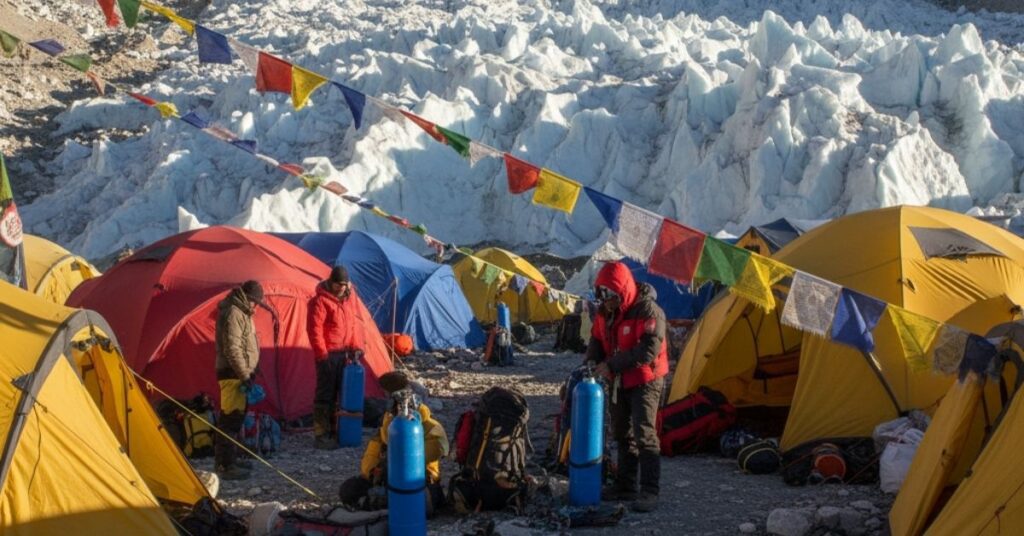
Altitude training helps your body adjust before you reach Nepal or Tibet. You can use hypoxic tents or altitude masks. Some athletes use altitude chambers. These tools lower oxygen levels during training. They help your body learn how to cope with thin air.
Some people live at moderate altitude for weeks before the climb. This method raises red blood cell count. You still need true high-altitude exposure during the climb. Pre-acclimatization only gives you a small head start.
Technical Skills You Must Master
Mount Everest demands more than physical strength. Climbers face ice, snow, rock, and extreme exposure. Strong technical skills help reduce risk in dangerous zones. These skills allow climbers to move with control in harsh conditions.
Essential Rope and Movement Skills
- Fixed rope travel: Climbers must clip and unclip carabiners with gloves on. This skill keeps climbers secure on steep sections.
- Ladder crossing: Crevasses in the Khumbu Icefall require ladder use. Climbers must cross with balance and steady movement.
- Self-arrest skills: Slips can happen on steep snow. Knowing how to stop a fall helps prevent serious injury.
- Glacier travel: Roped movement on ice helps teams manage hidden crevasses. Practice improves coordination and trust.
Ice and Snow Equipment Handling
- Crampon use: Proper foot placement helps climbers move safely on ice. Poor technique increases the risk of slips.
- Ice axe handling: Climbers use ice axes for balance and support. This tool also helps during self-arrest situations.
- Steep slope movement: Sections like the Lhotse Face demand slow and stable steps. Strong technique saves energy.
Oxygen System Management
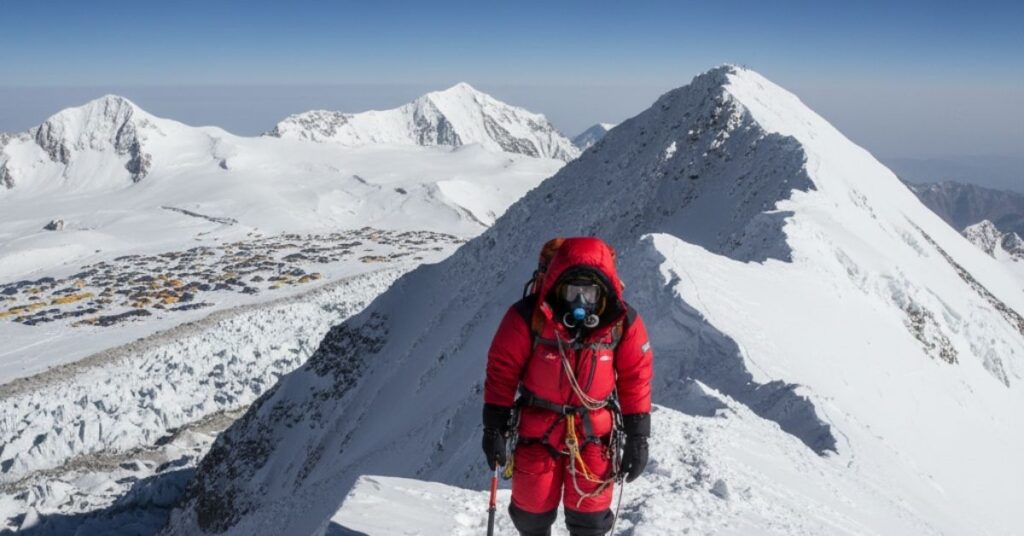
- Mask fitting: A proper fit prevents oxygen loss. Climbers must check seals often.
- Regulator control: Switching flow settings with gloves is vital. Mistakes can reduce oxygen intake.
- Bottle changes: Climbers must replace bottles fast in cold conditions. Delays increase fatigue in the death zone.
High-Risk Sections That Demand Skill
- Khumbu Icefall: Moving ice towers and deep crevasses make this area unstable. Skill helps climbers pass early and safely.
- Lhotse Face: Long icy slopes require fixed rope use and controlled movement.
- South Col: Strong winds and low oxygen demand focus and balance.
- North Ridge: This route has exposed rock sections. Precise footwork is essential.
The Everest Climbing Process: Route and Timeline
Everest climbs follow a set timeline. Your team needs weeks for acclimatization. Weather also affects the schedule. Most climbers need 6 to 8 weeks for the full expedition.
Everest Base Camp to Summit: The Route Breakdown
South Route (Nepal)
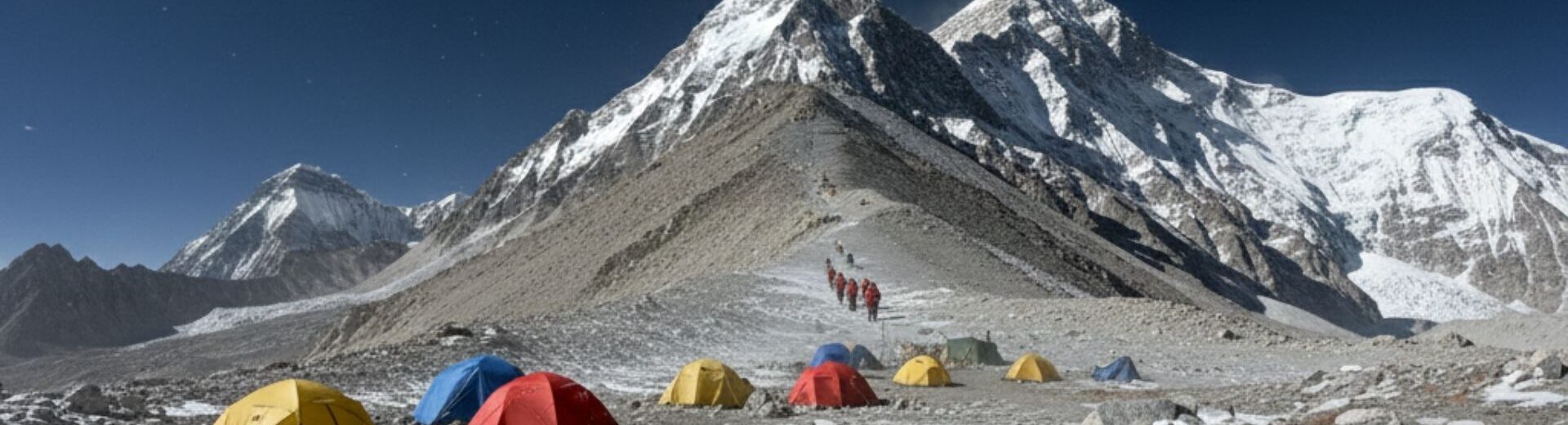
This route starts at Everest Base Camp at around 5,364 meters. Climbers cross the Khumbu Icefall. This section is dangerous due to moving ice blocks. Many climbers move early in the morning to avoid daytime heat. After the Icefall, climbers reach Camp 1 in the Western Cwm. This valley is warm during the day.
Camp 2 sits near the foot of the Lhotse Face. Many teams stay here for acclimatization. Camp 3 sits halfway up the Lhotse Face. Climbers clip into fixed ropes to reach it. Camp 4 sits at the South Col at around 7,900 meters. This area has very low oxygen. Climbers rest here for a short time before the final push.
The summit push starts late at night. Climbers pass the Balcony, the South Summit, and the Hillary Step. They reach the top if the weather stays stable. The death zone makes every step slow. Many climbers take 1 to 2 breaths per step.
North Route (Tibet)
The North Side starts in Tibet at the North Base Camp at around 5,150 meters. Climbers reach the Advanced Base Camp at around 6,500 meters. From here, they climb to the North Col. The route continues to Camp 2 and Camp 3 along the North Ridge. The North Side has steady winds. The route is exposed. Climbers need strong balance on rocky terrain. The final section crosses steep slopes near the Second Step. This part needs fixed ladders.
Both routes reach the same summit. The conditions are harsh on both sides. The South Side has more rescue support. The North Side has colder winds.
Want a clearer view of how the North Side and South Side differ?. Check Everest North Face vs. South Face: Routes and Access Compared
Mental Preparation and What to Expect
Mental strength is a key part of Everest preparation. You will spend weeks in cold camps. You may face fear during storms or on steep terrain. Long waiting periods can cause stress. You must stay calm if plans change. You also need patience. Weather windows are short. Many climbers wait many days before the final push.
You may feel the effects of low oxygen. Simple tasks feel slow. You may lose appetite. You may wake up at night with short breaths. This is normal at altitude. Your mind needs to stay steady even when your body feels tired.
A positive mindset helps you deal with the death zone. It also helps you manage long summit nights. Your team plays a big role. Good communication with guides, Sherpas, and teammates helps you stay focused.
Permits, Logistics, and Choosing an Operator
A climb on Everest needs many permits. Each side has its own rules.
Nepal Side
You need an Everest climbing permit from the Nepal government. You also need a liaison officer, insurance, and a local agency. You need a team that follows safety rules. Most Nepal expeditions cost more than USD 45,000 for standard teams. Oxygen and Sherpa support add to the price.
Tibet Side
You need a climbing permit from the Tibet Mountaineering Association. All climbers must join an organized group. The cost is similar to the Nepal side. The North Side has strict rules on group size and management.
Choosing an Operator
A good operator has trained guides. They also have strong Sherpa support. They carry good oxygen systems. They follow safe rotation schedules.
A good operator helps you stay healthy at high altitude. Look for teams with a strong safety record. Do not choose a team based on low cost. The cheapest teams may cut key support systems.
Your Path from Today to Everest Summit
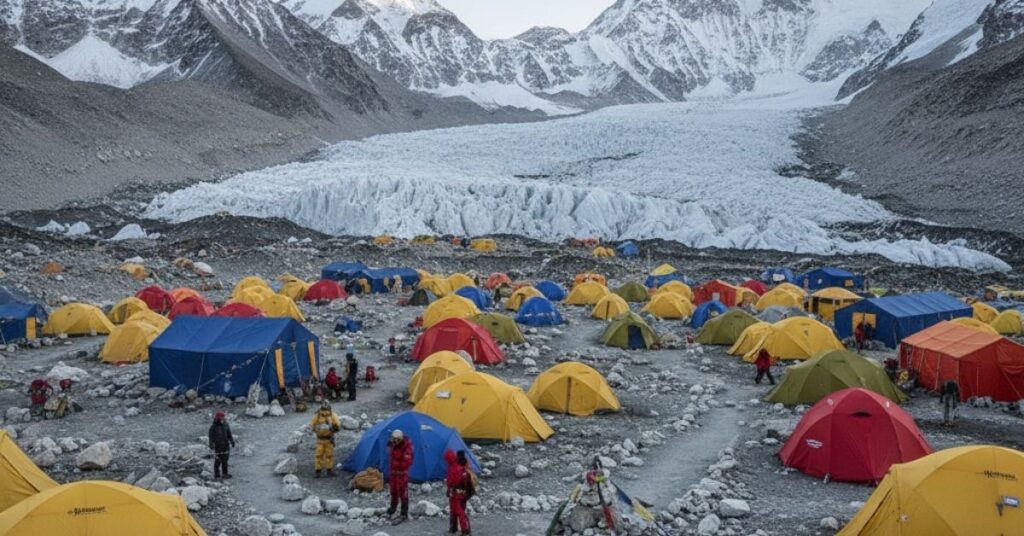
Your Everest journey starts long before the expedition. You need years of training. You must climb peaks in a steady order. You must build strong cardio and strength. You must learn technical skills. You must study the route and know each section well.
This path may feel long. Many climbers spend 3 to 5 years before they try Everest. Some spend longer. Safe progress is better than fast progress. Your body and mind must stay strong for a 6 to 8-week climb.
When your training is strong, your skills are sharp, and your team is ready, you will stand in Base Camp with confidence. You will know that you followed a safe path from your first small peak to the tallest point on Earth.
From Dream to Summit with Mountain Routes
Climbing Mount Everest needs expert planning and strong support at every stage. Safety depends on proper training, correct acclimatization, and a well-managed expedition team. From early preparation to the summit push, each decision matters. Working with an experienced operator helps reduce risk in high zones like the Khumbu Icefall and above 8,000 meters. A structured approach allows climbers to focus on steady progress and safe movement on the mountain.
Mountain Routes supports climbers who want a safe and well-organized Everest expedition. Our team assists with training guidance, route planning, permits, and on-ground logistics. We create an itinerary focusing on the preparation, safety, and a smooth climbing experience. With the right support, climbers can build confidence and create a strong and memorable journey to the top of Mount Everest.





 Chat on WhatsApp