
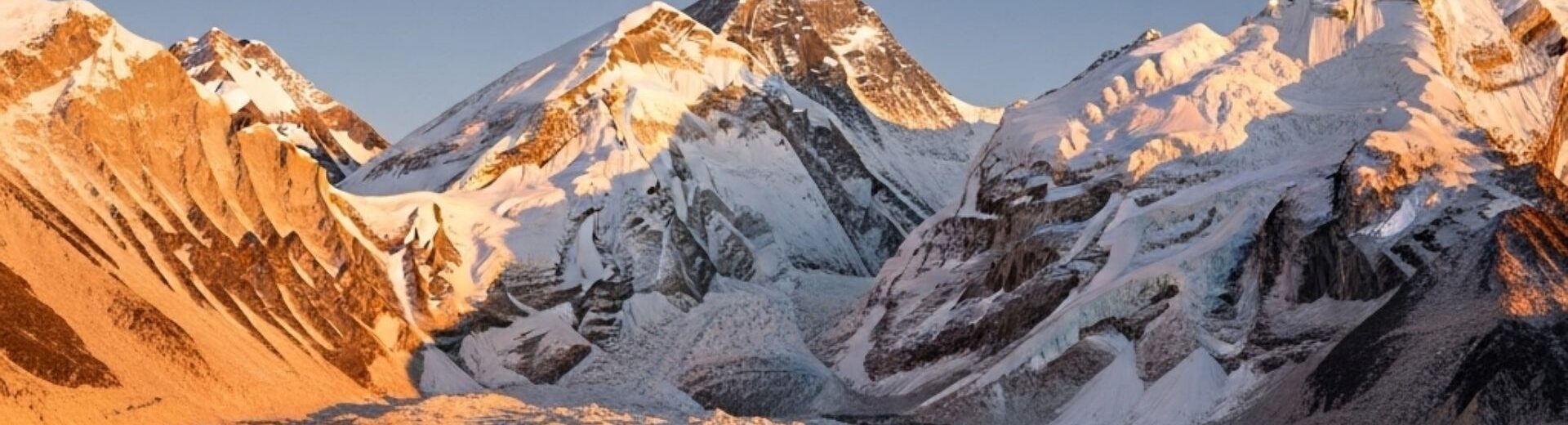
Khumbu Icefall – Dangers, Route, and Survival Tips for 2025/26
Climbing Everest in 2025/26? Then you’re likely to face one of the most feared sections of the route known as the Khumbu Icefall.
Located just above Everest Base Camp on the South Col route, this constantly moving glacier has been the site of many tragic incidents. Deep crevasses, falling seracs, and extreme altitude make it the riskiest part of your climb.
With the proper knowledge, training, and timing, you can make your Everest crossing much safer. Whether you’re an adventure traveler, a group leader, or planning a 2025 Everest trip, it’s essential to know what to watch out for, how to prepare, and how local teams utilize both modern tools and traditional methods to stay safe.
What Is the Khumbu Icefall?
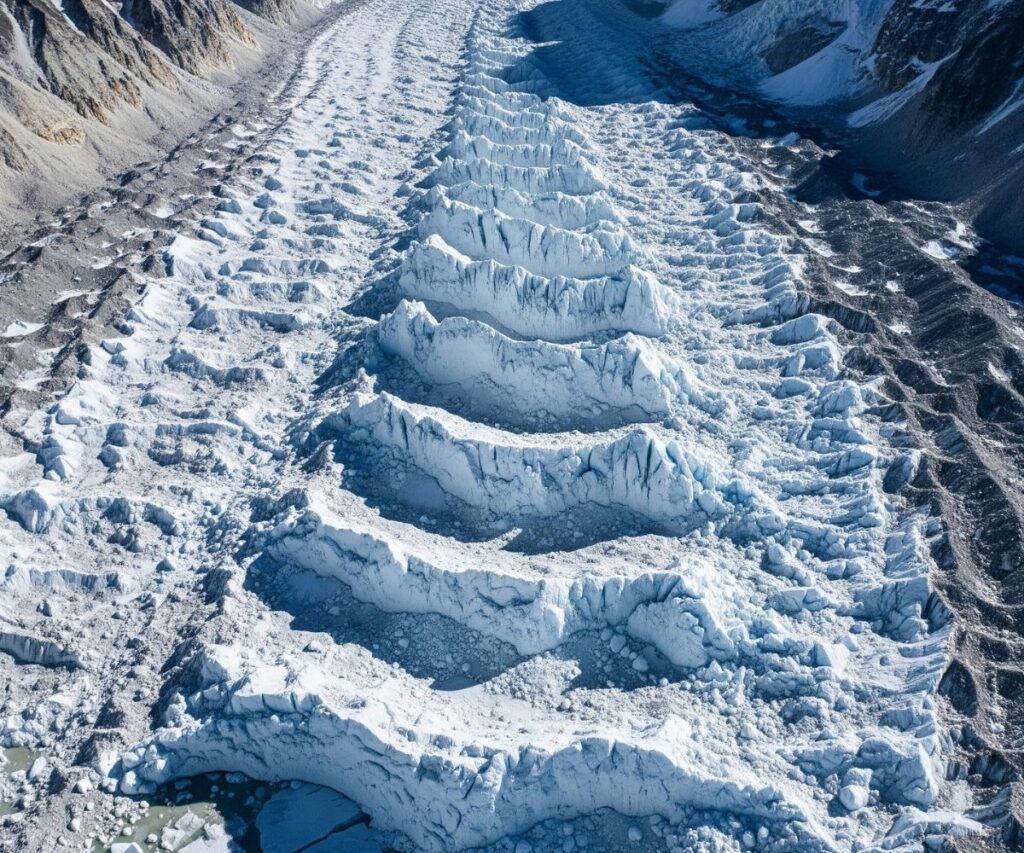
The Khumbu Icefall is a steep, unstable glacier found on the route to Mount Everest’s summit from the south. It moves up to 1.2 meters daily, creating dangerous conditions with ice towers, crevasses, and sudden serac collapses.
This section is known for avalanches, hidden gaps, and extreme cold, making it one of Everest’s riskiest areas. To avoid daytime hazards, most climbers cross it in the early morning before the sun warms the ice.
Where Is the Khumbu Icefall Located?
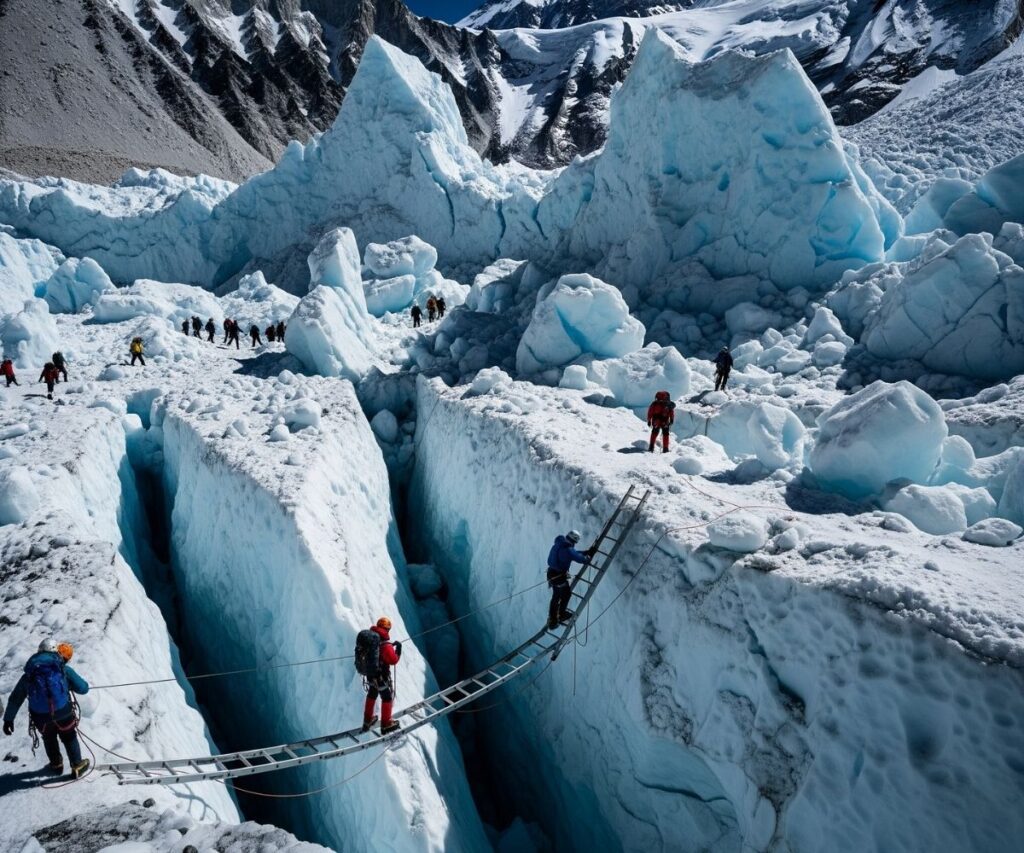
The Icefall begins just above Everest Base Camp at 5,364 meters and stretches to Camp I at about 5,900 meters. It marks the first major obstacle on the South Col route toward the summit of Mount Everest, giving trekkers and climbers a real sense of where Mount Everest is located in Nepal.
Climbers use ladders, fixed ropes, and support from Sherpa guides to move through this shifting glacier safely. Due to rapid temperature changes, the area becomes more dangerous as the day progresses. Every climber on the south side must pass through this section as it is an unavoidable part of the ascent.
Why Is the Khumbu Icefall So Dangerous?
The Khumbu Icefall is dangerous because it is constantly moving, unstable, and unpredictable. The glacier shifts daily, which causes deep crevasses to open and massive ice blocks called seracs to collapse without warning. Climbers face extreme altitude, rapidly changing terrain, and deadly avalanches, all in a narrow and enclosed environment.
These dangers are not just theoretical. They are proven by decades of tragic accidents and rescues. Each hazard in the Icefall can be life-threatening on its own. When combined, they create one of the most hazardous sections on any commercial mountain route in the world.
Icefall Movement and Serac Collapse
The Khumbu Glacier can move up to 1.2 metres per day. This constant movement causes large ice towers, or seracs, to shift and collapse suddenly.
These seracs can weigh several tonnes and fall without noise or warning. If a climber is in their path, survival is almost impossible. Movement also causes the ground beneath your feet to change, making fixed ropes and ladders unstable over time.
Because of this, climbers begin their journey through the Icefall before sunrise, when colder temperatures reduce the risk of collapse.
Deep Crevasses and Unstable Ladders
Crevasses are deep cracks in the glacier that can be over 100 metres deep. Many are hidden under thin snow bridges that collapse under weight.
To cross them, climbers use aluminium ladders tied together with rope. These ladders can shift, wobble, or slip if not placed correctly. The instability adds to the physical and mental stress of the climb.
Falling into a crevasse is often fatal. This is why climbers remain roped in at all times and move with great caution when crossing ladders.
Avalanche Risks and Falling Debris
Melting ice, shifting seracs, or fresh snow can trigger avalanches in the Icefall. These avalanches can sweep away climbers, gear, and ropes in seconds.
Falling debris from above is another danger. Even a small block of ice can cause serious injury when dropped from a height. Helmets are essential, but they offer limited protection in larger falls.
Avalanche risk increases after sunrise as ice softens. That’s why timing and group coordination are crucial for reducing exposure.
Crossing the Icefall – How Do Climbers Navigate It?
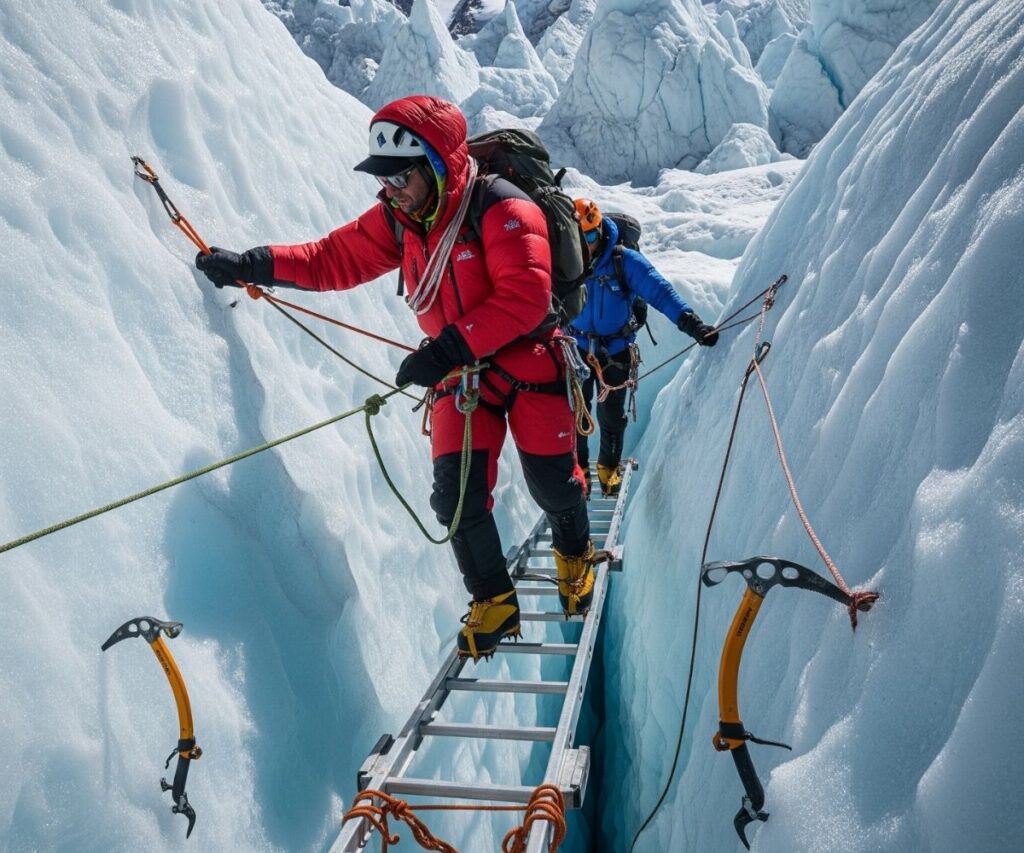
Climbers navigate the Khumbu Icefall using fixed ropes, aluminium ladders, and the guidance of experienced Sherpas. The route is rebuilt and maintained every season by Icefall Doctors, who adapt to daily changes in the glacier. Most climbers begin their ascent between 3 AM and 5 AM, when temperatures are lowest and the ice is most stable.
Navigating this section also requires mental focus, teamwork, and efficient movement. Staying clipped into ropes, moving with purpose, and trusting the team lead are essential practices. Without these methods, the risks of collapse, falls, and injury significantly increase.
Training and Preparation for the Khumbu Icefall
To cross the Icefall safely, climbers must be physically fit, technically skilled, and well-acclimatised. The challenges here aren’t just physical but also psychological. Preparing thoroughly will reduce your risk and build confidence in difficult conditions.
Every 2025 climber should focus on technical training, altitude adaptation, and selecting the right gear.
- Ice climbing training and rope skills
Learn how to use ascenders and friction devices on fixed ropes. Practice controlled descents and transitions between vertical and sloped ice.
Ice climbing skills will help you stay balanced while ascending or descending steep sections. These abilities are crucial in areas where ropes are the only protection against a fall.
- Ladder walking practice
Ladder crossings in the Icefall are a common occurrence. Some span crevasses over 10 metres deep.
Practice walking on horizontal ladders with crampons. Use a harness and safety rope while training. Building muscle memory here reduces panic and increases precision during your climb.
- Acclimatization at EBC
Spend several nights at Everest Base Camp to allow your body to adjust to the altitude.
Use the “climb high, sleep low” method to support acclimatisation. Short hikes above Base Camp help your lungs and muscles adapt more efficiently to the thin air.
- Essential gear: ascenders, helmets, fixed rope kits
Bring reliable gear that fits you well. Essential items include:
- Ascenders and carabiners
- Climbing harness and helmet
- Crampons
- Ice axe
- Fixed rope kit
- Headlamp and gloves
Always test and adjust your equipment before arriving at Base Camp.
Icefall Doctors – The Unsung Heroes
Icefall Doctors are elite Sherpas responsible for setting and maintaining the safest route through the Khumbu Icefall. Their work is dangerous, demanding, and essential to every Everest expedition.
Each climbing season, they install dozens of ladders and kilometres of fixed rope. They constantly monitor the ice movement and repair damaged sections. Without their work, the Icefall would be nearly impossible to cross safely.
Their expertise and bravery allow hundreds of climbers to pass through one of Earth’s most dangerous environments. They are highly respected within the mountaineering community but often remain out of the spotlight.
2025 and 2026 Updates: Is the Khumbu Icefall Safer Now?
Yes, the Khumbu Icefall is becoming safer due to advances in technology and stricter climbing regulations. Drone-based route monitoring, sensor systems, and updated safety protocols are now in use. These tools help detect glacier movement and provide real-time updates to climbing teams.
New government rules also require climbers to meet stricter health and experience standards. Together, these changes aim to reduce accidents and environmental impact.
Weather Monitoring Systems and Route Sensors
In 2025, drones equipped with cameras and mapping tools will help scout safe routes in the Icefall.
Some teams now use sensors to monitor ice shifts and temperature changes. This data allows Icefall Doctors to adjust the path before danger strikes.
Technology also supports quicker rescue planning and safer load carrying between camps.
Stricter Climbing Rules for the Icefall Section
All climbers must now show proof of high-altitude experience. A 7,000-metre summit is required before Everest permits.
Medical screenings include ECG tests and fitness clearance. Waste deposits are mandatory to protect the fragile ecosystem of the glacier.
These new policies reduce overcrowding and ensure only capable climbers enter the Icefall.
Alternatives and Bypasses: Can You Avoid the Icefall?
No, you cannot avoid the Khumbu Icefall if you climb Everest from the south (Nepal) side. It is the only route from Base Camp to Camp I on the traditional South Col route. Every climber going this way must cross the Icefall.
There have been experimental bypasses in the past, including via-ferrata routes and helicopter drops, but none have proven consistent or practical. The only true alternative is the North Ridge route from Tibet, which does not pass through the Icefall but comes with its own unique challenges.
For more info, see Everest Expedition – Mountain Routes
Tips for Surviving the Khumbu Icefall
To survive the Icefall, climbers must focus on timing, teamwork, and mental strength. Preparation matters, but awareness during the climb is just as important. These practical tips help reduce risk and increase your chances of a safe crossing.
- Start early (before 4 AM): The glacier is most stable before sunrise.
- Climb fast, descend faster: Spend as little time in the Icefall as possible.
- Trust your guide and team: Sherpas know the safest path and current conditions.
- Wear a helmet at all times: Ice and rockfall are common.
- Be mentally prepared for rapid changes in terrain: Ice shifts constantly, and decisions must be made quickly.
FAQs
How long does it take to cross the Khumbu Icefall?
Most climbers take between 3 to 6 hours to cross the Icefall. Sherpas, who are more experienced and faster, may complete the crossing in 2 to 3 hours.
Is the Khumbu Icefall the most dangerous part of Everest?
Yes, the Icefall is widely considered the most dangerous section of the South Col route. Most fatalities occur here due to serac collapses, crevasse falls, and avalanches.
Can you trek to the Icefall without climbing Everest?
Yes, trekkers visiting Everest Base Camp (EBC) can see the Khumbu Icefall up close. However, entering or crossing it is restricted to permitted climbers only, due to the high risk involved.
Are there fixed ropes and ladders in the Icefall?
Yes, a specialised team called the Icefall Doctors installs and maintains fixed ropes and ladders throughout the season. These help climbers cross crevasses and move safely through unstable ice terrain.
What gear is used to cross the Khumbu Icefall?
Essential gear includes:
- Helmet
- Crampons
- Harness
- Fixed rope kit (jumar, carabiners)
- Ascenders and an ice axe
- Gloves and warm clothing
- Headlamp
- Mountaineering boots
Proper training and correct use of gear are vital for safety in the Icefall.





 Chat on WhatsApp