Travel and Trek in Nepal: Frequently Asked Questions

Safety & Trekking Basics

    Trekking in Nepal is perfectly safe, even for first-timers. However, since April 2023, all foreign trekkers are required to hire a licensed guide through a registered trekking agency, which has made solo trekking much safer.

    Popular routes like Everest Base Camp, Annapurna Base Camp, and Langtang have well-marked trails, teahouses for accommodation, medical posts, and rescue services if needed. In 2023, Nepal welcomed over 150,000 trekkers, and serious accidents were very rare compared to the number of visitors.

    For safety, you’ll also need trekking permits:

    • e-TIMS card (Trekkers’ Information Management System) for most treks
    • National Park / Conservation Area permits (Everest, Annapurna, Langtang)
    • Restricted Area Permits (Manaslu, Upper Mustang, Dolpo), issued only through registered agencies

    At Mountain Routes, we arrange licensed guides, permits, insurance advice, and 24/7 support, so even first-time trekkers can explore Nepal’s trails with confidence.

    No, since 1 April 2023, trekking in Nepal without a licensed guide is not allowed. The Nepal Tourism Board has made it mandatory for all foreign trekkers to hire a registered guide and obtain an e-TIMS card through an authorized trekking agency. This rule applies to both popular routes like Everest Base Camp, Annapurna Circuit, Annapurna Base Camp, and Langtang Valley, as well as more remote trails such as Upper Mustang, Manaslu Circuit, Dolpo, and Kanchenjunga.

    For restricted regions, including Manaslu, Upper Mustang, Dolpo, and Tsum Valle,y special permits are required, which can only be arranged through licensed agencies.

    While fully independent trekking is no longer permitted, travelers can still choose between a full tour package or simply hiring a guide with the necessary permits.

    At Mountain Routes, we provide licensed guides, all permits, and tailored support, so even if you’re a solo traveler, you can trek safely and legally in Nepal.

    Nepal offers many beginner-friendly treks that are safe, stunning, and not too demanding in altitude:

    • Ghorepani Poon Hill Trek (Annapurna region): 3–5 days, famous sunrise view over the Himalayas.
    • Langtang Valley Trek: 6–8 days, near Kathmandu, with stunning valley and glacier views.
    • Everest View Trek: 5–7 days, gives you a close look at Everest without going to Base Camp.

    These treks are shorter, easier to follow, and well-supported with teahouses, making them ideal for first-time trekkers.

    At Mountain Routes, we customize these beginner treks with licensed guides, comfortable lodges, and flexible itineraries, so new trekkers can enjoy Nepal safely and confidently.

    If you want to explore more options, check out this guide on the best beginner and altitude-friendly treks in Nepal.

    Nepal offers several trekking styles to suit your preferences and pace.

    • Teahouse Trekking – the most popular style, with you staying in welcoming village lodges, enjoying hot meals, and resting in a comfortable bed after each day on the trail.
    • Camping Treks – for more remote routes, with tents and full crew backup so you can easily go off-the-beaten-path.
    • Luxury Treks – offer more improved lodges or boutique-style hotels with personal rooms, improved amenities, and increased comfort for a more leisurely trekking experience.
    • Helicopter Return Treks – combine trekking with a flight return, allowing for the faster return while still experiencing the stunning mountain views.

    At Mountain Routes, we arrange all styles of trek from budget teahouse to luxury + heli-return packages. Making sure every detail is tailored to your preferences and pace.

    Nepal offers several trekking styles:

    • Teahouse Trekking – the most popular, staying in village lodges with hot meals and a bed.
    • Camping Treks – for remote routes, with tents and crew support.
    • Luxury Treks – upgraded lodges or boutique hotels with private rooms and better comfort.
    • Helicopter Return Treks – fly back from Everest Base Camp or Annapurna Base Camp for a faster, scenic finish.

    At Mountain Routes, we arrange all styles—from budget teahouse to luxury + heli-return packages.

    Yes, Nepal has family-friendly treks with short routes, lower altitudes, and cultural stops that children enjoy. Popular choices are:

    • Ghorepani Poon Hill (3–4 days): Gentle trails + famous sunrise views.
    • Nagarkot Hike (near Kathmandu): Easy paths with village stays.
    • Dhampus Trek (2–3 days near Pokhara): Stunning Annapurna views.
    • Langtang Valley (6–8 days): Gradual trails, warm villages, and close Himalayan scenery.

    With Mountain Routes, we design safe, child-friendly itineraries with licensed guides and flexible pacing, so families can enjoy Nepal worry-free.

    Yes. Nepal is one of the safest trekking destinations for women. Sticking to popular routes, booking through a trusted trekking agency, and using licensed guides are the best ways to ensure safety and comfort.

    Since April 2023, foreign trekkers cannot do solo treks on routes like Everest Base Camp, Annapurna Circuit, or Langtang Valley; all now require a licensed guide for safety and permits.

    However, you can still enjoy short hikes near Kathmandu and Pokhara without a guide, such as:

    • Nagarkot Hike – sunrise and village walk
    • Shivapuri Hike – forest and monastery visit
    • Champadevi Hill Hike – panoramic valley views
    • Australian Camp (Pokhara) – easy trek with Annapurna views

    At Mountain Routes, we can arrange both guided treks and provide advice for safe independent day hikes near the cities.

    The safest way is to book through a government-registered trekking agency in Kathmandu or Pokhara. A professional guide should have:

    • Government license (issued by the Department of Tourism)
    • First-aid training & mountain safety knowledge
    • Experience on your chosen trekking route
    • Language skills and positive client reviews

    Hiring through an agency ensures your guide is insured, reliable, and prepared for emergencies.

    With Mountain Routes, we match you with licensed, experienced, and friendly guides, so you trek Nepal with confidence and local expertise.

    Key safety tips: Always have travel insurance that covers high-altitude rescue, carry a small first-aid kit, stay hydrated, and trek at a steady pace. Hiring a licensed guide or porter adds both safety and local support. Following marked trails and checking daily weather updates are also highly recommended
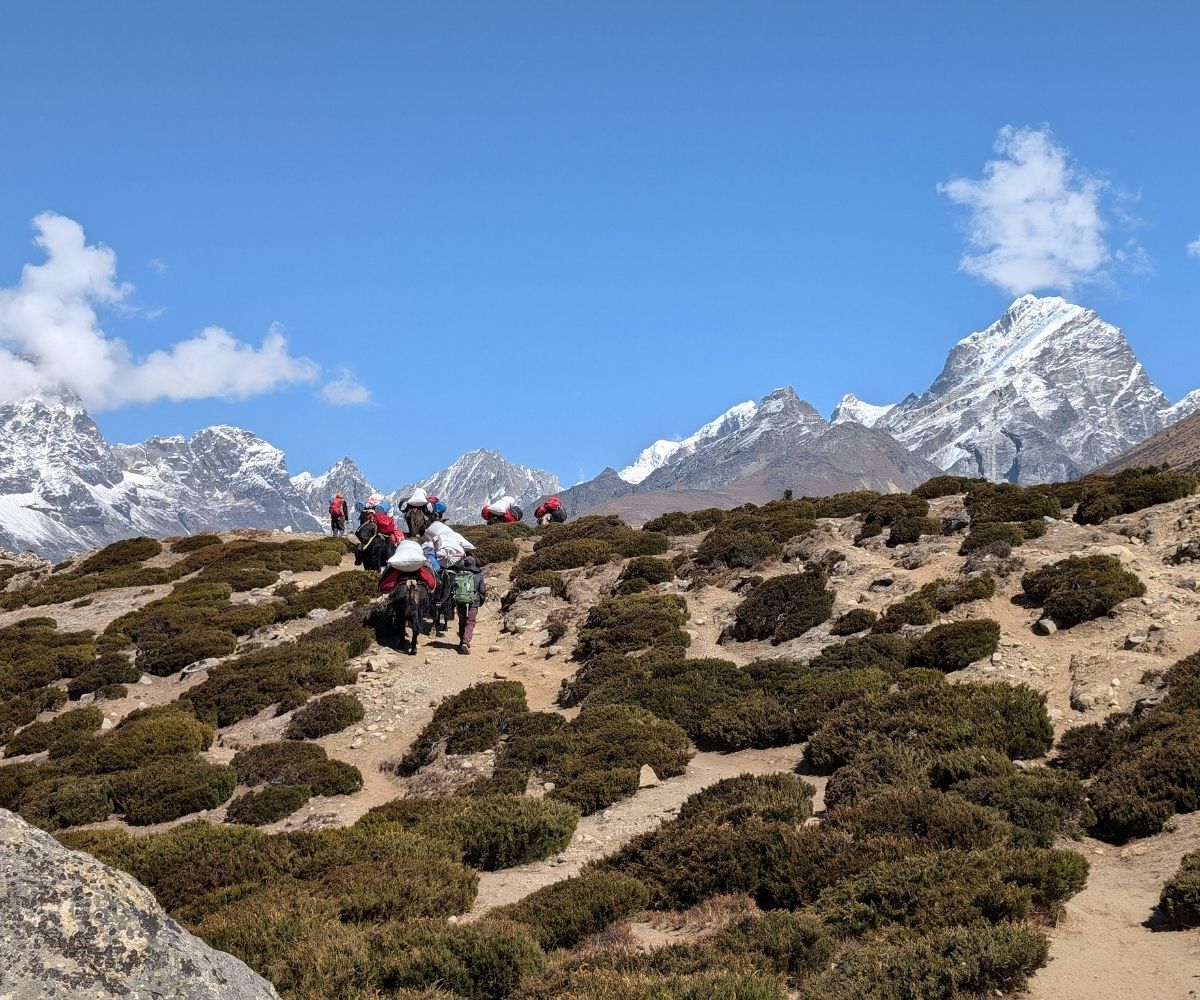
Porters carrying loads along the Everest trail with snow-capped peaks in the background,

Entry & Visa

    Yes—almost all foreigners need a Nepal visa. You can get it on arrival at Tribhuvan International Airport in Kathmandu or at land borders like Belahia (Bhairahawa), Kakarbhitta, and Birgunj.

    • Visa fees: USD 30 (15 days), USD 50 (30 days), USD 125 (90 days).
    • Online Application: Fill out the official form before flying to save time.
      Indian citizens don’t need a visa, while nationals of countries like Nigeria, Ghana, and Afghanistan must apply in advance at a Nepalese embassy.

    At Mountain Routes, we guide our clients through the visa process so arrival in Nepal is stress-free.

    https://nepaliport.immigration.gov.np/on-arrival/IO01

    Tourist visas are valid for 15, 30, or 90 days. You can extend up to 150 days per year at the Immigration Offices in Kathmandu or Pokhara. Extensions cost USD 30 for 15 days.

    https://nepaliport.immigration.gov.np/visa-processing

    Yes—most travelers get their visa on arrival in Kathmandu. Bring your passport, photo, and cash or card for payment. The process is quick and simple.

    US citizens can apply on arrival at Kathmandu Airport or land borders. Fees: USD 30 (15 days), USD 50 (30 days), USD 125 (90 days). You can also apply online in advance or at the Embassy of Nepal in Washington, DC.

    Nepal issues several visas: Tourist, Business, Student, Residential, and Non-tourist. For trekking, a tourist visa is sufficient, extendable to 150 days per year.

    You’ll need a non-tourist visa, arranged through your registered NGO or organization in Nepal. They must provide official approval to the Department of Immigration in Kathmandu.

    Only Indian citizens can stay without a visa, with a valid ID. Travelers from all other countries need a visa, even for short stays.

    Overstaying is not recommended. You’ll pay a fine per day and must report to the Immigration Office before leaving. Extend your visa on time to avoid stress.

    Yes—your passport must be valid for at least six months from your arrival date, otherwise you may be denied entry or visa issuance.

    At Mountain Routes, we help trekkers and volunteers with the right visa advice, permit arrangements, and airport support, so you can focus on the Himalayan adventure, not paperwork.

    1. Apply Online in Time
      Please complete your online visa application no earlier than 10 days before your arrival in Nepal. The system only stores your data for 10 days.
    2. Keep Proof of Submission
      After submitting the form, make sure to save a screenshot or print out the confirmation message you receive. You will need to show this at immigration.
    3. Consider the Embassy Option
      If there is a Nepalese Embassy near your city, it may be more convenient to obtain your visa in advance directly from the embassy.
    4. Carry Cash for Visa Fee
      Although card payment is available at Tribhuvan International Airport, the ATM machines sometimes do not work due to technical issues. To avoid problems, always carry enough cash (USD or equivalent) to cover your visa fee.

    Alternative Application
    You can also apply for your Nepal visa through Sherpa, an online travel documentation service.

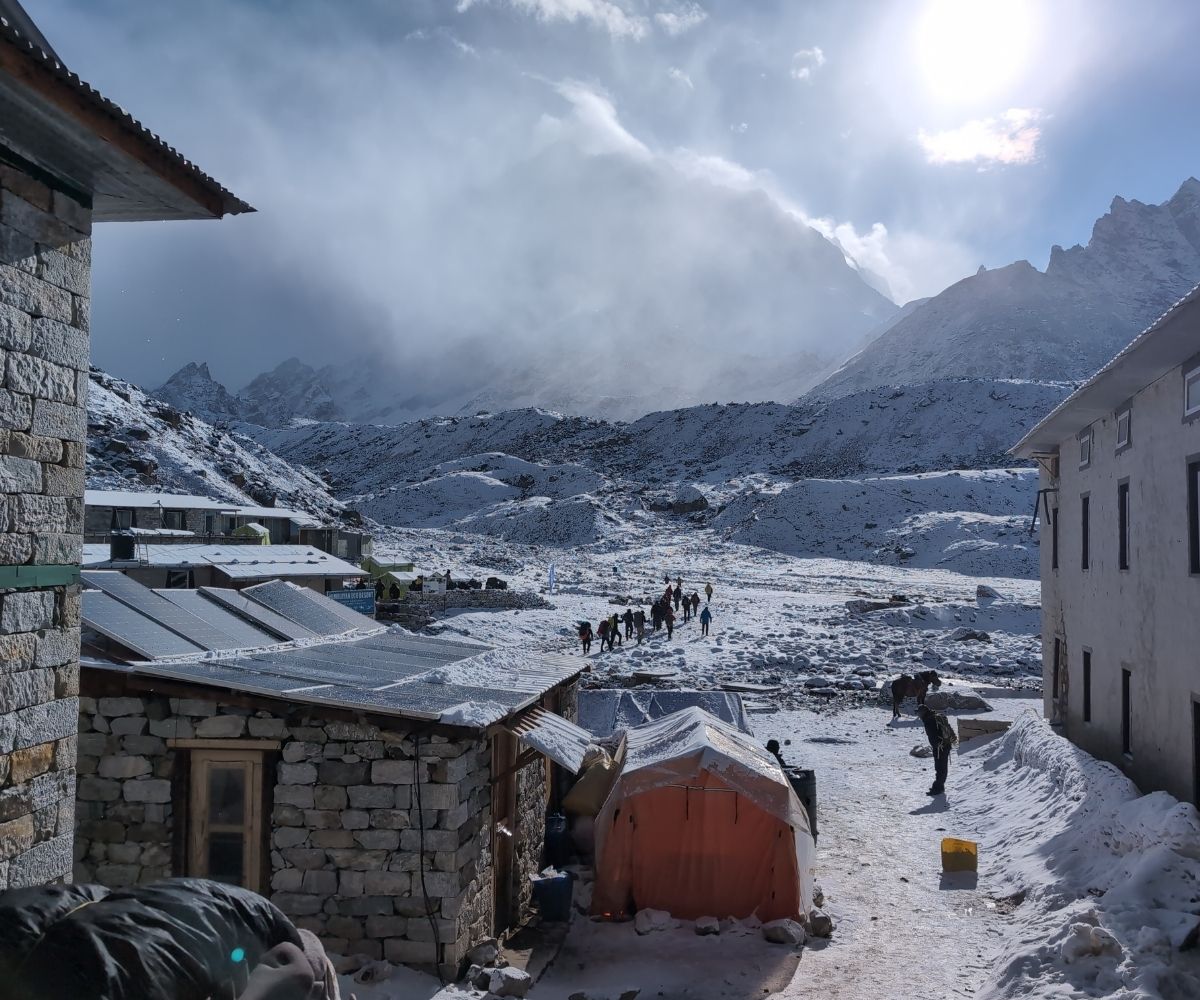
Snowy morning view of Lobuche village in Nepal during Everest Base Camp trek

Budget & Money

    Everyone knows that the budget for traveling in Nepal depends on your personal travel style and spending habits. To give you a clear idea, here is the average cost you might need according to different categories:

    Budget Traveler (Backpacker)

    • Average daily cost: $25 – $40

    Standard / Mid-Range Traveler

    • Average daily cost: $50 – $90

    Luxury Traveler

    • Average daily cost: $200 – $400+

    In summary, Nepal can fit any type of traveler’s budget – from affordable backpacking to high-end luxury holidays.

    Average Trekking Cost in Nepal

    Trek Type / Style Duration Examples Average Cost (USD)
    Short Treks 4 – 6 days Ghorepani Poon Hill, Mardi Himal, 5-day ABC $400 – $600
    Classic Treks 10 – 14 days Everest Base Camp, Annapurna Circuit $1000 – $1,500
    Luxury Treks 7 – 14 days EBC with luxury lodges, private services $3,000+
    Restricted Area Treks 10 – 20 days Upper Mustang, Dolpo $1,800 – $3,000+

    Summary: Trekking in Nepal can be as affordable as $400 for short hikes or as premium as $3,000+ for remote or luxury treks. The cost depends on where you go, how long you trek, and the level of comfort you choose.

    In 2025 and 2026, the average cost of hiring trekking staff in Nepal depends on the level of experience and service you want:

    Licensed Trekking Guide

    • Normal trekking and tour guide: USD 25 – 35 per day
    • Language-specific or highly experienced guide: USD 100 – 200 per day
    • Price usually includes their food, accommodation, and salary during the trek.

    Porter

    • Cost: USD 20 – 25 per day
    • They can carry 15–20 kg of luggage on average.

    Porter-Guide (Combination)

    • Cost: USD 25 – 30 per day
    • Can both guide you and carry a light load.

    Summary: Hiring a guide or porter in Nepal is affordable compared to other trekking destinations, and it adds safety, cultural insight, and local support to your trekking experience.

    The average daily trekking cost in Nepal depends on how you travel and the level of comfort you choose:

    • Independent trekkers (self-managed):
      Around USD 35 – 50 per day
      Covers meals, teahouse accommodation, and small extras.
    • With trekking company (guide + porter included):
      Around USD 75 – 100 per day
      Includes meals, lodging, permits, guide, and porter support.
    • Luxury trekking packages:
      Around USD 250+ per day
      Offers better lodges, private rooms, upgraded meals, and special services.

    In summary, the daily cost of trekking in Nepal ranges from budget-friendly $35 per day to luxury $250+ per day, depending on your style of travel.

    Tipping in Nepal is not mandatory, but it is expected and appreciated as a way to thank your trekking team for their hard work. The common tipping amounts are:

    • Licensed trekking guide: USD 15 – 20 per day
    • Porter: USD 10 – 15 per day

    Many trekkers prefer to give the tip at the end of the trek in an envelope, and it’s best to adjust the amount depending on trek length, difficulty, and quality of service.

    Even if you book a trekking package in Nepal, there are extra costs you should budget for:

    • Hot showers: USD 2 – 5 per use
    • Charging phone/camera: USD 2 – 4 per hour
    • WiFi on the trail: USD 2 – 5 per device
    • Snacks & drinks: Prices rise with altitude; bottled water, soft drinks, and bakery items add up.
    • Tipping:
      • Guide: USD 15 – 20 per day
      • Porter: USD 10 – 15 per day
    • Other extras: Souvenirs, gear rental in Kathmandu or Pokhara, travel insurance, and emergency expenses (e.g., helicopter evacuation).

    Average tip: Most trekkers set aside USD 15 – 20 per day for these add-ons, depending on the trekking region and comfort level.


    Some of the most expensive treks in Nepal are those that require special permits, longer logistics, or luxury services:

    • Upper Mustang & Dolpo Treks
    • Restricted areas requiring costly permits and a licensed guide through a registered agency.
    • Average cost: USD 1,800 – 3,000+
    • Kanchenjunga Trek
    • A long and remote trek in eastern Nepal, which increases expenses for transport, guides, porters, and extra trekking days.
    • Cost: Higher overall even if daily rates are similar to other treks.
    • Luxury Treks on Popular Routes
    • Routes like Everest Base Camp or Annapurna Base Camp can become very expensive if you choose luxury packages.
    • Includes upgraded lodges, private rooms, and better meals.
    • Cost: Often above USD 3,000

    Summary: Treks in restricted regions (Upper Mustang, Dolpo, Kanchenjunga) or treks with luxury upgrades are the most expensive in Nepal due to permits, remoteness, and premium services.

    For budget-conscious trekkers, the Annapurna and Langtang regions are the most affordable areas to trek in Nepal.

    • These regions have plenty of teahouses, easy road access to trailheads, and lower permit fees compared to restricted areas.
    • If you manage your own food and accommodation, the average daily cost is around USD 35 – 50 per day.

    By contrast, restricted regions such as Upper Mustang, Dolpo, or Kanchenjunga are much more expensive due to high permit fees and complex logistics.

    Summary: If you are a budget traveller, trekking in the Annapurna or Langtang regions gives you the best value for money in Nepal.

    It is generally better to bring cash in USD or EUR and exchange it in Kathmandu or Pokhara before starting your trek. Money changers in these cities offer competitive rates, and you will have Nepali Rupees ready for the trail.

    ATMs are available in major cities, but:

    • They often charge high withdrawal fees
    • Daily withdrawal limits are low
    • ATMs are not reliable in trekking regions

    Best tip: Carry some cash in USD/EUR to exchange, and use ATMs only as a backup while in Kathmandu or Pokhara.

    During most treks in Nepal, credit cards are not acceptedcash is king.

    • Normal teahouses, meals, and small shops: Payment is only in Nepali Rupees (NPR).
    •  Luxury lodges in Everest and Annapurna regions: Some may accept credit cards, but they charge high service fees and often face network problems.

    Best advice: Always carry enough cash (in Nepali Rupees) for your trek, as relying on cards is not practical in the mountains.

    The amount of money you need per day on the trail depends on the type of trek and your spending habits:

    • Teahouse treks (Everest, Annapurna, Langtang, etc.):
    • Around USD 35 – 50 per day for meals, accommodation, and hot drinks.
    • Keep an extra USD 10 – 20 per day in Nepali Rupees for snacks, hot showers, charging, and WiFi.
    • Prices increase at higher altitudes for bakery items, bottled drinks, or beer, so carry a little more if you plan to buy these.
    • Remote or camping treks (Dolpo, Kanchenjunga, Upper Mustang, etc.):
    • Around USD 100 – 130 per day, which covers food, tents, camping gear, cooks, and extra staff support.

    Important tip: Always carry enough cash in Nepali Rupees since most teahouses and shops do not accept cards. Keep some extra for permits, emergencies, or unexpected costs.

    Yes, trek costs in Nepal can vary depending on the season:

    • Peak season (Spring: March–May, Autumn: September–November):
    • Higher demand means flights, hotels, and teahouse rooms are more expensive.
    • Advance booking is recommended to secure guides, porters, and accommodation.
    • Off-season (Summer/Monsoon: June–August, Winter: December–February):
    • Costs are usually lower, and you can often find discounts on rooms and services.
    • However, weather conditions (rain, snow, flight delays) may make trekking more difficult.

    Summary: Trekking in peak season costs more but offers the best weather and views, while off-season treks are cheaper but more challenging.

    Yes. During peak trekking seasons (spring: March–May and autumn: September–November), both prices and availability are affected:

    • Accommodation & flights: Hotels, teahouses, and domestic flights (like Kathmandu–Lukla) often get fully booked weeks in advance. Prices may be higher due to high demand.
    • Trek packages: Most trekking companies keep package prices stable, but last-minute bookings may cost more or have limited options.
    • Guides & porters: Availability is tight, so it’s best to book early to secure experienced staff.

    If you are planning to trek in Nepal during spring or autumn, it’s smart to book your trek, flights, and accommodation early to guarantee the best price and availability.

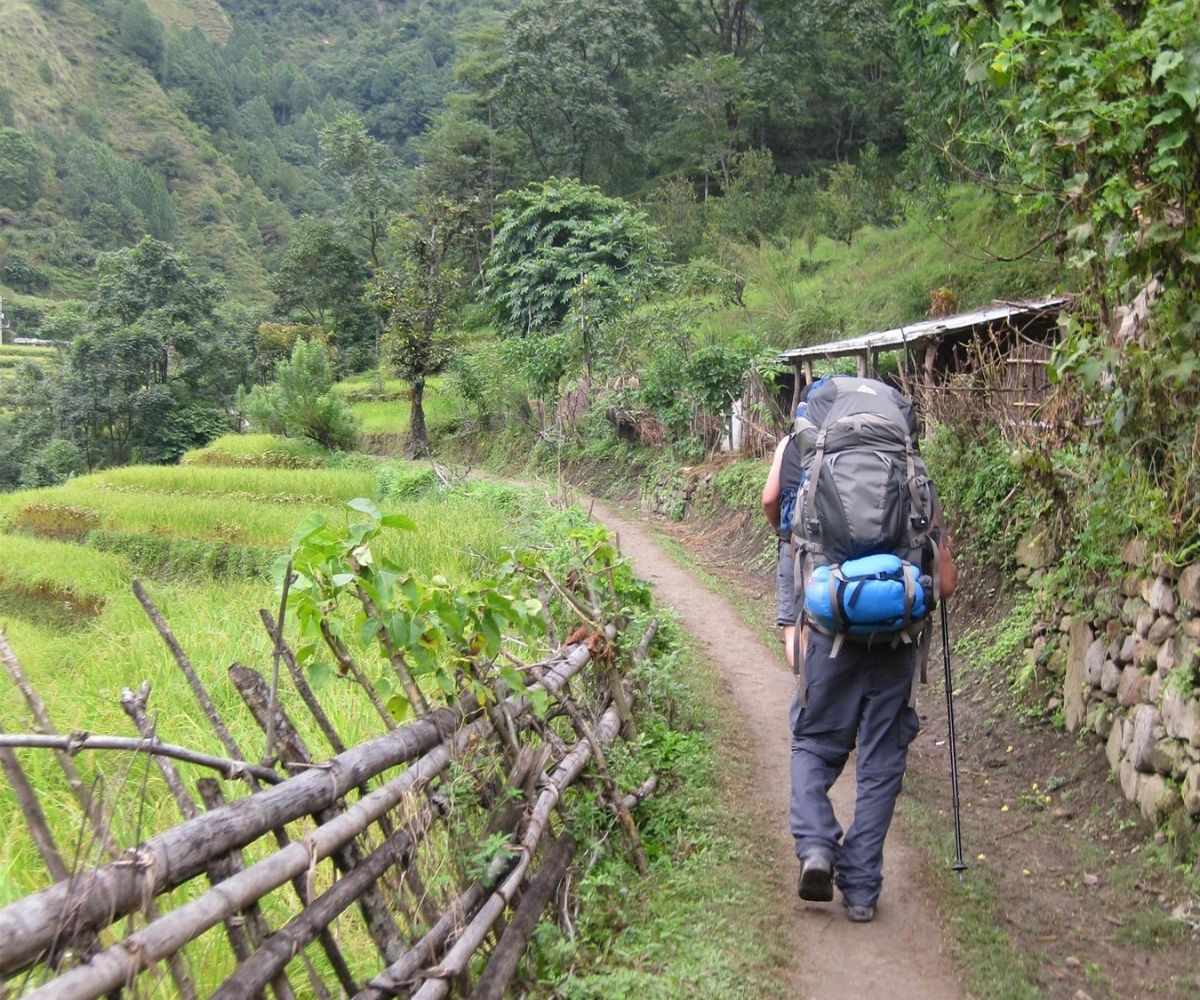
Hiker walking through a green forested trail in rural Nepal,
Hiker walking through a green forested trail in rural Nepal.

Preparation and Logistics

    You can do both, but it depends on the season and the trek. In peak seasons (spring and autumn), it is best to book your trek in advance. Flights to Lukla, guides, and good teahouses fill up quickly, so booking early saves stress.

    In the off-season (summer or winter), you can often arrange treks after you arrive in Kathmandu or Pokhara. There are many local trekking agencies, and you can compare prices, meet guides, and check gear before you decide.

    If you want a fixed plan with flights and hotels secured, book in advance. If you prefer flexibility and are travelling in the off-season, arranging after arrival also works well.

    Yes, you should book flights to Lukla and other mountain airports early, especially in peak trekking seasons (spring and autumn). Seats sell out fast, and weather delays can make it even harder to get a ticket at the last minute.

    In the off-season (summer or winter), flights are easier to book, but they are still often delayed or cancelled because of weather. Booking in advance through a trekking agency or airline office is the safest choice if you want to keep your trek on sche

    When trekking in Nepal, it’s important to respect local culture and traditions:

    • Greet people with “Namaste” and a smile.
    • Dress modestly, especially in villages and monasteries.
    • Always ask before taking photos of people.
    • Walk clockwise around stupas and prayer wheels.
    • Remove shoes before entering temples or homes.
    • Do not share food or drinks you have already eaten — in Nepal this is considered “Jhuto” (contaminated).

    👉 Tip: A little cultural respect makes your trek more meaningful and helps you connect with local communities.

    Yes, you can rent trekking gear in both Kathmandu and Pokhara. However, please note that the size and quality you are looking for may not always be available for rent.

    Most local trekking agencies provide some gear free of charge, such as sleeping bags, down jackets, gloves, hiking poles, or spikes. This varies by agency, so it is best to confirm at the time of booking whether rental or complimentary gear is included.

    👉 Important Tip: I highly recommend bringing your hiking boots from home. While you can buy new boots in Nepal, having a pair that is already broken-in will help you avoid blisters during the trek.

    For personal items like trekking boots, socks, and base layers, buying is a better option since comfort, fit, and hygiene are most important.

    Yes, travel insurance is mandatory for trekking in Nepal. Most trekking agencies will not allow you to join a trek without it.

    Your insurance policy should include:

    • Emergency helicopter rescue from high altitude
    • Medical repatriation
    • Trip cancellations or delays

    Make sure the policy is valid for trekking above 5,000–6,000 meters, as popular treks such as Everest Base Camp, Annapurna Base Camp, and the Annapurna Circuit all reach these altitudes.

    It is also wise to include coverage for lost baggage and theft.

    Without insurance, a single helicopter evacuation can cost over USD 5,000. Having the right plan ensures both safety and peace of mind on the trail.

    To prepare for trekking in Nepal, focus on building stamina, leg strength, and endurance. You don’t need to be an athlete, but regular training makes the trek much easier:

    • Cardio training: Hiking, running, cycling, or stair climbing (3–4 times a week).
    • Leg strength: Squats, lunges, and step-ups to prepare for uphill and downhill walking.
    • Core & balance: Planks, yoga, or light weights to keep your body stable on uneven trails.
    • Practice hikes: Take day hikes with a backpack to get used to walking long hours.

    Tip: Start training at least 6–8 weeks before your trek to avoid altitude and fatigue problems during the journey.

    To prepare for trekking in Nepal, focus on building stamina, leg strength, and endurance. You don’t need to be an athlete, but regular training makes the trek much easier:

    • Cardio training: Hiking, running, cycling, or stair climbing (3–4 times a week).
    • Leg strength: Squats, lunges, and step-ups to prepare for uphill and downhill walking.
    • Core & balance: Planks, yoga, or light weights to keep your body stable on uneven trails.
    • Practice hikes: Take day hikes with a backpack to get used to walking long hours.

    Tip: Start training at least 6–8 weeks before your trek to avoid altitude and fatigue problems during the journey.

    Altitude sickness is a common risk on high-altitude treks like Everest Base Camp, Annapurna Circuit, and Manaslu. Proper preparation is the best way to stay safe:

    • Train your fitness: Build stamina with cardio (hiking, running, cycling) and practice long walks with a backpack. A stronger body adjusts better to thin air.
    • Plan acclimatization days: Choose an itinerary that includes rest days above 3,000m to let your body adjust.
    • Ascend slowly: Do not climb more than 500–600m in sleeping altitude per day once above 3,000m.
    • Stay hydrated: Drink 3–4 liters of water daily and better to avoid alcohol.
    • Eat well & sleep enough: Balanced meals and good rest support your body at altitude.
    • Medication (if needed): Some trekkers carry Diamox (after doctor’s advice) for prevention.
    • Listen to your body: If symptoms like headache, dizziness, or nausea get worse, descend immediately.

    Tip: Good fitness, a safe itinerary, and proper acclimatization are the keys to avoiding altitude sickness on treks in Nepal.

    What kind of accommodation is available in Nepal, and should I book before arrival?

    Nepal offers all types of accommodation — from budget guesthouses and teahouses to mid-range hotels and luxury resorts.

    • In Kathmandu and Pokhara, you’ll find plenty of options, and it’s easy to book online in advance.
    • On trekking routes, teahouses are common and usually easy to find, but in peak season (spring & autumn) it’s better to book through a trekking agency to guarantee rooms.

    Tip: Book your first nights in Kathmandu/Pokhara before arrival, and let your trekking company arrange teahouse stays during the trek.


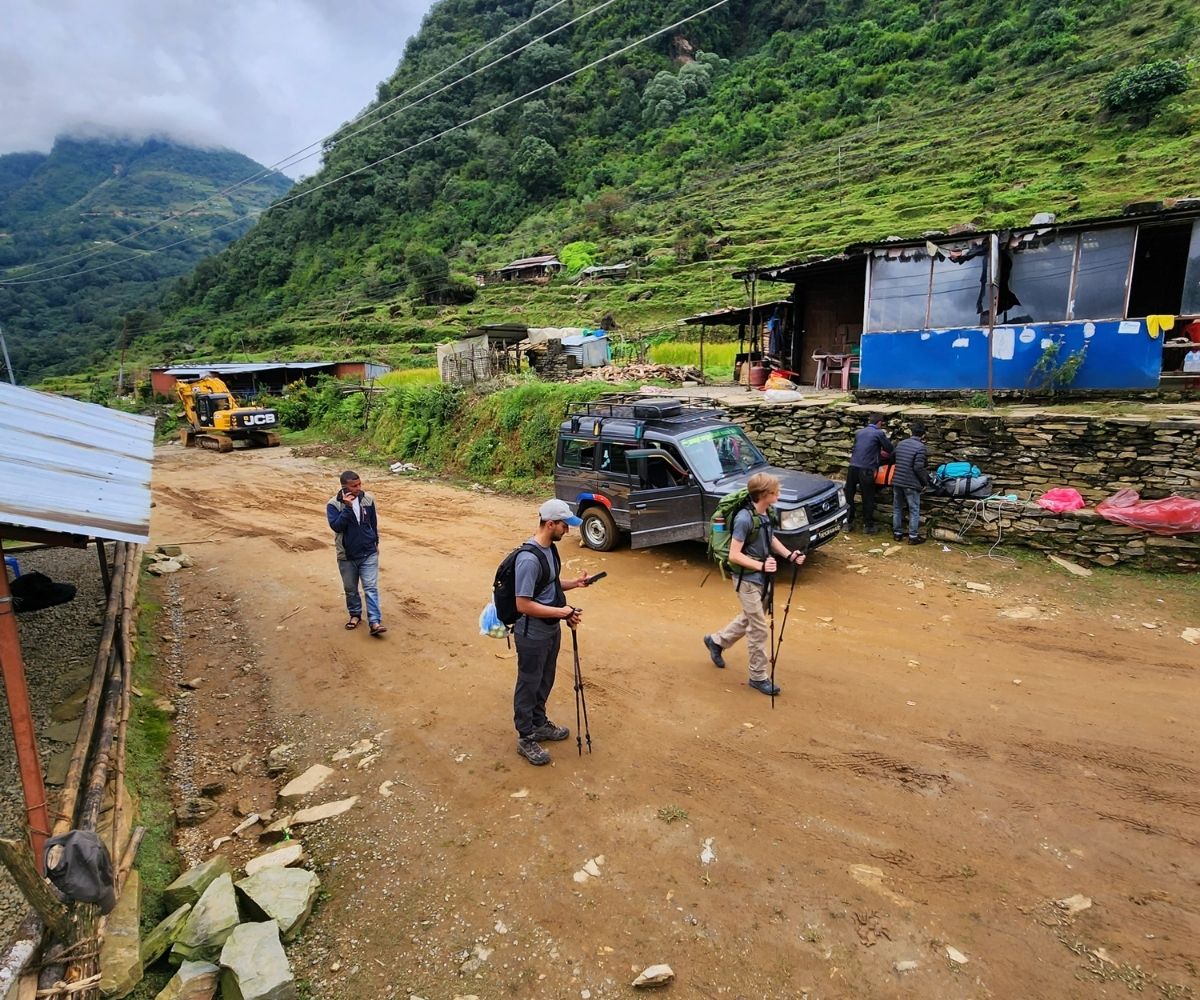
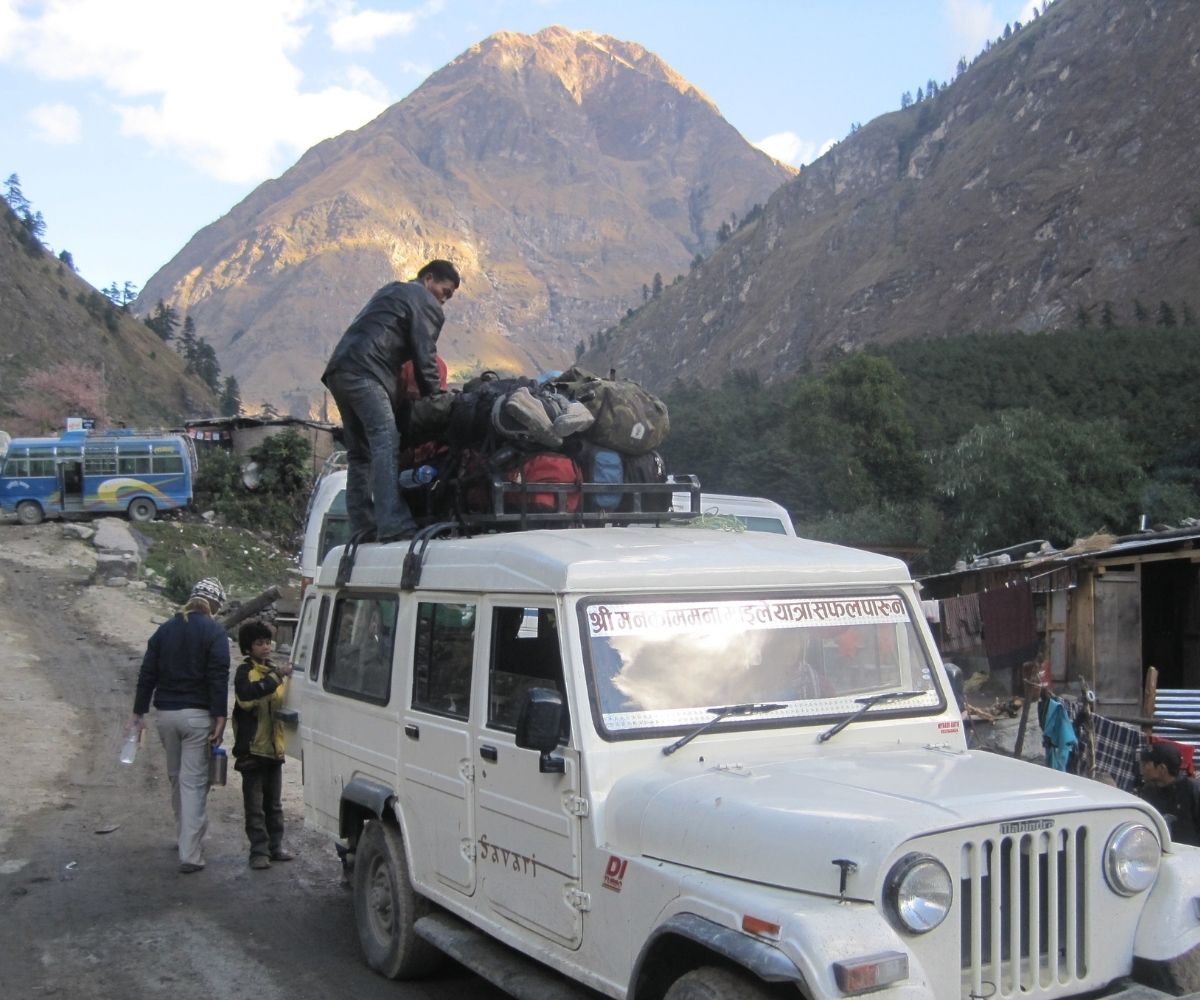
Start point for nepal travel in rural Nepal with hikers preparing beside jeeps

Trek Planning & Routes

    Trekking in Nepal can be as short as 3–4 days or as long as 3 weeks or more, depending on the route you choose.

    • Short treks (3–7 days): Popular options include Poon Hill, Mardi Himal, and Langtang Valley.
    • Moderate treks (8–12 days): Annapurna Base Camp and classic Langtang treks fall in this range.
    • Long treks (12–21 days): Everest Base Camp, Annapurna Circuit, and Manaslu Circuit are the most famous.

    In general, most travelers plan 10–14 days for a comfortable trekking experience in Nepal.

    Choosing the right trek in Nepal can feel overwhelming because the country offers so many incredible options. The best trek for you depends on your interests, fitness level, available time, and the kind of experience you want. Here are some key points to help you decide:

    1. Scenery & Mountain Views

    If your priority is to witness the world’s highest peaks up close, then iconic treks like the Everest Base Camp, Annapurna Base Camp, or Langtang Valley are perfect choices. These trails provide dramatic views of snow-capped giants and sunrise panoramas that you’ll remember for a lifetime.

    1. Cultural Experience

    For those who want to connect with local communities, choose treks that pass through villages with rich traditions. The Annapurna Circuit and Upper Mustang treks are ideal to explore Buddhist and Hindu cultures, ancient monasteries, and traditional mountain lifestyles.

    1. Short & Relaxed Treks

    If you’re short on time or prefer a lighter adventure, Poon Hill, Mardi Himal, and Nagarkot to Chisapani treks offer stunning scenery in just a few days, without requiring extreme physical effort.

    1. Remote Wilderness & Adventure

    For adventurers who love off-the-beaten-path journeys, treks like Manaslu Circuit, Kanchenjunga Base Camp, or Dolpo provide untouched landscapes, fewer crowds, and pure wilderness.

    1. Nature & Wildlife

    If your focus is more on forests, rivers, and diverse ecosystems, then treks in the Langtang region, Helambu, or around Shivapuri National Park are great choices. These trails are rich in flora, fauna, and birdlife.

    1. A Mix of Everything

    If you want a balance of mountains, culture, and adventure, the Annapurna Circuit remains one of the best treks in the world. It offers varied landscapes, cultural immersion, and breathtaking Himalayan views.

    1. Time & Fitness Considerations
    • Short treks (3–7 days): Perfect for beginners or those with limited time.
    • Moderate treks (8–12 days): Great for average fitness levels with some hiking experience.
    • Long treks (12–21+ days): Best for seasoned trekkers ready for a full Himalayan adventure.

    Pro Tip: Always consider the trekking season as well. The best times are spring (March–May) and autumn (September–November) for clear skies and comfortable weather.

    Yes, you can! Many treks can be customized for shorter walking days. Options like Poon Hill,  (lower section), and hikes around Kathmandu or Pokhara are perfect. Just be prepared for some stone steps, walk at your own pace, and consider a porter to carry your bag. With a flexible itinerary, you can still enjoy stunning views and cultural experiences without long walking days.

    The difference comes from how the itinerary is planned. Some companies design shorter versions with longer walking hours each day, while others offer longer itineraries with shorter, more comfortable walking days. Extra days may also be added for acclimatization, side trips, or rest. For example, the Annapurna Base Camp trek can be done in as few as 5 days for strong trekkers, or stretched to 10–12 days for a more relaxed pace.

    Local Tip: In Nepal, many trails involve long stone staircases and steep ascents, which can feel tougher than the distance suggests. Choose an itinerary that matches your walking pace and comfort, rather than just the number of days. Please discuss about it before booking the trek

    The price difference usually comes from quality and standards, not just the inclusions. Factors such as the experience of guides, safety measures, group size, quality of accommodation, meals, transport, and service level can vary between companies. Some may use cheaper hotels, local buses, or inexperienced staff, while others provide better logistics, certified guides, private transport, and more reliable support. In trekking, you often pay for safety, comfort, and trust—not just the itinerary.

     Local Tip: In Nepal, almost every company will list “similar inclusions,” but the real difference is in service and reliability. Everyone will tell you the same things, so the best way to judge is to read genuine reviews and see what past trekkers say about their experience.

    Yes, traditionally autumn (September–November) and spring (March–May) are considered the best trekking seasons in Nepal. But with changing weather patterns in recent years, it’s important to look closer:

    • Autumn (September–November):
      This has always been the most popular season. However, due to climate change, September and the first week of October often still see lingering monsoon rains. The skies usually become crystal clear from mid-October through December, offering breathtaking views. December is colder, especially at higher altitudes, but the trails are quieter, and visibility is excellent.
    • Spring (March–May):
      Spring is famous for rhododendron blooms and warm days. But in recent years, March has seen heavy snowfalls and very cold conditions in higher regions. From April to early June, trekking is more stable with milder temperatures and vibrant landscapes.
    • Winter (December–February):
      Cold and snow make high passes difficult, but lower-altitude treks like Poon Hill, Langtang, and Mardi Himal (lower section) are still enjoyable, with fewer crowds.
    • Summer/Monsoon (June–August):
      The monsoon brings rain, landslides, and leeches on many trails. Still, regions like Upper Mustang and Dolpo (rain-shadow areas) remain good options.

    Local Tip: The shoulder seasons—late October–December and April–early June—are becoming some of the best times to trek. Trails are less crowded, the weather is more stable, and the mountain views are often clearer than in peak season.

    The right trek depends on your time, fitness, and interests. If you want iconic Himalayan views, choose Everest Base Camp or Annapurna Base Camp. For culture, the Annapurna Circuit or Upper Mustang lets you experience diverse ethnic groups and ancient traditions. If you prefer peace and fewer crowds, go for Manaslu Circuit or Kanchenjunga. As locals, we always recommend balancing scenery with cultural experiences—you get a deeper sense of Nepal that way.

    • Everest Base Camp (EBC): Usually 12–14 days including acclimatization days in Namche Bazaar and Dingboche. Strong trekkers can do it in 10–11 days, but we don’t recommend rushing due to altitude.
    • Annapurna Base Camp (ABC): Can be done in 7 days with long walks, but most comfortable itineraries take 10–12 days. Shorter options exist but require long daily climbs.

    Local Tip: Don’t just look at the number of days—altitude and trail conditions matter more than distance.

    Yes! Almost every trek can be tailored. For example, Poon Hill, usually a 4-day trek, can be extended into 6–7 days with shorter walking hours. Similarly, on the ABC trek, instead of 6–7 hours of daily walking, we design 3–4 hour days by adding extra nights. Hiring a porter also helps you trek comfortably without carrying heavy loads.

    Not necessarily. These treks are non-technical, meaning no ropes or climbing skills are needed. However, you should be comfortable walking 5–7 hours per day with some steep ascents and descents. The main challenge is altitude, not technical difficulty. Beginners with determination, proper acclimatization, and a good guide can do these treks safely.a

    • From Kathmandu, the Sundarijal to Nagarkot trek is one of the easiest and shortest options. Another very popular beginner-friendly route is the Chisapani–Nagarkot trek, which takes 2 nights and 3 days and rewards you with stunning Himalayan panoramas along the way.
    • From Pokhara: Poon Hill, Australian Camp, and Dhampus Village treks (2–4 days) are beginner-friendly with spectacular sunrise and Annapurna range views.

    These are perfect for travelers with limited time or those who want a lighter introduction to trekking.

    • Annapurna Circuit: A mix of Gurung, Thakali, and Tibetan-influenced cultures.
    • Upper Mustang: Ancient Tibetan Buddhist traditions, cave monasteries, and festivals.
    • Langtang Valley & Helambu: Strong Tamang and Sherpa culture, plus warm homestays.

    If you want to blend trekking with living in villages, community homestay treks in Ghale Gaun or Sikles are wonderful.

    Yes—Nepal still has many hidden gems:

    • Manaslu Circuit: Remote, fewer trekkers, and stunning landscapes.
    • Kanchenjunga Base Camp: Wild and untouched, recommended for experienced trekkers.
    • Dolpo & Rara Lake: Rugged, isolated, and culturally rich regions.

    These routes require more permits and logistics but reward you with pure wilderness.

    • Tea House Treks: Most popular routes (Everest, Annapurna, Langtang, Manaslu) have tea houses—lodges with rooms, meals, and basic facilities. They’re convenient and budget-friendly.
    • Camping Treks: Required in remote regions like Dolpo, Kanchenjunga, or Upper Mustang (before it opened). Even now, some trekkers prefer camping for privacy and flexibility.

    Local Tip: Tea houses offer plenty of comfort on most routes. Camping is best if you want a wilderness feel in off-the-beaten areas.

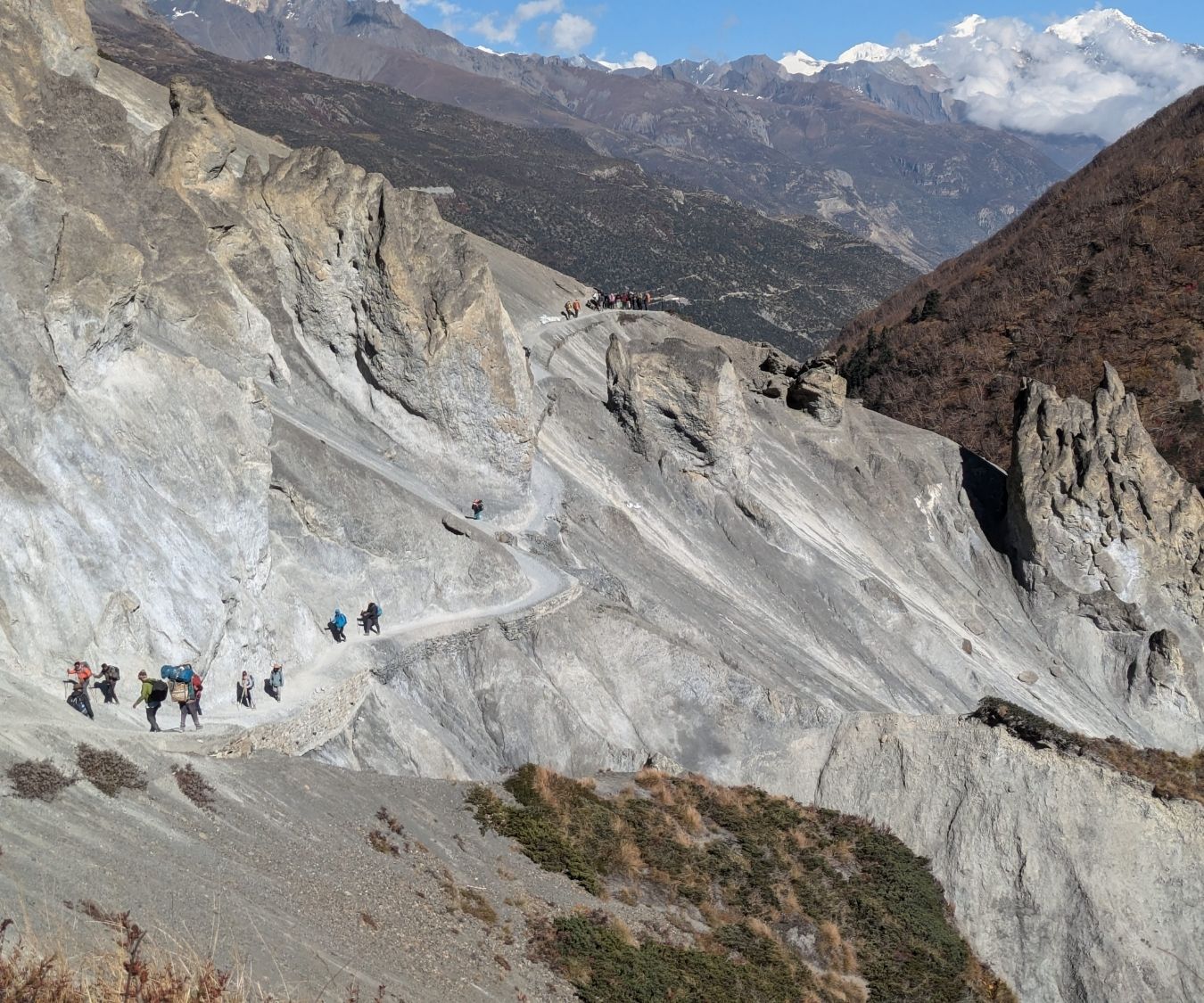
Travelers making their way along the dramatic cliffside trails of the Annapurna Circuit in Nepal

Permit and Rules

    Most treks require a Trekking Information Management System (TIMS or e-TIMS) card and National Park / Conservation Area entry permits. Special regions like Upper Mustang, Dolpo, Manaslu, Nar Phu need a Restricted Area Permit (RAP).

    • TIMS (via agency): USD 20–30
    • National Park / Conservation Area permits: USD 20–30 each
    • Restricted Area Permit (RAP): USD 70–100+ per week, depending on the region


    No—since April 2023, individual trekkers cannot get a TIMS card on their own. You must apply through a government-registered trekking agency with a licensed guide.

    Yes—every trekking region requires some form of permit, whether e-TIMS, National Park entry, or Restricted Area Permit. Even short treks

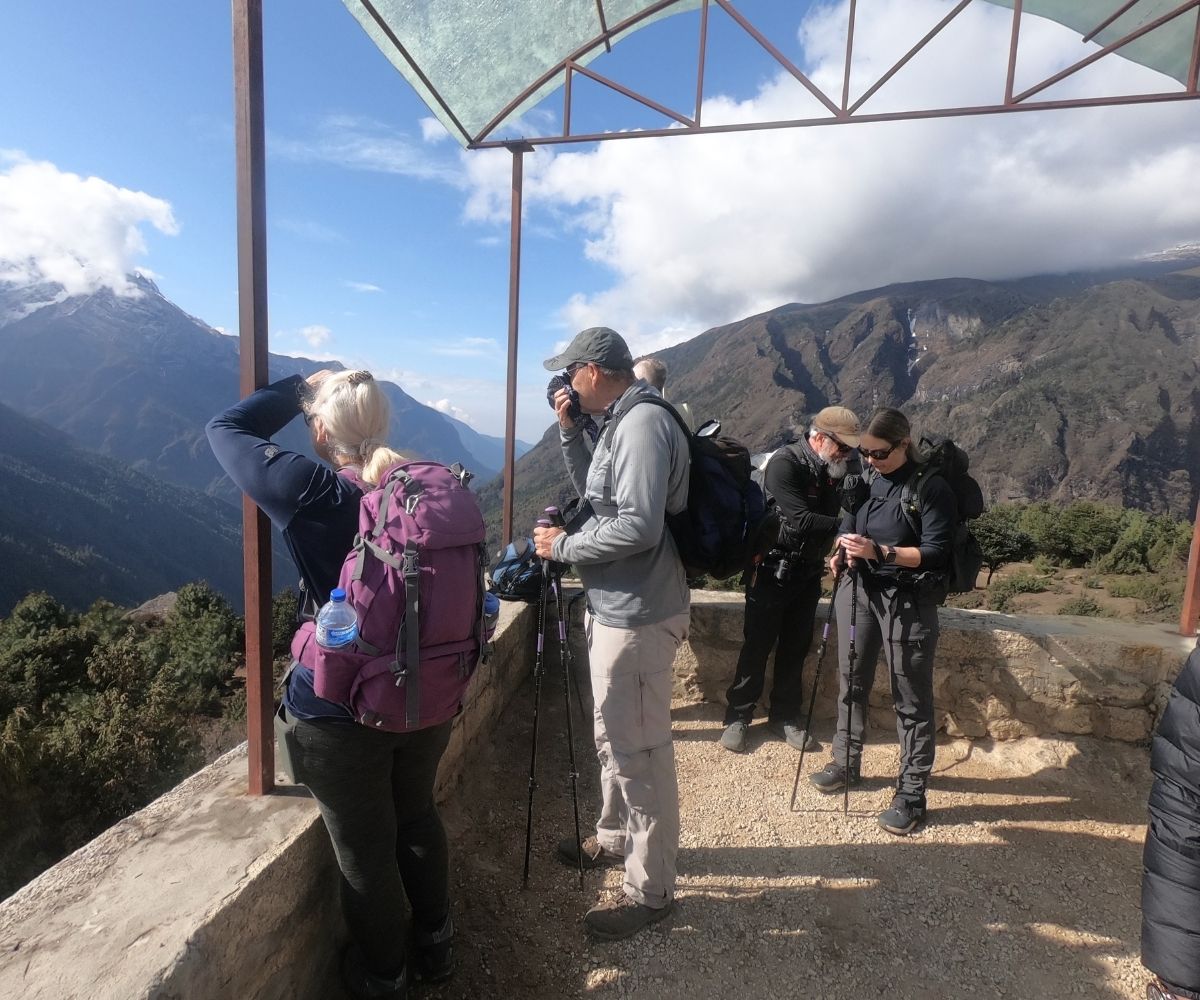
Trekking group takes a break on Everest Base Camp trail, checking backpacks and trekking poles

Packing & Gears

    A rucksack (backpack) is better for traveling in Nepal, especially if you plan to trek. Trails, stairs, and uneven roads make carrying a suitcase difficult.

    • Use a rucksack/backpack for treks and moving between villages.
    • Keep a small suitcase or duffel only if you stay in cities like Kathmandu or Pokhara.

    Best choice: Bring a rucksack for trekking and a daypack for essentials.

    Pack light layers you can add or remove as the weather changes.

    • Spring & Autumn: Light base layers, fleece, trekking pants, and a warm jacket for cold nights.
    • Winter: Heavy down jacket, thermals, gloves, wool hat, and a warm sleeping bag.
    • Monsoon: Rain jacket, quick-dry clothes, bag cover, and trekking poles.

    For all seasons, bring sturdy trekking boots, a water purifier, sunscreen, and a headlamp. You can rent jackets, sleeping bags, and poles in Kathmandu or Pokhara, but use your own boots and essentials for comfort.

    For winter treks in Nepal (December–February), you need proper cold-weather gear. Days can be sunny, but nights at higher altitudes often drop well below freezing.

    Pack the following essentials:

    • Heavy down jacket and thermal base layers
    • Fleece or wool sweaters and insulated trekking pants
    • Gloves, wool hat, and warm sleeping bag
    • Trekking boots with thick socks (gaiters useful in snow)

    Local Tip: Use the layering system — light clothes for daytime hiking, and add warm layers in the evening to stay comfortable.

    Yes. The monsoon season in Nepal (June–August) brings heavy rain, muddy trails, and leeches in lower regions. To stay safe and comfortable, carry:

    • A good rain jacket and backpack cover
    • Quick-dry clothes and waterproof trekking boots
    • Trekking poles for slippery trails
    • Long pants for leech protection

    Local Tip: Even if it doesn’t rain every day, weather is unpredictable, so rain gear is essential for trekking in Nepal during monsoon.

    In spring and autumn, most teahouses provide blankets, but they may not always be warm or clean enough. A light sleeping bag (or liner) is recommended for comfort and hygiene, especially at higher altitudes.

    Best tip: In peak seasons, carry at least a 3-season sleeping bag for safety.

Guides, Porters & Rules

    Since April 1, 2023, it’s mandatory to hire a licensed trekking guide through a government-registered agency for treks inside national parks & conservation areas. You’ll also need an e-TIMS card issued by your agency. Short city hikes around Kathmandu & Pokhara are exempt. The rule is for safety, rescue support, and better trail management.

    • Licensed Guide: USD 35–50/day
    • Porter-Guide: USD 30–45/day
    • Porter: USD 25–35/day


    Yes—tipping is customary and highly appreciated. A good guideline is:

    • Lead Guide: USD 20–25/day
    • Assistant Guide / Porter-Guide: USD 15–20/day
    • Porter: USD 10–15/day

    Tips are usually pooled at the end of the trek and handed to the team in cash.

    Most porters know basic English for simple communication. If you want easier conversation, a porter-guide can speak more English, while a licensed guide is usually fluent.

    Yes—Nepal has multilingual guides available in Kathmandu and Pokhara. Chinese & Japanese guides are most common, while Spanish, French, and Korean speaking guides are available with advance booking. Their rates are a little higher than English-speaking guides.

    A porter-guide carries a lighter load (10–15 kg) and helps with basic route navigation. They’re a budget-friendly option for popular trails.
    Reminder: to meet Nepal’s mandatory guide rule, the person leading you must hold an official guide license card.

    • Look for their Department of Tourism Guide License Card (name, license no., and validity date).
    • Book through a government-registered agency—your e-TIMS will include your guide’s details, verified at trail checkpoints.

    At Mountain Routes, we take care of everything—licensed and insured guides, fair porter loads, multilingual support, e-TIMS, and permits—so you can just arrive and enjoy your trek without stress.

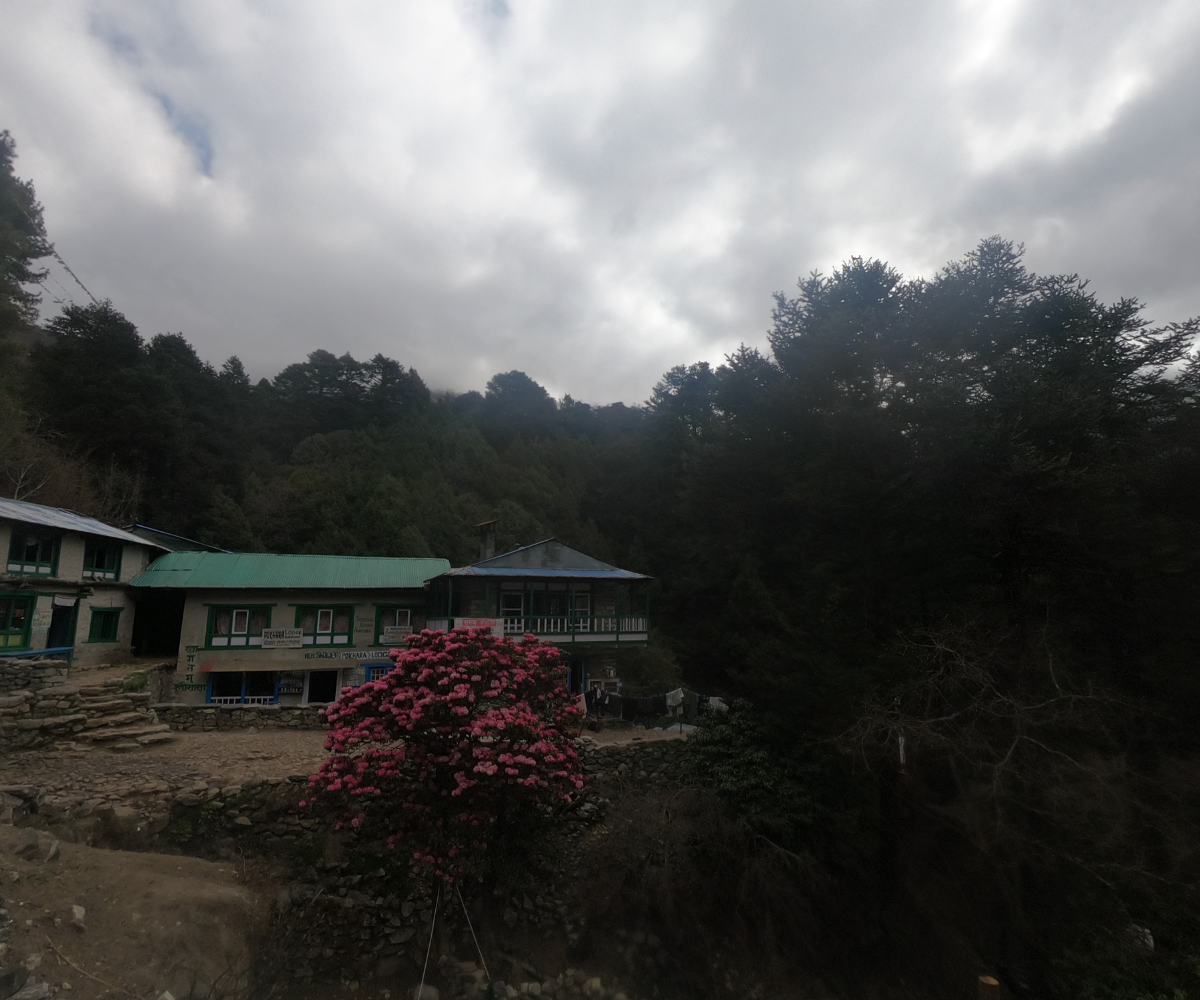
Guesthouses in the Himalayas surrounded by green forest and a blooming rhododendron tree

Food, Stay & Daily Experience

    On popular treks like Everest Base Camp and Annapurna Circuit, you’ll stay in teahouses (lodges) with twin rooms, shared toilets, and simple but filling meals—dal bhat (rice & lentils), noodles, soups, pasta, momo dumplings, fried rice, and eggs are common.

    In Kathmandu and Pokhara, you’ll find everything from budget guesthouses to luxury hotels. Food ranges from local Nepali cuisine to international options like pizza, burgers, Korean BBQ, sushi, and vegan cafés.


    A trekking day usually starts early with breakfast at 7:00 am, walking 5–7 hours with lunch around midday, and reaching the next lodge by 3:00–4:00 pm. Evenings are spent relaxing, eating dinner, and enjoying mountain views.

    Most treks begin around 7:30–8:00 am to take advantage of clear morning weather and avoid afternoon winds.

    Lunch is normally served between 11:30 am and 1:00 pm at teahouses along the route.

    Stick to freshly cooked hot meals like dal bhat, soups, fried rice, noodles, potatoes, and omelets. These are safe, energy-rich, and locally available.

    Yes—safe water is available at lodges and villages. You can buy bottled water, boiled water, or use purification tablets/filters. Avoid drinking directly from streams.

    Avoid raw meat, salads, and unpasteurized dairy, as well as street food in remote areas, since hygiene can be uncertain. Stick to hot, cooked meals.

    Yes—while teahouses may have limited options, you can usually get rice, potatoes, soups, omelets, and vegetables which are gluten-free. Inform your guide and lodge owners in advance for better arrangements.

    The best option is boiled water from lodges or treated water using purification tablets/filters. It’s eco-friendly and safer than buying bottled water.

    Yes—vegetarian and vegan meals are widely available. Common options include dal bhat without meat, fried rice, noodles, soups, potatoes, and vegetable curries. Just let the lodge staff know your preference.

    At Mountain Routes, we ensure your meals and accommodation are safe, clean, and comfortable—whether you’re trekking in the Himalayas or staying in Kathmandu and Pokhara. We also cater to vegetarian, vegan, and gluten-free diets with advance notice.

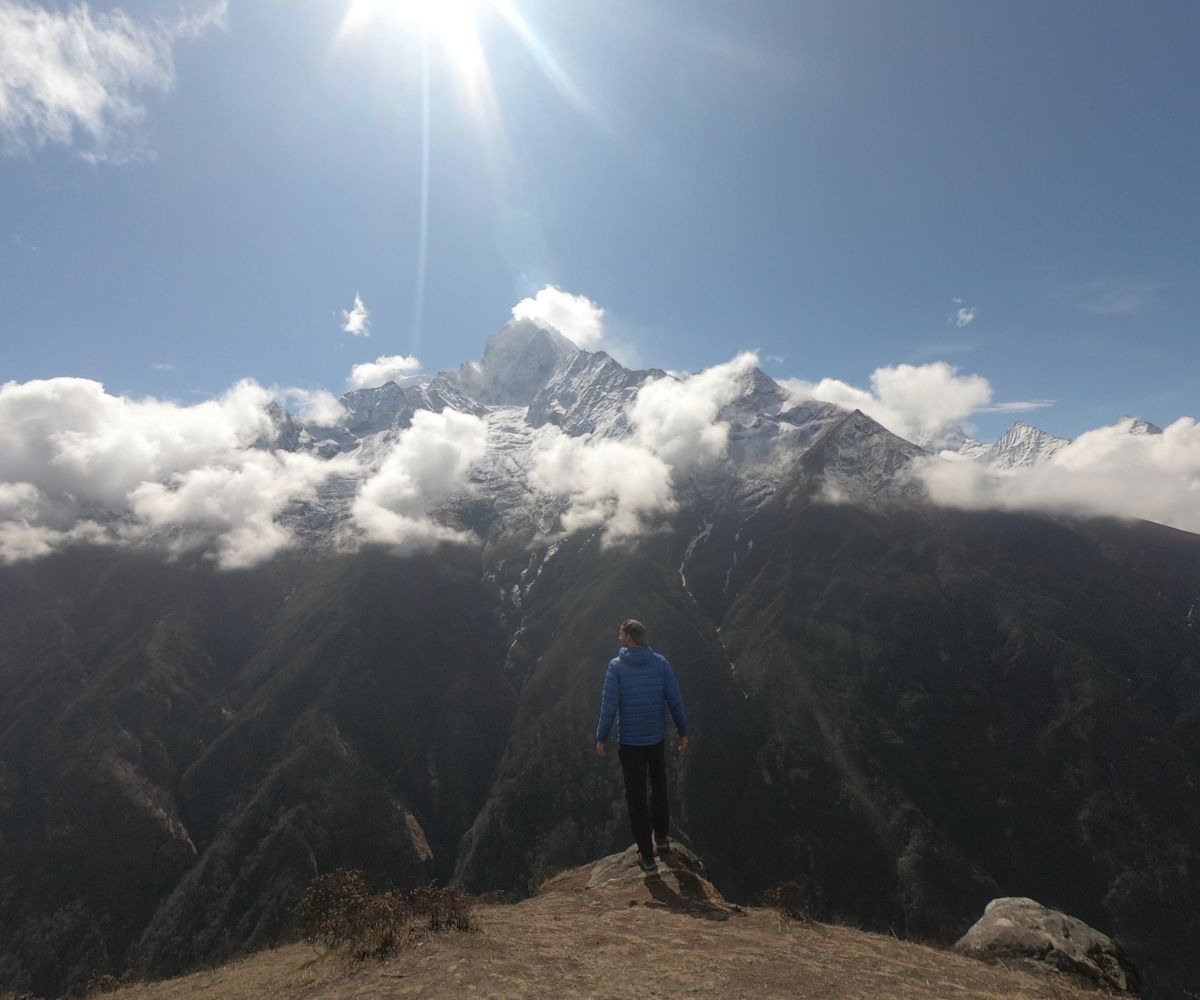
Traveler on EBC trek admiring snowy Himalayan peaks

Practical Travel Questions

    For trekkers, the most reliable options are Ncell and Nepal Telecom (NTC). Coverage varies by region—Ncell works better in Annapurna, while NTC is stronger in remote areas like Langtang. In the Everest region, many lodges use Everest Link Wi-Fi cards, which are sold locally.

    At Kathmandu Airport, you can easily buy a local SIM or eSIM with data packages. International eSIMs (like Airalo, Holafly) work in cities, but local SIMs are cheaper and have better coverage in trekking areas.

    You can use mobile data where networks are available, but signals are patchy in high mountains. Most teahouses offer paid Wi-Fi (Everest Link in Khumbu, local Wi-Fi in Annapurna). For safety, many agencies (including Mountain Routes) provide satellite phone access in emergencies, so you’re never completely cut off.

    Tip: Let your trekking company know your connectivity needs—they can guide you on which network works best on your chosen route.

Weather and Seasons

    Yes—spring days (March–May) are warm, but high-altitude nights can drop below freezing. Carry a warm down jacket, thermal base layers, gloves, hat, and a 4-season sleeping bag.

    The best choice is sturdy, ankle-support trekking boots with good grip. In spring/autumn, medium-weight boots are enough, while for winter/monsoon waterproof boots with insulation are recommended.

    Yes, it’s safe in certain regions like Upper Mustang, Dolpo, and Annapurna rain-shadow areas. But lower trails can be muddy, leech-filled, and prone to landslides. Trekking with a guide is highly advised.

    Not mandatory, but highly recommended, especially in monsoon (June–Aug) and winter (Dec–Feb). In dry spring/autumn, breathable boots work well, but waterproof shoes give extra comfort and safety.

    You’ll need full winter gear (down jacket, insulated boots, gloves, gaiters, sleeping bag -15°C). Without proper equipment, trekking above 3,500m in Dec–Feb can be dangerous.

    Yes—Kathmandu (Thamel) and Pokhara have many rental shops for down jackets, sleeping bags, trekking poles, rain gear at affordable rates. Agencies like Mountain Routes also provide selected gear to clients.

    Traditionally, autumn (Sep–Nov) is the best trekking season—clear skies and mild temperatures. But September and early October now see rain due to climate change. Weather usually stays clear till mid-December.

    Spring (Mar–May) is mostly clear with rhododendrons blooming, but in recent years sudden heavy snowfall has been seen even in April. Expect cold nights at high altitudes despite sunny days.

    Local Tip: At Mountain Routes, we guide you on exact gear lists, seasonal packing tips, and arrange rentals in Kathmandu or Pokhara, so you travel light and trek safe.

Local rider helping trekkers by carrying packages to trail start point

Health & Insurance

    The vaccinations you require will depend on which vaccinations you have had previously.There are no strict mandatory vaccinations for Nepal, unless you are coming from a Yellow Fever country. Still, some vaccines and health checks are strongly recommended for safe trekking.

    It is best to be up to date with Hepatitis A, Typhoid, Tetanus, and Diphtheria. Some trekkers also get Hepatitis B or Rabies if they plan to spend more time in rural areas. Visit your doctor at least 4–6 weeks before your trip to review your health and fitness for high altitude. 

    Basic checks like heart health, general fitness, and even a dental check can prevent problems on the trail. While not legally required, being prepared helps you enjoy your trek with less risk. A full list of recommended and required checkup is provided by our travel experts

Transportation & Flights

    Domestic flights hinge heavily on weather conditions—especially in mountainous routes like Lukla. Only three private carriers operate, and there’s now an option to fly via Ramechhap, about a 5-hour drive from Kathmandu, offering more flexibility. Book through a trusted agency like Mountain Routes for real-time updates, comfort, and backup arrangements.

    There is no direct road to Lukla, but you can drive part of the way. From Kathmandu, it takes about 8 hours by jeep to Salleri. After an overnight stay, you continue by road to Surke, then trek about 4 hours to Phakding. In total, you should plan for 2 extra days (drive + trek) to reach Phakding by road instead of flying.

    Many trekkers choose this option when Lukla flights are delayed or cancelled due to weather. At Mountain Routes, we arrange private jeeps, safe lodges, and guides for this alternative route, so your trek stays on schedule.

    Kathmandu (Tribhuvan Airport) offers the most international connections and flexibility. Pokhara is quieter, but starting September 2025, Sichuan Airlines plans to launch direct flights from Pokhara to Australia via Chengdu, pending regulatory approval.

    There are no direct flights from Europe, the USA, or Canada to Kathmandu. Travelers usually fly via major hubs like Doha (Qatar Airways), Istanbul (Turkish Airlines), or Delhi (Vistara, Air India, IndiGo) for smooth connections.

    Reaching Thamel generally takes around 25 minutes in light traffic, and up to 40 minutes during peak congestion. Your Mountain Routes guide or driver can coordinate your pickup for seamless arrival.

    • Tourist Bus (morning departures): ~7 hours
    • Jeep or Private Car: Faster, but more expensive
    • Flight: ~25 min flight time; arrive at the airport 1 hour in advance; typically around USD 100 per seat. Mountain Routes offers safe transfers and ticket handling across all options.


    Yes—regular direct tourist buses run between Kathmandu and Chitwan, taking around 6 hours. We can add this route into multi-destination packages upon request.

    Flights to Lukla take approximately 40 minutes, but may be delayed or rescheduled when the weather turns—having local support ensures safer, more flexible itineraries.

    Yes—domestic flights are generally safe, though highly weather-dependent in the mountains. Booking via Mountain Routes gives you access to real-time updates, flight flexibility, and alternate transit arrangements when needed.


Why Mountain Routes ?

  • Local Support
  • Instant Response
  • Customized Packages
  • Friendly and Professional Guides

Not satisfied with what we offer ?

We can customize the trip for you.

Make your Query

Feel free to ask question regarding Travel and Trek in Nepal: Frequently Asked Questions. Our team of Experts will get back to you within 24hour.

As Featured On:

Awards:

WhatsApp Chat on WhatsApp